

Corporate Firewalls for the Enterprise Edge
Corporate edge routing solutions for branch offices and distributed environments, enabling a smooth transition from traditional connectivity to secure, cloud-ready hybrid architectures.
Corporate routing for today and tomorrow

Corporate networks need firewalls that deliver reliable connectivity, strong security, and consistent performance at the Edge, while adapting to evolving models such as cloud, SD-WAN, and hybrid access, without compromising stability:





Routing evolution in modern enterprises

For years, corporate firewalls have been at the heart of enterprise networks, connecting offices, data centers, and remote users. But digital transformation, the adoption of cloud services, the rise of distributed work, and the growing need for resilience have reshaped their role.
Today, organizations need more than basic connectivity. They rely on routing platforms that can integrate multiple WAN access types, secure traffic, prioritize critical applications, and adapt to hybrid environments, without increasing operational complexity. The Edge has become a strategic layer where networking, security, and services converge.
In this context, corporate firewalls are not disappearing, they are evolving. They remain a core part of the network, but now incorporate advanced capabilities such as fixed and mobile access, high-performance encryption, integration with SD-WAN solutions, Wi-Fi support, switching, and centralized management.
Modern routing solutions must ensure operational continuity, protect against threats, and enable a smooth transition to new network models, allowing organizations to evolve at their own pace without compromising stability or existing investments.
Key points for corporate firewalls at the Edge

Firewalls remain the backbone of the network
Corporate firewalls continue to play a critical role in traffic control, security, and site connectivity. At the Edge, they serve as a central point for aggregating services and enforcing network policies.

From connectivity to Intelligent Edge Networking
To meet the demands of modern businesses, firewalls must support multiple WAN access types while delivering advanced security and full traffic visibility. In short, they are evolving into intelligent platforms without compromising reliability.

Progressive transition, not disruption
Corporate routing must evolve in a way that allows traditional models to coexist with newer architectures such as SD-WAN, ensuring a smooth transition while avoiding disruption and protecting existing investments.

Scalability tailored to each site
Not all locations have the same requirements. Modern routing must scale from small branch offices to more complex environments, adapting to each site while maintaining a consistent operational experience.
Understanding Corporate Edge Routing
Modern corporate routing goes far beyond simply interconnecting networks. It is now the point where critical decisions are made around availability, cybersecurity, performance, and user experience. As applications extend beyond the data center, the Edge has become a core part of enterprise architecture.
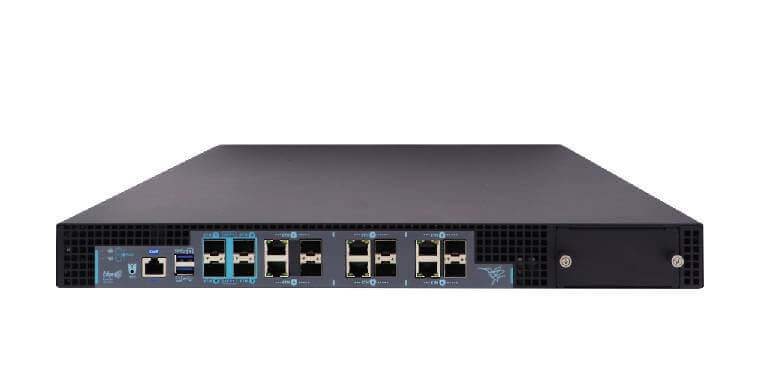
Today’s organizations operate across multiple WAN access types, combining fiber, Ethernet, and backup links via 4G/5G connectivity. Solutions such as the Windbit RS420, designed for small and medium-sized sites, or the Teldat-M2, built for higher-performance branch environments, enable seamless orchestration of these connections, ensuring service continuity and consistent routing, prioritization, and quality of service.
At the same time, the Edge acts as the network’s first line of defense. Communications must be protected through encryption, segmentation, and traffic control, without compromising performance. As a result, corporate firewalls are evolving into platforms that can integrate natively or work alongside advanced cybersecurity frameworks such as NGFW, ZTNA, and XDR, extending protection from the network perimeter to users and applications.
The shift toward models such as SD-WAN does not replace traditional routing, it enhances it. Organizations need the flexibility to adopt new technologies gradually, while maintaining control, visibility, and stability that define mature enterprise networks.
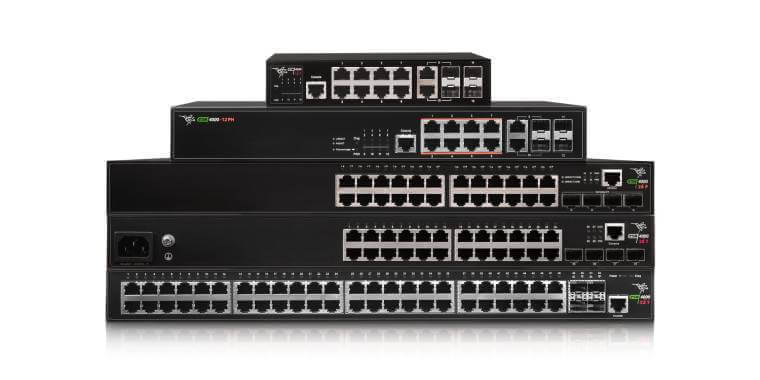
At the same time, the Edge firewall is no longer an isolated device, but a service integration point. By incorporating switching and Wi-Fi capabilities, it brings together LAN and WLAN connectivity within the branch. Solutions such as the Windbit ESW0L3 managed switch series and Wi-Fi 6 access points like the Windbit WAP820-Iax and Windbit WAP880-Iax allow this architecture to scale efficiently, adapting to different density and criticality requirements.
Finally, management becomes a key pillar. Organizations need centralized operations with end-to-end visibility and unified control. In this context, Teldat’s Cloud NetManager (CNM) platform provides a true “single pane of glass”, enabling integrated management of routing, security, WAN access, and network services from a single platform, simplifying operations, improving efficiency, and supporting advanced managed services models.
Understanding modern corporate routing means recognizing that the firewall is no longer just a transit device, but a strategic platform that brings together connectivity, security, and services, all ready to support digital transformation and meet the evolving demands of the enterprise Edge.
Solution & Teldat Products
Teldat Enterprise Edge Routing
Teldat’s corporate routing solutions are designed to meet the real needs of distributed organizations, providing a solid foundation for efficient, secure, and scalable edge network architectures.
Rather than relying on fragmented approaches, Teldat delivers an integrated model where the firewall acts as the central platform, bringing together branch services, simplifying infrastructure, and reducing operational complexity.

Optimized routing for distributed branches

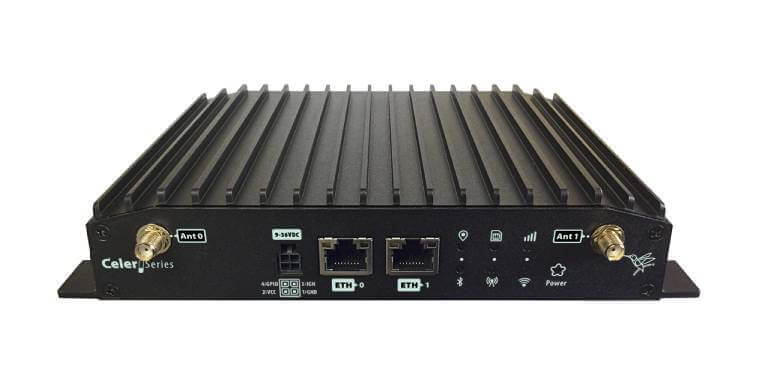
Teldat’s portfolio addresses the connectivity needs of small and medium-sized sites with solutions such as the Windbit RS420, Teldat-M2, and Teldat-M10-Smart. High-performance platforms designed for reliability and ease of deployment. They combine advanced routing capabilities with multiple WAN access options and mobile connectivity, helping ensure seamless business continuity across distributed environments.
Built for large-scale deployments and managed services, these solutions deliver the automation, stability, and consistency required in demanding network environments.
Expanding Connectivity with 4G/5G
Teldat-5Ge and Teldat-4Ge Plus solutions make it easy to add mobile connectivity to existing infrastructures, enhancing resilience and flexibility without changing the network architecture. They support backup scenarios, temporary access, and rapid deployments, all while maintaining full control from the corporate firewall.
Integrated LAN and WLAN infrastructure
Beyond routing, Teldat also offers switching and Wi-Fi solutions to create a complete branch network. The Windbit ESW3L2P switch series and Wi-Fi 6 access points, such as the Windbit WAP820-Iax and Windbit WAP880-Iax, deliver high-performance LAN and WLAN connectivity, adapting seamlessly to different environments and user densities.
By bringing these elements together, organizations can move toward more efficient network models, reducing the number of devices and simplifying day-to-day operations.
Security and SD-Branch as an Operating Model
Teldat solutions incorporate advanced security capabilities and are designed to work with architectures such as NGFW, ZTNA, and XDR, delivering protection directly at the Edge. This approach supports the transition to an SD-Branch model, where networking and security are unified on a single platform.
Unified management and centralized control
The entire infrastructure is managed through Teldat’s Cloud NetManager (CNM), which provides a centralized operating model based on a “single pane of glass”. From one platform, organizations can manage routing, WAN connectivity, security, and network services. Simplifying operations and enabling large-scale managed services.
Teldat delivers a comprehensive solution for the corporate edge, designed to meet today’s business needs while remaining ready for future evolution.
Corporate Routing – Use cases
Connected and secure corporate branch
Reliable corporate routing for branch offices, delivering secure connectivity, high performance, and a smooth transition to hybrid architectures.
Business continuity with hybrid access
By combining fixed and mobile connectivity, corporate routing ensures availability and resilience across all scenarios.
Connected and secure corporate branch
Reliable corporate routing for branch offices, delivering secure connectivity, high performance, and a smooth transition to hybrid architectures.
Challenge
Modern corporate branches require stable and secure connectivity to access business applications, cloud services, and centralized resources. However, many organizations still operate with heterogeneous infrastructures, limited WAN access options, and a growing number of distributed devices, driving up operational complexity and increasing management costs.
In addition, the lack of advanced security and traffic prioritization capabilities can negatively impact both user experience and business continuity. This calls for a corporate routing solution that delivers reliability, simplicity, and scalability, without requiring a redesign of the network.
Solution

Teldat provides corporate routing solutions for branch offices built on platforms such as the Windbit RS420, Teldat-M2, and Teldat-M10-Smart. These platforms integrate advanced routing, multiple WAN access options, hardware-based encryption, and 4G connectivity. By consolidating network infrastructure into a single device, they simplify both deployment and day-to-day operations.
Thanks to a common operating system and centralized management, branches can gradually evolve toward hybrid architectures while maintaining the control and stability of traditional routing.
Why Teldat?
Teldat combines proven corporate routing with integrated security, through solutions such as be.Safe Essential and be.Safe Pro along with ease of deployment in a scalable platform designed for managed services and future growth, without added complexity.
Business continuity with hybrid access
By combining fixed and mobile connectivity, corporate routing ensures availability and resilience across all scenarios.
Challenge
Reliance on a single WAN access point represents a significant risk to business continuity. Service outages, link degradation, or deployments in locations without fixed infrastructure can severely impact operations. Organizations need to incorporate mobile connectivity as a backup or complement without increasing complexity or losing visibility and control over traffic, security, and network policies.
Solution

Teldat-5Ge and Teldat-4Ge Plus solutions enable the simple, non-intrusive integration of 4G and 5G connectivity into corporate routing environments. These platforms extend WAN connectivity wherever it is needed, while maintaining centralized management and full control of network policies through the corporate firewall. This ensures high availability, business continuity, and rapid deployment whether in branch offices or in temporary or mission-critical environments.
Why Teldat?
Teldat integrates mobile connectivity as a natural extension of corporate routing, providing resilience, full control, and a consistent network experience across any scenario.
Read our latest Blog Posts

Edge Computing local processing where data is generated
Every second, millions of sensors, cameras, and connected devices generate data across factories, vehicles, power grids, and entire cities. For years, the standard practice was to ship all of it to the cloud for processing. It was convenient, but it’s becoming less...

MPLS traffic, SD-Branch and 5G connectivity
For nearly three decades, connecting a branch office to the corporate network meant one thing: ordering an MPLS circuit. It was the reliable, predictable choice. The private toll motorway of enterprise traffic, where every packet travelled in a guaranteed lane....

Flexible 5G/LTE backup connectivity: rethinking the role of wireless WAN
For more than two decades, mobile networks have served as the safety net for enterprise WAN environments. From the early days of GPRS modems to today’s 5G Standalone (SA) connections, the core idea has always remained the same: if the wired link fails, the cellular...