

● Cybersecurity Glossary
What is a Smart Grid?
A Smart Grid is a modernized electrical network that integrates digital communications, IoT sensors, and automation technologies to monitor and manage electricity generation, transmission, distribution, and consumption in real time. Unlike traditional power grids that operate with limited visibility and one directional power flow, Smart Grids enable bidirectional energy flow, distributed generation from renewable sources, demand response, and automated fault detection with self healing capabilities. The communication infrastructure that connects millions of Smart Grid endpoints (from substations to smart meters) is the backbone of the entire system, and securing it against cyber threats has become one of the most pressing challenges in critical infrastructure protection.
Smart Grid definition and how it differs from traditional grids
A Smart Grid is an electricity network that uses two way digital communication between the utility and its customers, along with sensing and automation technologies along the transmission and distribution infrastructure, to improve the efficiency, reliability, and safety of power delivery. The concept was first formalized by the US Energy Independence and Security Act of 2007, and today the International Energy Agency (IEA) and the European Commission both recognize Smart Grids as essential infrastructure for the energy transition.
The traditional power grid was built on a simple model: large centralized power plants generate electricity, high voltage transmission lines carry it over long distances, and distribution networks deliver it to homes and businesses. Power flows in one direction, visibility into the network is limited to major substations, and the system reacts to problems only after they occur.
The Smart Grid transforms every aspect of this model. Power flows in both directions because consumers with solar panels and battery storage can feed electricity back into the grid. Sensors and smart meters throughout the network provide real time visibility into voltage levels, power quality, consumption patterns, and equipment health. Automation systems can detect faults and reroute power in seconds, a capability known as self healing. And demand response programs allow the utility to communicate directly with consumers and connected devices to balance load during peak periods.
| Dimension | Traditional Grid | Smart Grid |
|---|---|---|
| Power flow | One directional (plant to consumer) | Bidirectional (supports DER and storage) |
| Monitoring | Limited; major substations only | End to end; smart meters, sensors, PMUs at every level |
| Fault response | Manual; crews dispatched after outage reported | Automated; self healing reroutes power in seconds |
| Consumer role | Passive; no visibility into consumption | Active; real time data, demand response, prosumer capability |
| Renewable integration | Difficult; grid not designed for distributed generation | Native; DER management, grid balancing, storage integration |
| Communication | Minimal; basic SCADA at substations | Pervasive; millions of endpoints connected via PLC, LTE, fiber |
| Data volume | Low; periodic manual readings | Massive; continuous telemetry from millions of devices |
Smart Grid architecture and key components
A Smart Grid is organized into three main domains connected by communication networks. Each domain has specific technologies and security requirements:
Communication technologies in Smart Grids
The communication network is the nervous system of the Smart Grid. Different technologies serve different segments of the grid, each with specific bandwidth, latency, and reliability requirements:
Power Line Communication (PLC) and broadband PLC
PLC transmits data over the existing electrical wiring, eliminating the need for separate communication cables. Narrowband PLC (using standards like PRIME and G3-PLC) connects smart meters to data concentrators at transformation centers, supporting up to 2,000 meters per base node. Broadband PLC (BPL) using technologies like Nessum provides higher speed connectivity between substations and transformation centers, reusing the power line infrastructure already in place. PLC is the most cost effective communication technology for smart metering because it requires no additional cabling.
Celular (LTE, 5G)
LTE and 5G provide wireless connectivity to substations and remote sites where wired connections are impractical. Cellular is used for SCADA telecontrol, remote monitoring of distribution equipment, and backup communications when primary links fail. 5G promises lower latency and higher density, which will support advanced use cases like real time DER management and grid edge computing.
Fiber optics
Fiber provides the highest bandwidth and lowest latency, making it the standard for backbone connections between control centers and major substations. Fiber is immune to electromagnetic interference (a concern in high voltage environments) and supports the data volumes required by modern grid telemetry.
IP protocols for SCADA telecontrol
Smart Grids use standard industrial protocols over IP for telecontrol: IEC 60870-5-104 (the TCP/IP variant of IEC 101) for substation communication, DNP3 (widely used in North America), and Modbus TCP for equipment monitoring. Protocol gateways bridge legacy serial devices (IEC 101, Modbus RTU) to modern IP networks, allowing utilities to modernize communications without replacing all field equipment.
Communication convergence: A typical Smart Grid deployment combines multiple communication technologies. A substation might connect to the control center via fiber, communicate with downstream transformation centers over broadband PLC, reach smart meters through narrowband PLC, and use LTE as a backup path. Managing this heterogeneous communication infrastructure requires industrial grade routers that support all these interfaces in a single ruggedized device.
AMI, smart metering, and distributed energy resources
Advanced Metering Infrastructure (AMI)
AMI is the system that connects smart meters to the utility’s back office systems. It replaces manual meter reading with automated, real time data collection. A typical AMI deployment includes: smart meters at every consumer premise that measure consumption in intervals as short as 15 minutes; a communication network (usually PLC) that transmits meter data to head end systems; data concentrators at transformation centers that aggregate readings from hundreds or thousands of meters; and a Meter Data Management System (MDMS) that stores, validates, and processes the data for billing, analytics, and demand response.
AMI enables capabilities that were impossible with traditional meters: remote connection and disconnection, real time outage detection (the utility knows a meter has lost power before the consumer calls), tamper detection, power quality monitoring, and the data foundation for time of use pricing and demand response programs.
Distributed Energy Resources (DER)
DER are small scale energy generation or storage systems located near the point of consumption. Rooftop solar panels, residential battery storage (like home energy systems), small wind turbines, and electric vehicle chargers that feed energy back to the grid are all DER. Their rapid adoption is transforming the grid from a one directional system to a bidirectional network where consumers become “prosumers” who both consume and produce electricity.
Managing DER requires Smart Grid communications and control systems that can monitor distributed generation in real time, balance supply and demand dynamically, manage voltage and frequency across the distribution network, and coordinate charging and discharging of distributed storage. This is one of the most complex challenges in modern grid management.
Smart Grid cybersecurity challenges
The digitalization of the power grid creates a massive and complex attack surface. Every smart meter, sensor, RTU, communication link, and software platform is a potential entry point for attackers. Smart Grid cybersecurity faces unique challenges:
Standards and regulations: IEC 62351, IEC 62443, NERC CIP
Several standards and regulatory frameworks address Smart Grid cybersecurity. The most relevant are:
IEC 62351: security for power system communications
IEC 62351 defines security measures specifically for power system communication protocols. It adds authentication and encryption to protocols like IEC 61850 (substation automation), IEC 60870-5-104 (telecontrol), and DNP3. Unlike general IT security standards, IEC 62351 is designed to work within the latency and reliability constraints of power system operations.
IEC 62443: industrial automation cybersecurity
IEC 62443 provides the comprehensive framework for securing industrial automation and control systems, including those used in Smart Grids. Its zones and conduits model, Security Levels (SL-1 through SL-4), and lifecycle approach apply directly to the segmentation of grid communication networks and the protection of SCADA systems.
NERC CIP: North American grid reliability
The NERC CIP (Critical Infrastructure Protection) standards define mandatory cybersecurity requirements for operators of the bulk electric system in North America. They cover electronic security perimeters, physical security, access management, incident reporting, and recovery planning. NERC CIP compliance is audited and carries financial penalties for violations.
NIS2 and European grid regulation
The NIS2 Directive classifies energy operators as essential entities requiring robust cybersecurity programs, mandatory incident reporting within 24 hours, supply chain security measures, and management liability. European utilities operating Smart Grids must align their cybersecurity with both NIS2 and sector specific standards like IEC 62351.
Standards alignment: Effective Smart Grid cybersecurity typically combines IEC 62351 for protocol level security, IEC 62443 for network architecture and zone segmentation, NERC CIP or NIS2 for regulatory compliance, and NIST SP 800-82 for operational guidance. These frameworks are complementary and should be implemented together as part of a unified security program.
Teldat Smart Grid solutions
Teldat has been providing communication solutions for Smart Grid networks for over a decade, with more than 40,000 Regesta Smart devices deployed across utility companies worldwide. The Regesta Smart family is designed specifically for the communication, security, and management requirements of modern electrical networks.
The Regesta Smart family
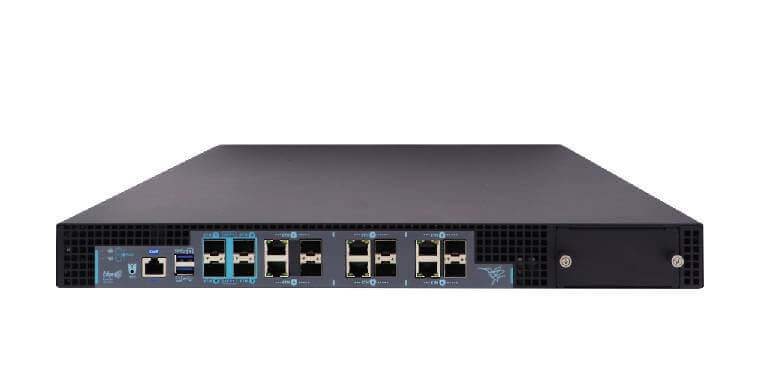
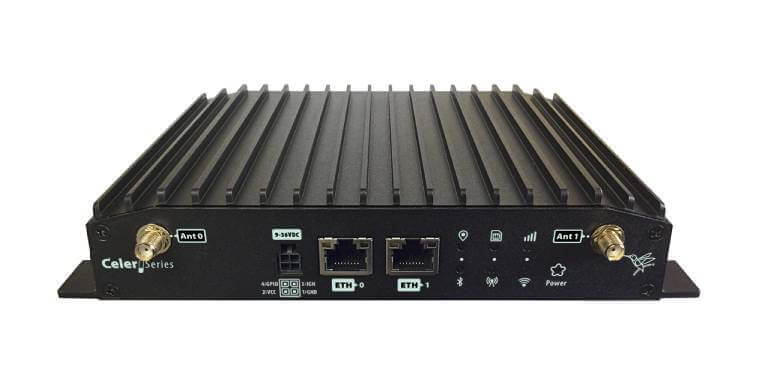
The Regesta Smart family includes industrial grade routers for every Smart Grid scenario. Regesta Smart PRO provides LTE, fiber optic, and Gigabit Ethernet connectivity for substations and control centers. Regesta Smart PLC integrates PLC PRIME base node capability to communicate directly with up to 2,000 smart meters, eliminating the need for separate PLC concentrators. Regesta Smart NESSUM uses broadband power line communication (BPL) to provide high speed connectivity over existing electrical wiring between substations and transformation centers, reducing infrastructure costs.
SCADA integration and protocol support
All Regesta Smart routers fully support SCADA telecontrol protocols including IEC 60870-5-101/102/104, Modbus, and DNP3 gateways. This enables utilities to connect legacy serial RTUs and IEDs (Intelligent Electronic Devices) to modern IP networks without replacing field equipment. The IEC 101 to IEC 104 gateway function built into the router OS bridges the gap between older serial devices and IP based control centers.
Embedded security for grid communications
The Regesta Smart family incorporates encryption, VPN protocols, firewall techniques, and access control directly in the router. Communications between substations, control centers, and metering infrastructure are secured with IPsec tunnels, and the firewall engine protects against unauthorized access. Integration with be.OT adds ICS specific IPS signatures and Network Traffic Analysis with AI for detecting anomalies in grid communication traffic.
SD-WAN and centralized management
Teldat’s Cloud Net Manager (CNM) and SD-WAN integration enable utilities to manage thousands of Regesta Smart devices from a single console. Zero Touch Provisioning (ZTP) allows new routers to be deployed at remote substations without sending IT personnel to each site. SD-WAN ensures optimal path selection across multiple communication links (fiber, LTE, PLC) and provides centralized security policy enforcement.
Teldat’s Smart Grid advantage: As a network hardware manufacturer with over 40,000 Smart Grid devices deployed, Teldat understands the operational reality of utility communications. The Regesta Smart family combines PLC PRIME, broadband PLC Nessum, LTE, fiber, and Ethernet in industrial grade routers with embedded security, SCADA protocol support, and SD-WAN management. This provides utilities with a single vendor ecosystem for communications, security, and management across the entire grid, from control centers to the last mile smart meter.
Frequently asked questions about Smart Grids (FAQ’s)
❯ What is a Smart Grid?
A Smart Grid is a modernized electrical network that uses digital communications, sensors, and automation to manage electricity generation, distribution, and consumption in real time. Unlike traditional grids, Smart Grids enable bidirectional energy flow, integration of renewable sources, demand response programs, and automated fault detection with self healing capabilities.
❯ How is a Smart Grid different from a traditional grid?
A traditional grid moves electricity in one direction from centralized power plants to consumers with limited monitoring. A Smart Grid adds bidirectional power flow (supporting solar and storage), digital sensors and smart meters throughout the network, real time monitoring via SCADA, and communication networks connecting every element from substations to consumer meters.
❯ What communication technologies do Smart Grids use?
Smart Grids use PLC and broadband PLC for smart metering, LTE and 5G for remote substations, fiber optics for backbone connections, and IP protocols (IEC 104, DNP3, Modbus) for SCADA telecontrol. A typical deployment combines multiple technologies managed through industrial grade routers.
❯ Why is cybersecurity important for Smart Grids?
Smart Grids connect millions of devices through communication networks not originally designed for security. A cyberattack can cause widespread outages, equipment damage, and safety incidents. Key threats include SCADA attacks, false data injection, legacy device exploitation, and nation state campaigns against energy infrastructure.
❯ What is Advanced Metering Infrastructure (AMI)?
AMI is the system connecting smart meters to utility management systems. It includes smart meters, communication networks (PLC, cellular), head end systems, and meter data management systems. AMI enables remote reading, real time monitoring, outage detection, and demand response.
❯ What are Distributed Energy Resources (DER)?
DER are small scale generation or storage systems near the point of consumption: rooftop solar, residential batteries, small wind turbines, and EV chargers feeding energy back to the grid. DER make the grid bidirectional and require Smart Grid communications to manage distributed generation in real time.
Power your Smart Grid with Teldat
The Regesta Smart family delivers PLC, broadband PLC, LTE, and fiber connectivity with embedded security, SCADA protocol support, and SD-WAN management for Smart Grid networks. Over 40,000 devices deployed.