

● Cybersecurity Glossary
What is Industrial IoT (IIoT)?
Industrial IoT (IIoT) is a network of intelligent sensors, actuators, edge gateways, and communication infrastructure that connects industrial equipment to data analytics and control systems. IIoT extends the Internet of Things to manufacturing, energy, transportation, and other industrial sectors, enabling real time monitoring, predictive maintenance, process optimization, and remote management. Sitting at the intersection of Operational Technology (OT) and Information Technology (IT), IIoT is the foundational technology that makes Industry 4.0 possible. With over 18 billion connected IoT devices worldwide and projections reaching 40 billion by 2030, securing IIoT infrastructure has become one of the defining challenges of industrial cybersecurity.
IIoT definition and how it differs from consumer IoT
Industrial IoT (IIoT) refers to the use of interconnected sensors, instruments, actuators, and other devices networked together with industrial applications to collect, exchange, and analyze data. The goal is to improve operational efficiency, enable predictive maintenance, optimize production processes, and support data driven decision making in industrial environments. IIoT ecosystems consist of connected devices that sense, communicate, and store information about themselves; public and private communication infrastructure; analytics and applications that generate business information from raw data; and storage systems for the data that IIoT devices generate.
The term is sometimes used interchangeably with IoT, but there are important differences. Consumer IoT connects devices like fitness trackers, smart home appliances, and connected vehicles, with the primary focus on user experience and convenience. IIoT connects industrial machines, sensors, and control systems in sectors like manufacturing, energy, transportation, oil and gas, mining, and utilities. The stakes are fundamentally different.
When a consumer IoT device fails, the consequence is inconvenience. When an IIoT system fails, the consequence can be equipment damage, production downtime costing thousands per hour, environmental contamination, or loss of human life. This difference in consequence drives every aspect of IIoT design: higher reliability requirements, stricter real time performance, ruggedized hardware for harsh environments, and security approaches that prioritize availability and physical safety over data confidentiality.
| Dimension | Consumer IoT | Industrial IoT (IIoT) |
|---|---|---|
| Primary focus | User experience and convenience | Operational efficiency, safety, and reliability |
| Failure impact | Inconvenience | Equipment damage, production loss, safety risk |
| Environment | Home, office, personal | Factory floor, field sites, vehicles, harsh conditions |
| Latency requirements | Tolerant (seconds acceptable) | Critical (milliseconds for control loops) |
| Device lifecycle | 2 to 5 years | 15 to 25+ years |
| Security priority | Privacy and data protection | Availability, physical safety, then data integrity |
| Scale | Millions of diverse consumer devices | Thousands of specialized industrial devices per site |
| Protocols | Wi-Fi, Bluetooth, Zigbee, HTTP | Modbus, Profibus, EtherNet/IP, OPC UA, MQTT |
IIoT architecture: sensors, edge, connectivity, cloud
A professional IIoT solution is built on four functional layers. Each layer must be industrial grade to meet the reliability, safety, and security requirements of operational environments:
The four layer model in practice: A vibration sensor on a motor (Layer 1) sends readings to an edge gateway (Layer 2) that detects an anomaly locally and triggers an immediate alert. The gateway transmits filtered data over LTE (Layer 3) to a cloud analytics platform (Layer 4) that compares the anomaly against historical patterns and predicts that the motor bearing will fail within 72 hours. The maintenance team receives a work order before the failure occurs. This is predictive maintenance, and it is the single most common IIoT use case.
Edge computing in IIoT
Edge computing is the practice of processing data closer to where it is generated rather than sending everything to the cloud. In IIoT, the edge is the gateway or computing device that sits between the industrial sensors and the cloud platform. Three forces make edge computing essential in industrial environments:
Latency
A safety shutdown on a production line must happen in milliseconds. A round trip to a cloud data center takes hundreds of milliseconds at best. For any IIoT application that involves real time control, safety systems, or closed loop automation, the cloud is too far away. Edge gateways execute control logic locally, processing high frequency sensor data and triggering actions without waiting for a network round trip.
Bandwidth and cost
Streaming raw telemetry from thousands of sensors 24/7 over a cellular or satellite link generates massive data volumes and corresponding costs. Most of that data is steady state readings that add no value. Edge computing performs data deduplication and aggregation at the source, transmitting only change on threshold events or compressed summaries. Businesses typically see an 80% reduction in data backhaul costs when edge processing is properly implemented.
Resilience
In a cloud only architecture, an internet outage stops everything. In industrial environments, this is unacceptable. Edge computing provides operational autonomy: the local gateway continues processing data, executing control logic, and storing readings even when connectivity to the cloud is lost. When the connection is restored, buffered data synchronizes automatically. The production line never stops because of a network issue.
Edge computing and protocol translation: Edge gateways also solve the protocol gap between OT and IT. Legacy industrial equipment speaks Modbus, Profibus, or EtherNet/IP. Cloud platforms expect MQTT, HTTP, or JSON. The edge gateway translates between these worlds, enabling organizations to connect decades old equipment to modern analytics without replacing the equipment itself. This retrofitting capability is one of the most practical benefits of IIoT edge computing.
IIoT security challenges
IIoT expands the industrial attack surface dramatically. Every sensor, gateway, and communication link is a potential target. The security challenges specific to IIoT include:
The IIoT security imperative: IIoT devices account for a growing share of cyber attacks on industrial infrastructure. The convergence of IT and OT through IIoT creates attack paths that traditional security tools were not designed to handle. Effective IIoT security requires a layered approach: embedded security in the edge gateway, network segmentation between IIoT and enterprise IT, passive traffic monitoring with AI for anomaly detection, and unified IT/OT security management.
Teldat OT/IoT portfolio
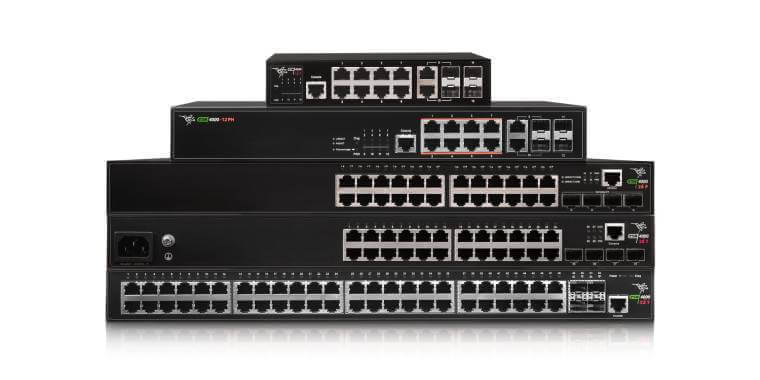
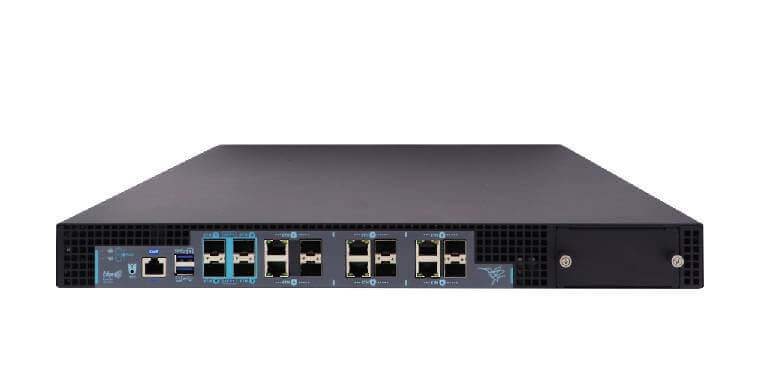
Teldat provides a comprehensive portfolio of hardware, software, and security solutions for industrial IoT and OT environments. From Smart Grid communications and railway connectivity to OT cybersecurity and centralized management, the portfolio covers the full IIoT stack:
Industrial connectivity: Regesta Smart and H5-Rail
The Regesta Smart family provides industrial grade routers for Smart Grid deployments, with PLC PRIME, broadband PLC (Nessum), LTE, fiber, and Ethernet connectivity. Over 40,000 devices deployed across utility companies. The H5-Rail and H5-Automotive platforms provide ruggedized connectivity for trains, trams, and vehicles, with 5G, LTE, Wi-Fi 6, and SD-WAN capabilities designed for vibration, temperature extremes, and continuous operation.
Cellular gateways for remote IIoT
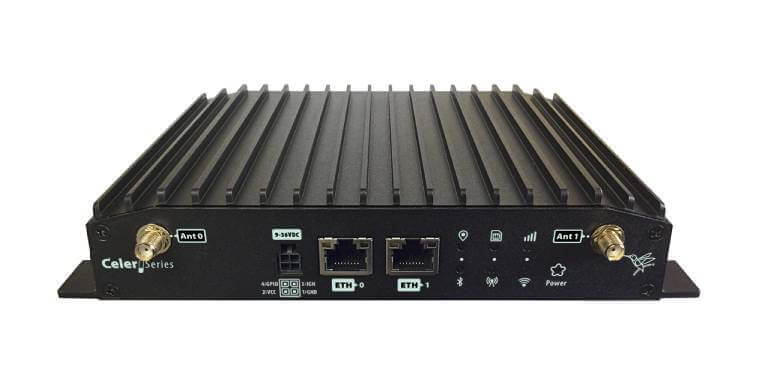
Teldat’s cellular gateways provide 4G LTE and 5G connectivity for remote and mobile IIoT assets. Dual SIM redundancy, extended temperature range, and industrial grade enclosures make them suitable for substations, field sites, and unattended installations. These gateways support SCADA protocols (Modbus, IEC 104), VPN encryption, and firewall capabilities in a compact form factor.
OT security with be.OT
be.OT secures the OT/IIoT environment with four capabilities: automated asset discovery for visibility into every connected device, NGFW with over 1,000 ICS specific application controls and IPS signatures, Network Traffic Analysis with AI for anomaly detection (including zero day attacks and protocol abuse), and virtual patching for legacy devices that cannot be updated directly.
Unified management with SD-WAN and XDR
Teldat’s Cloud Net Manager (CNM) and SD-WAN platform manage distributed IIoT infrastructure from a single console. Zero Touch Provisioning deploys new devices without sending IT personnel to remote sites. be.Safe XDR correlates security events from IT endpoints, network traffic, cloud services, and OT/IIoT telemetry, providing unified threat detection and automated response across the entire converged environment.
The Teldat IIoT advantage: As a network hardware manufacturer and cybersecurity provider, Teldat delivers IIoT connectivity and security from the same ecosystem. Industrial grade routers, cellular gateways, embedded security, OT specific threat detection, and centralized management are integrated rather than bolted together from different vendors. This reduces complexity, eliminates gaps between tools, and adapts to the specific requirements of each industrial vertical, from energy and transportation to manufacturing and critical infrastructure.
Frequently asked questions about Industrial IoT – (FAQ’s)
❯ What is Industrial IoT (IIoT)?
IIoT is a network of sensors, actuators, edge gateways, and communication infrastructure that connects industrial equipment to data analytics and control systems. It enables real time monitoring, predictive maintenance, process optimization, and remote management in sectors like manufacturing, energy, transportation, and utilities.
❯ What is the difference between IoT and IIoT?
IoT connects consumer devices and focuses on user experience. IIoT connects industrial machines and control systems. IIoT systems must meet stricter requirements for reliability, real time performance, physical safety, and security because failures can result in equipment damage, environmental harm, or loss of life.
❯ What is edge computing in IIoT?
Edge computing processes data locally on gateways near industrial equipment rather than sending everything to the cloud. This reduces latency for time critical decisions, lowers bandwidth costs by transmitting only filtered data, and provides operational resilience when cloud connectivity is lost. Edge gateways also translate legacy OT protocols to cloud friendly formats.
❯ What connectivity technologies does IIoT use?
IIoT uses cellular (4G, 5G) for remote sites, Wi-Fi for indoor factories, Ethernet and fiber for high bandwidth connections, PLC for smart grid metering, LoRaWAN for long range low power sensors, and industrial fieldbus protocols (Modbus, Profibus, EtherNet/IP) for equipment communication.
❯ Why is IIoT security different from IT security?
IIoT devices have long lifecycles and often cannot be patched. Many sensors have limited computing power for encryption. Industrial protocols lack built in authentication. Active scanning can crash field devices. Security incidents can cause physical damage. IIoT security requires network segmentation, passive monitoring, virtual patching, and edge security enforcement.
❯ What is Industry 4.0 and how does IIoT relate to it?
Industry 4.0 is the vision of fully digitalized, intelligent manufacturing. IIoT is the foundational technology that makes it possible by connecting physical machines to digital systems. Without IIoT sensors, edge gateways, and communication networks, the data driven automation and AI powered optimization that define Industry 4.0 would not exist.
Connect and protect your Industrial IoT with Teldat
From Regesta Smart for Smart Grids to be.OT for OT security and be.Safe XDR for unified threat detection, Teldat delivers IIoT connectivity and cybersecurity from a single integrated ecosystem.