
Logo Teldat

• Cybersecurity Glossary

What is European Digital Sovereignty?

European Digital Sovereignty is the capacity of the EU, its member states and their organizations to exercise full control over their own data, digital infrastructure and technology stack under European law, free from structural dependence on non EU technology providers. Driven by regulations including GDPR, NIS2, the Data Act and DORA, it addresses the growing risk that extraterritorial laws and geopolitical pressures expose European data and operations to foreign jurisdiction. For organizations managing critical network infrastructure, cloud services and cybersecurity, Digital Sovereignty has moved from a policy concept to an operational requirement.

European Digital Sovereignty definition

European Digital Sovereignty refers to the ability of the European Union and its organizations to govern their own digital domain: the data they generate, the infrastructure they rely on, the software they operate and the technology supply chains they depend on. It means that decisions about how European data is stored, processed, accessed and protected are made under European law and by European institutions, not by foreign governments or corporations subject to extraterritorial jurisdiction.

The concept gained urgency after the Snowden revelations of 2013, the invalidation of the EU US Privacy Shield by the Schrems II ruling in 2020, and the growing dominance of non EU cloud and AI providers across European markets. By 2025, an estimated 65% of European cloud services were provided by three US based companies, and more than 90% of data generated in Europe was managed by foreign firms. The EU responded with a regulatory and industrial strategy that treats digital independence as a matter of economic resilience, democratic governance and national security.

Unlike protectionism, European Digital Sovereignty does not seek isolation. The November 2025 Franco German Summit on European Digital Sovereignty defined the objective as strengthening independence “in an open manner,” maintaining international cooperation while reducing critical dependencies that expose European citizens, businesses and governments to foreign legal compulsion, supply chain disruption or surveillance risk.

The six pillars of Digital Sovereignty

Digital Sovereignty is not a single regulation or technology. It is a strategic framework built on six interconnected pillars, each addressing a different dimension of European digital independence.

1
Data governance and protection
Control over personal and non personal data under EU law. GDPR governs personal data with strict rules on consent, cross border transfers and breach notification. The Data Act extends governance to industrial and non personal data, prohibiting unauthorized third country access to data stored or processed in the EU.
2
Cloud and infrastructure autonomy
Reducing dependence on non EU cloud providers whose parent companies may be subject to extraterritorial disclosure laws such as the US CLOUD Act. The EU Cloud and AI Development Act (CADA, expected 2026) aims to establish EU wide eligibility requirements for cloud services and encourage European sovereign cloud alternatives.
3
Cybersecurity and resilience
Protecting critical infrastructure through the NIS2 directive, which mandates risk management, incident reporting and supply chain security for organizations across 18 sectors. DORA adds operational resilience requirements for financial services. The Cyber Resilience Act extends security obligations into the software and hardware supply chain.
4
Artificial intelligence governance
The EU AI Act regulates AI systems by risk level, mandating conformity assessments for high risk applications and transparency for general purpose models. It represents the most comprehensive AI governance framework globally and ensures that AI deployed in Europe operates within European values and legal boundaries.
5
Semiconductor and hardware supply chains
The European Chips Act mobilizes over 43 billion euros by 2030 to increase EU semiconductor production capacity, reduce reliance on Asian fabrication and secure supply chains for the chips that power everything from network routers to industrial controllers.
6
Digital identity and public infrastructure
The European Digital Identity Wallet (EUDI Wallet), with a 2026 implementation deadline, provides a standardized, privacy preserving digital identification system under EU control, replacing dependence on commercial identity providers headquartered outside Europe.

Digital Sovereignty vs data residency

Data residency and Digital Sovereignty are frequently confused, but they address different problems. An organization can store data on EU servers and still have that data exposed to foreign jurisdiction if the cloud provider is subject to extraterritorial laws. The table below clarifies the distinction.

Dimension Data residency Digital Sovereignty
Definition The physical location where data is stored (e.g. servers in Frankfurt or Dublin) Full legal and operational control over data, infrastructure and technology under domestic jurisdiction
Legal protection Does not prevent foreign legal access if the provider is subject to extraterritorial laws Ensures data is governed by EU law and shielded from foreign compulsion orders
Scope Applies only to data storage location Covers data, cloud infrastructure, software, AI, semiconductors, identity systems and cybersecurity
US CLOUD Act exposure Data can reside in the EU but remain accessible to US authorities through US headquartered providers Sovereignty architectures ensure that no non EU legal authority can compel data disclosure
Regulatory alignment Partial: satisfies some GDPR transfer requirements Comprehensive: aligns with GDPR, NIS2, Data Act, DORA, AI Act and Cyber Resilience Act
Provider requirements Any provider with EU data centers Providers headquartered, operated and legally anchored within EU jurisdiction
Risk mitigation Reduces latency and some jurisdictional risk Addresses extraterritorial legal risk, supply chain dependence and geopolitical exposure
Certification Data center certifications (ISO 27001, SOC 2) Sovereign certifications such as EUCS (EU Cloud Certification Scheme), CPSTIC, ENS Alta

The practical implication: hosting data in an EU data center operated by a US headquartered provider does not guarantee sovereignty. The US CLOUD Act can compel disclosure of data held anywhere in the world by US based companies. True sovereignty requires that the entire technology stack, from infrastructure to management, operates under EU legal authority.

The EU regulatory framework

Digital Sovereignty in Europe is not a policy aspiration. It is enforced through a comprehensive legislative framework that mandates specific obligations for organizations operating across the EU. Each regulation addresses a different layer of the digital stack.

1
GDPR (General Data Protection Regulation)
The foundational regulation for personal data protection in the EU. Requires explicit consent for data processing, strict rules for cross border transfers and breach notification within 72 hours. The Schrems II ruling reinforced that transfers to countries without adequate protection require additional safeguards such as Standard Contractual Clauses. Fines reach up to 20 million euros or 4% of global annual revenue.
2
NIS2 (Network and Information Security Directive 2)
Effective since October 2024, NIS2 extends cybersecurity obligations to 18 critical sectors including energy, transport, healthcare, digital infrastructure and public administration. It mandates risk management, supply chain security, incident reporting within 24 hours and management accountability. Penalties reach 10 million euros or 2% of global turnover. NIS2 is the regulation that most directly connects cybersecurity and sovereignty for network operators.
3
Data Act
Applicable from 2025, the Data Act governs non personal and industrial data. It prohibits unauthorized third country access to data stored in the EU, mandates data portability between cloud providers and establishes fair access conditions for data generated by connected devices and IoT systems.
4
DORA (Digital Operational Resilience Act)
Effective from January 2025, DORA applies to financial entities including banks, insurers and investment firms. It requires organizations to prove their ICT systems are operationally resilient, auditable and accessible to EU regulators, creating strong incentives to use sovereign infrastructure providers.
5
Extends security obligations into the software and hardware supply chain. Manufacturers must ship products with secure default configurations, transparent update policies and prompt vulnerability patching. This shifts accountability for digital product security to the producer, reinforcing European control over the technology stack.
6
AI Act
The world’s first comprehensive AI regulation, classifying systems by risk level from unacceptable to minimal. High risk AI systems (deployed in healthcare, law enforcement, critical infrastructure) require conformity assessments, transparency documentation and human oversight. General purpose AI models face additional transparency and safety obligations.

Implementation challenges

The strategic intent behind European Digital Sovereignty is clear. Execution remains the hard part. Organizations planning their sovereignty transition need to account for the following constraints.

1
Scale of existing dependencies
European organizations spend an estimated 265 billion euros annually on non EU digital products and services. Three US based companies account for roughly 65% of the European cloud market. Replacing this infrastructure requires sustained investment over a decade or more, with realistic alternatives still maturing in areas such as hyperscale cloud and frontier AI models.
2
Regulatory fragmentation
While NIS2 and GDPR set EU wide standards, transposition into national law varies between member states. Some countries missed the October 2024 NIS2 transposition deadline, creating temporary compliance uncertainty for multinational organizations. Aligning overlapping requirements from GDPR, NIS2, DORA and the CRA adds complexity for compliance teams.
3
Talent and skills gap
Building sovereign digital infrastructure requires specialized expertise in cloud architecture, cybersecurity, AI engineering and semiconductor manufacturing. The EU faces a persistent shortage of qualified professionals in these fields, competing with US and Asian technology firms for global talent.
4
Balancing openness and autonomy
The EU must reduce critical dependencies without isolating itself from global innovation and trade. Overly restrictive procurement rules or certification requirements could slow adoption and raise costs, while insufficient enforcement leaves sovereignty objectives unmet. The Franco German 2025 declaration framed this as sovereignty pursued in an open manner.
5
Cloud certification delays
The European Cybersecurity Certification Scheme for Cloud Services (EUCS) has faced prolonged development. Only one EU certification scheme (EUCC) has been adopted so far. Until EUCS is finalized and widely adopted, organizations lack a harmonized standard for evaluating cloud provider sovereignty across member states.
6
Investment at scale
Achieving meaningful Digital Sovereignty requires what analysts describe as an investment supercycle. The European Chips Act targets 43 billion euros by 2030. The Digital Europe Programme received 1 billion euros in the 2026 EU budget. Whether these figures are sufficient to build competitive European alternatives in cloud, AI and semiconductors remains an open question.

Organizational roadmap

Moving toward Digital Sovereignty is a multi year effort that requires both strategic planning and practical execution. The steps below follow current EU regulatory guidance and can be started today regardless of whether broader European infrastructure initiatives like EUCS or CADA have been finalized.

1
Technology dependency audit
Map every non EU provider in your technology stack: cloud platforms, SaaS tools, security services, identity systems and network equipment. Identify which services are subject to extraterritorial laws and which data flows cross jurisdictional boundaries. This inventory drives prioritization for the migration.
2
Classify data by sensitivity and regulation
Not all workloads require the same level of sovereignty. Prioritize critical data flows subject to GDPR, NIS2 or DORA, traffic carrying national security or defense information, and data with long confidentiality horizons. Non sensitive workloads may remain on existing platforms while high risk systems migrate first.
3
Select sovereign infrastructure providers
Choose network, cloud and cybersecurity providers headquartered and legally anchored within the EU. Verify certifications such as CPSTIC, ENS Alta or ISO 27001, and confirm that no parent company or subsidiary is subject to extraterritorial disclosure obligations. Teldat, as a European network hardware manufacturer, provides SD-WAN and cybersecurity solutions under EU jurisdiction.
4
Deploy encrypted, centrally managed SD-WAN
Replace legacy WAN architectures with encrypted SD-WAN tunnels managed through a European platform. Centralized orchestration ensures consistent policy enforcement, traffic visibility and incident response across all sites. Teldat CNM SD-WAN Suite provides this capability with zero touch provisioning and API driven automation.
5
Implement SASE and Zero Trust access
Extend sovereignty beyond the WAN edge with cloud delivered security that operates under European jurisdiction. Secure Web Gateway, CASB, ZTNA and Next Generation Firewall capabilities should be integrated into a single platform. Teldat be.Safe Pro SSE delivers SASE with over 15,000 IPS signatures and 4,000 application decoders.
6
Monitor, audit and report
Establish continuous compliance monitoring aligned with NIS2 incident reporting timelines: 24 hours for initial notification, 72 hours for detailed assessment, one month for full incident report. Use AI powered threat detection and behavioral analytics across IT and OT environments. Teldat be.Safe XDR provides real time anomaly detection, UEBA and automated incident response.

Teldat sovereign network solutions

Teldat is a European network hardware manufacturer and cybersecurity software provider. Its entire product portfolio is designed, developed and operated under EU jurisdiction, making it a natural fit for organizations pursuing Digital Sovereignty. The following solutions address the network and security dimensions of sovereignty compliance.

1
CNM SD-WAN Suite
Centralized network orchestration for encrypted SD-WAN tunnels across all branch offices and remote sites. Provides visibility, segmentation, policy enforcement and zero touch provisioning from a single European managed platform. Deployed in Europe’s largest SD-WAN and XDR implementation at the Junta de Andalucia with 2,700 branches.
2
be.Safe Pro SSE
Teldat’s cloud delivered SASE platform combining Secure Web Gateway, CASB, ZTNA and Next Generation Firewall into a unified service. Over 15,000 IPS signatures, 84 browsing categories and 4,000 application decoders provide granular access control and threat prevention under EU jurisdiction.
3
be.Safe XDR
AI powered extended detection and response with personalized machine learning models. Provides real time anomaly detection in encrypted traffic, behavioral analytics and User Entity Behavior Analytics (UEBA) across both IT and OT environments. Supports NIS2 incident handling and effectiveness assessment requirements.
4
be.OT (OT Security)
Dedicated operational technology security for industrial networks, SCADA systems and critical infrastructure. Protects sectors covered by NIS2 such as energy, transport, water and manufacturing with network segmentation, protocol level inspection and anomaly detection purpose built for OT environments.
5
CPSTIC and ENS certification
Teldat holds both Qualified and Approved status in Spain’s CPSTIC Catalog (CCN/ENS) at the highest level (ENS Alta). This validates alignment with NIS2’s emphasis on certified, standards compliant technologies operated under European governance.
6
Embedded NGFW security
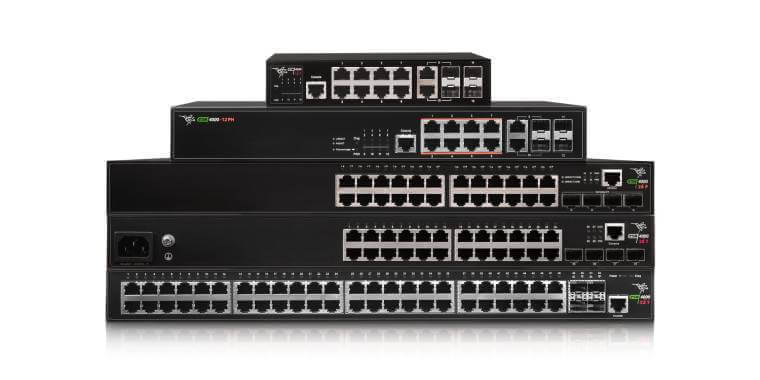
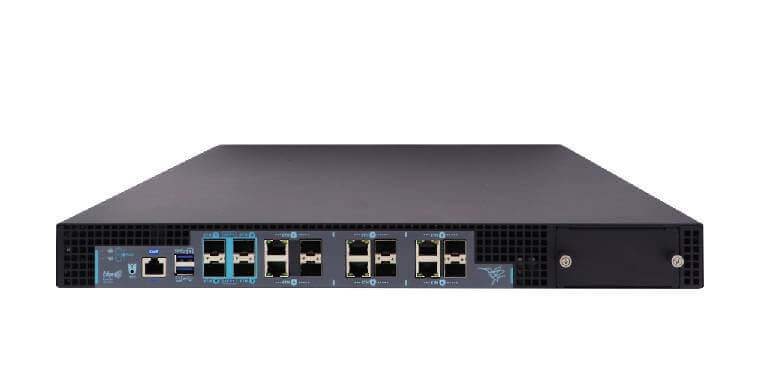
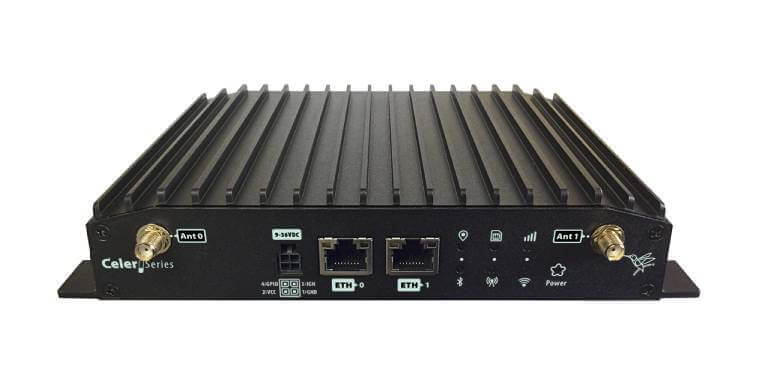
Teldat edge routers include embedded Next Generation Firewall capabilities providing intrusion prevention, application control and threat intelligence at each network node. Defense in depth at the network edge complements cloud delivered security and ensures consistent protection regardless of connectivity path.

The Teldat sovereignty advantage: as a European headquartered manufacturer, Teldat is not subject to extraterritorial disclosure laws such as the US CLOUD Act. Every component of the platform, from SD-WAN hardware to cloud delivered security and XDR analytics, operates under European legal authority. Organizations can build their sovereign network infrastructure on a single integrated platform without managing multiple vendor solutions or jurisdictional risks.

Frequently asked questions about European Digital Sovereignty – (FAQ’s)

❯ What is European Digital Sovereignty in simple terms?

European Digital Sovereignty is the ability of the EU and its organizations to maintain full control over their data, digital infrastructure and technology without relying on non European providers that operate under foreign laws. It covers data governance, cloud infrastructure, cybersecurity, artificial intelligence and semiconductor supply chains, and it is enforced through EU regulations such as GDPR, NIS2 and the Data Act.

❯ Why does Digital Sovereignty matter for European organizations?

European organizations depend heavily on non EU technology providers for cloud computing, collaboration tools and security services. Extraterritorial laws such as the US CLOUD Act can compel those providers to disclose data stored in the EU, bypassing European legal protections. Digital Sovereignty reduces this exposure by ensuring data, infrastructure and operations remain under EU jurisdiction and governance.

❯ Which EU regulations enforce Digital Sovereignty?

The main regulatory instruments include GDPR for personal data protection, NIS2 for cybersecurity of critical infrastructure, the Data Act for non personal and industrial data governance, DORA for digital operational resilience in financial services, the Cyber Resilience Act for software and hardware supply chain security, and the AI Act for trustworthy artificial intelligence. Together they form a comprehensive framework that mandates European control over digital assets.

❯ What is the difference between data residency and data sovereignty?

Data residency refers to the physical location where data is stored, for example on servers in Germany or Ireland. Data sovereignty is broader: it means having legal and operational control over that data, including who can access it and under which laws. Data can reside in the EU but still be subject to foreign jurisdiction if the provider is headquartered outside Europe and bound by extraterritorial disclosure laws.

❯ How does Teldat support Digital Sovereignty?

Teldat is a European network hardware manufacturer and cybersecurity provider. Its SD-WAN, SASE, XDR and OT security solutions are designed, developed and operated under European jurisdiction. Teldat holds CPSTIC certification at the highest ENS level in Spain and provides NIS2 aligned capabilities including encrypted SD-WAN tunnels, centralized network management through CNM, be.Safe Pro SSE for cloud delivered security, and be.Safe XDR for AI powered threat detection across IT and OT environments.

❯ What steps should organizations take toward Digital Sovereignty?

Start with a technology dependency audit to map all non EU providers, data flows and extraterritorial legal exposure. Then prioritize sovereign alternatives for the most sensitive workloads. Ensure NIS2 and GDPR compliance across your supply chain. Choose network and cybersecurity providers headquartered and operating under EU law. Adopt encrypted, centrally managed SD-WAN and SASE architectures that keep data inspection and policy enforcement within European jurisdiction.
Build sovereign network infrastructure with Teldat

From NIS2 compliant SD-WAN to SASE, XDR and OT security, Teldat delivers European cybersecurity from a single integrated platform, under EU jurisdiction and free from extraterritorial legal exposure.