

• Cybersecurity Glossary
SD-WAN vs MPLS: differences and when to migrate
MPLS (Multiprotocol Label Switching) is a carrier technology that forwards traffic along predetermined label switched paths across a private operator backbone, delivering predictable performance with strong SLAs at a premium price. SD-WAN (Software Defined Wide Area Network) is an overlay architecture that builds encrypted tunnels over any transport (internet broadband, fiber, 4G/5G, and MPLS itself) and steers each application over the best available path in real time. The two are not direct substitutes: MPLS is a transport, SD-WAN is an intelligence layer above transports. The real question for most enterprises is not “which one” but “how much MPLS do we still need once SD-WAN is in place”. This page compares both across cost, performance, security and cloud readiness, and lays out the migration paths Teldat sees working in production networks.
What are MPLS and SD-WAN?
MPLS is a packet forwarding technology operated by carriers since the early 2000s. Traffic entering the operator network gets a label, and routers along the path forward it based on that label rather than on IP lookups, following an engineered path with reserved capacity. The result is a private WAN service with predictable latency, low jitter and contractual SLAs. The price of that predictability: MPLS circuits cost several times more per megabit than internet broadband, take weeks or months to provision, and every site’s traffic is backhauled through the carrier network even when its destination is a cloud service reachable directly.
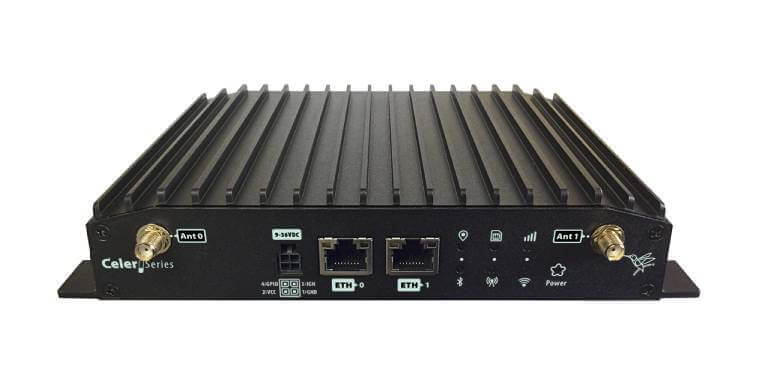
SD-WAN is not a circuit. It is a software layer that sits on edge devices at each site, builds encrypted overlay tunnels across whatever transports are available, measures loss, latency and jitter on each path continuously, and steers each application over the path that meets its requirements at that moment. A video call can ride the MPLS circuit while bulk backup traffic takes broadband; if the broadband degrades, traffic shifts in seconds without dropping sessions.
The practical consequence: SD-WAN turns transport into a commodity decision. Once the overlay handles encryption, path selection and failover, the underlying circuit can be MPLS, fiber internet, cable or 5G FWA, chosen per site on price and availability rather than on a single carrier’s footprint. That is what makes the migration question an economic one rather than a purely technical one.
Key technical differences
MPLS and SD-WAN differ in where the intelligence lives, who controls it and what you pay for. The six differences below are the ones that actually drive migration decisions, beyond the marketing simplifications.
SD-WAN vs MPLS: side by side
The table below contrasts MPLS and SD-WAN across the dimensions that matter in a WAN procurement or renewal decision. Note that the comparison is between an MPLS only WAN and an SD-WAN over mixed transports; a hybrid of the two (SD-WAN using a retained MPLS circuit where it earns its cost) inherits the best column of each row.
| Dimension | MPLS | SD-WAN |
|---|---|---|
| What you buy | Private circuit service from a carrier, per site | Overlay software and edge devices over any transport |
| Cost per megabit | High; premium for engineered private capacity | Low; commodity broadband, fiber or FWA per site |
| Typical provisioning time | Weeks to months per circuit | Days; ZTP over existing or cellular transport |
| Latency and jitter | Excellent and contractually guaranteed | Very good on quality transports; managed per app by the overlay |
| SLA model | Carrier SLA per circuit | Architecture based availability via multi path failover |
| Cloud and SaaS access | Backhauled through central breakout; added latency | Local breakout per site with SSE security; direct path |
| Bandwidth scalability | Tiered upgrades through the carrier, with lead time | Add or upgrade transports per site, on market terms |
| Encryption | Private by separation, not encrypted by default | All overlay traffic encrypted end to end by default |
| Visibility and control | Carrier portal and periodic reports | Per application, per path telemetry in real time |
| Best fit | Sites with strict latency contracts and stable traffic to private data centers | Cloud first organizations, distributed sites, fast changing footprints |
The hybrid answer is the honest answer. Very few enterprises rip out every MPLS circuit on day one, and very few should. The pattern that works: deploy SD-WAN across all sites first, using existing MPLS as one of the transports. Then let the telemetry show which circuits still earn their premium (usually a handful of latency critical sites) and let every other contract lapse into broadband plus FWA. Teldat CNM SD-WAN Suite manages MPLS, internet and 5G transports as equals in one overlay, which is what makes this gradual approach operationally clean.
The cost equation in detail
The business case for migration is usually framed as “SD-WAN is cheaper”, which is true but incomplete. The real cost equation has six terms, and two of them can surprise in the wrong direction if they are not planned. Here is where the money actually moves.
When to migrate or not?
Migration timing is a per site decision, not a binary corporate one. The six signals below separate the sites that should move first from the ones where keeping MPLS, at least for now, is the defensible choice.
Migration paths that work in practice
There is more than one way to get from an MPLS WAN to an SD-WAN. The six patterns below are the ones Teldat sees working in real enterprise migrations, ordered roughly from most conservative to most aggressive.
How Teldat runs the transition?
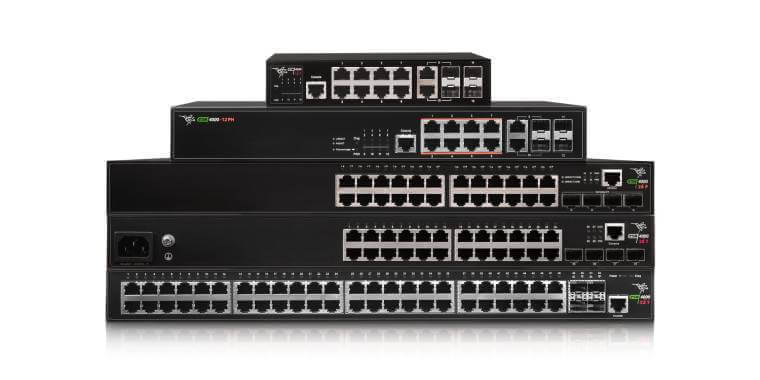
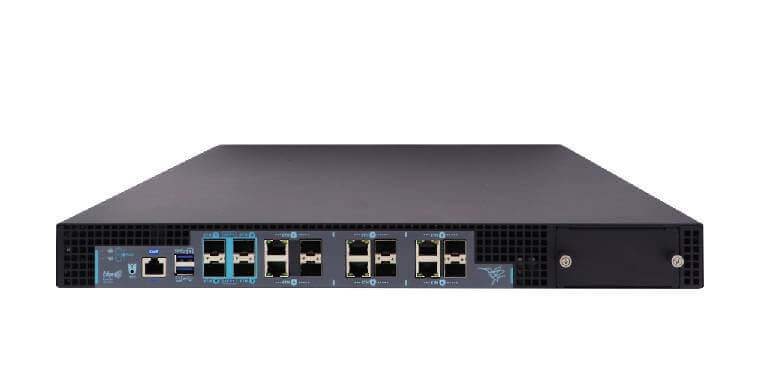
Teldat has been building enterprise WAN equipment for over 35 years and runs some of the largest SD-WAN deployments in Europe. The CNM SD-WAN Suite was designed for exactly the scenario this page describes: networks that start on MPLS, move through a hybrid phase and end on diverse internet transports, without changing platform at any point along the way.
Migration without a platform bet: the riskiest part of leaving MPLS is usually not the circuits, it is committing to an overlay platform before knowing how the network behaves on internet transports. The Teldat approach removes that bet. Deploy the CNM SD-WAN Suite over the MPLS you already have, gather real per application telemetry, and make every circuit decision afterwards with evidence. The platform, the policies and the security stack stay identical from the first hybrid site to the last full internet one.
Frequently asked questions about SD-WAN vs MPLS
❯ What is the difference between SD-WAN and MPLS?
MPLS is a carrier transport service: a private circuit with engineered paths and contractual SLAs, priced at a premium per megabit. SD-WAN is a software overlay that runs on edge devices and steers application traffic across any mix of transports (broadband, fiber, 4G/5G, and MPLS itself) based on real time path quality. They operate at different layers, which is why an SD-WAN can use an MPLS circuit as one of its transports during and after a migration.
❯ Is SD-WAN cheaper than MPLS?
Per megabit, yes, usually by a factor of 3 to 10, because SD-WAN rides commodity broadband and FWA instead of engineered private circuits. The full picture includes the edge devices and licenses SD-WAN adds, and the branch firewalls, VPN concentrators and proxies it removes. Most enterprises end up with several times more bandwidth at flat or lower total WAN spend after migrating.
❯ Does SD-WAN replace MPLS completely?
It can, but it does not have to. Many enterprises keep a reduced MPLS footprint at sites with strict latency requirements toward private data centers, while all other sites run on internet and 5G FWA transports. SD-WAN manages both kinds of sites in one overlay with the same policies, so the MPLS question becomes a per site economics decision rather than an architecture decision.
❯ When should a company migrate from MPLS to SD-WAN?
The strongest migration signals are: most traffic going to cloud and SaaS rather than to a private data center, MPLS contracts approaching renewal, sites waiting weeks for circuit provisioning, and WAN costs limiting the bandwidth the business needs. The cleanest approach migrates in waves aligned with circuit renewal dates, using telemetry from early waves to validate the harder sites.
❯ Is SD-WAN as reliable as MPLS?
Differently reliable. MPLS reliability comes from a carrier SLA on a single engineered circuit. SD-WAN reliability comes from architecture: two or more diverse transports with sub second failover, FEC and packet duplication for sensitive applications. A site with broadband plus 5G FWA under SD-WAN routinely achieves higher measured availability than a single MPLS circuit, because the two paths fail for unrelated reasons.
❯ How does Teldat support MPLS to SD-WAN migration?
The Teldat CNM SD-WAN Suite runs MPLS, internet and 4G/5G FWA as equal transports in one overlay, so migration can start on existing circuits and move to internet transports per site, in waves, with no platform change. Zero Touch Provisioning activates sites in minutes, embedded NGFW and be.Safe Pro SSE secure local breakout from day one, and CNM Visualizer provides the per application telemetry that drives each circuit decision with evidence.
Plan your MPLS to SD-WAN migration with Teldat
The CNM SD-WAN Suite runs MPLS, internet and 5G FWA as equal transports, with embedded NGFW, be.Safe Pro SSE and per application telemetry to guide every circuit decision. Proven at 2,700 sites in Europe’s largest SD-WAN and XDR deployment.