

Centralized Network Management with SDLANet Manager
Centralized platform for managing LAN and WLAN networks, simplifying the operation, monitoring, and control of wired and wireless infrastructures from a single view.
Total network control from a single point
- Centralized management of LAN and WLAN networks
- Full visibility of wired and wireless networks
- Simplified provisioning and configuration
- Consistent application of network policies
- Reduction of operational costs and errors




Enterprise LAN and WLAN Management

Traditional management models, based on manual configurations and isolated tools, do not provide the visibility or control required to operate these networks securely and reliably. The lack of a unified view of wired and wireless networks increases configuration errors, complicates incident resolution, and drives up operational costs.
In this context, centralized LAN and WLAN management has become a fundamental requirement for organizations. Modern management platforms simplify day-to-day operations, enable consistent policy enforcement, and allow network monitoring from a single point of control.
Efficient LAN and WLAN management not only improves network stability and performance, but also allows IT teams to focus on strategic initiatives, reducing operational workload and enhancing service continuity.
What are the important points related to SDLANet Manager Solution?

Unified network visibility
Centralized management provides a comprehensive view of the status, performance, and availability of LAN and WLAN networks from a single control platform.

Consistent policy control
Network and access policies are applied consistently across the entire LAN and WLAN infrastructure, ensuring operational control and compliance.

Simplified IT operations
Automation and centralized provisioning reduce manual tasks, configuration errors, and deployment times across both wired and wireless networks.

Scalability without complexity
Network management platforms must scale easily alongside infrastructure growth without increasing operational complexity.
What centralized LAN and WLAN management delivers

In traditional environments, LAN and WLAN networks are often managed using separate tools or through manual configurations on individual devices. This fragmented model limits global visibility, increases the risk of errors, and complicates consistent policy enforcement.
A centralized management platform unifies wired and wireless network operations, providing real-time insight into network status, performance, and availability. This enables early detection of issues and proactive problem resolution.
In modern enterprise networks, where Wi-Fi plays a critical role and the LAN remains the foundation of connectivity, unified LAN and WLAN management is essential to ensure operational continuity, security, and efficiency.
Teldat SDLANet Manager Solution & Product
The platform simplifies remote provisioning and configuration of switches and Wi-Fi access points, reducing deployment times and eliminating complex manual configurations. Its centralized approach allows network policies to be applied consistently across the entire LAN and WLAN infrastructure.


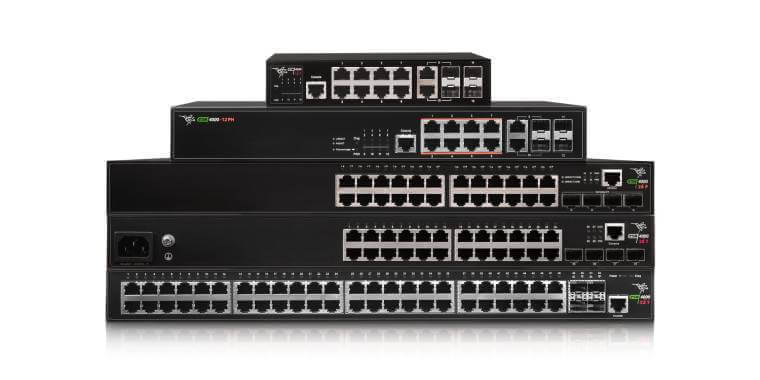
Integration with Teldat’s switching and Wi-Fi ecosystem consolidates wired and wireless network operations into a single tool, simplifying management and reducing the operational burden on IT teams.
With SDLANet Manager, Teldat provides a solution focused on improving operational efficiency, increasing network control, and ensuring the structured evolution of LAN and WLAN infrastructures.
SDLANet Manager Solution Use Cases

Centralized LAN & WLAN Management
Centralized management of switches and Wi-Fi access points in organizations with multiple distributed locations.

IT Operations with Limited Resources
Simplified network management for small IT teams through centralized provisioning and control.

Network Service Visibility and Control
Continuous monitoring of LAN and WLAN network status and performance to ensure service quality.
Centralized LAN & WLAN Management
Challenge
Solution

Why Teldat?
IT Operations with Limited Resources
Challenge
Solution

Why Teldat?
Network Service Visibility and Control
Challenge
Solution

Why Teldat?
Read our latest Blog Posts

Understanding the technology behind heat pipes
Heat pipes transfer heat on electronic devices & industrial applications, using the heat transition principle, to transfer to heat sinks within a cooling system. Heat pipes have clear advantages over other heat dissipation methods. What are heat pipes? Heat pipes...

The importance of sequencing power domains in electronics
There is a clear trend in the electronics industry for integration, allowing for more compact and efficient designs. More and more, electronics manufacturers are making their chips smaller, including more components within their chips and extending the feature range....

Improving device reliability and redundancy
In a previous article we looked at how to mathematically calculate the reliability of electronic equipment. That is, the probability of it working correctly for a given period of time. This is best characterised by the Mean Time Between Failure (MTBF), or its...