

Take control of the operator network
Your SD-WAN negotiates with the mobile operator in real time: guaranteed network quality when you need it, password-free identity verification and GPS-free location. Centralized, automatic decisions.
The controller talks to the operator

The SD-WAN controller consumes Open Gateway’s standardized network APIs to orchestrate mobile operator capabilities across the entire network. Centralized, intelligent and automatic decisions over hundreds of sites:
- On-demand quality of service activated from the controller based on network policies.
- Identity verification and SIM fraud detection built into network management.
- Location based on the operator network, with no GPS dependency on the devices.
- Centralized orchestration: a single API integration to manage hundreds of sites.
- Open CAMARA standard backed by the GSMA and more than 80 operator groups.




Networks open up to applications

Telecommunications networks have historically been closed infrastructures. Enterprises could contract connectivity, but could not access the network’s internal capabilities: traffic prioritization, location information, subscriber identity verification or fraud detection.
This limitation is disappearing. The Open Gateway initiative, led by the GSMA with more than 80 operator groups representing 80% of the world’s connections, has standardized access to network capabilities through open APIs under the CAMARA framework. For the first time, applications can request guaranteed quality of service, verify the identity of a mobile user or determine the location of a device through universal programmatic interfaces.
The impact goes beyond connectivity. Sectors such as banking, logistics, healthcare and industry are already integrating these APIs: financial institutions verify millions of transactions each month against SIM fraud, logistics operators validate driver identity in real time, and emergency services secure critical connectivity through dynamic reservation of network resources.
For enterprises with distributed networks, the challenge is not only accessing these APIs, but orchestrating them coherently across all their sites and devices. An SD-WAN controller with full topological visibility of the network is the natural point to make those decisions: it knows which sites use mobile connectivity, which applications need priority and when link quality degrades.
Key points for Open Gateway Solution

Network quality on demand
The SD-WAN controller requests a guaranteed connectivity profile from the operator for the sites that need it: low latency, reserved bandwidth or traffic priority. The network adapts in real time to the demands of the business.

Network-verified identity
The mobile operator automatically verifies the user through their SIM, with no passwords or SMS codes. The APIs detect fraudulent SIM card swaps and validate identity data against the operator’s records in real time.

Location without GPS dependency
The operator network confirms whether a device is in a given location using antenna triangulation. It works indoors and in environments where GPS is unavailable, providing a reliable source of location.

Intelligent, centralized orchestration
The SD-WAN controller consumes the APIs with full visibility of the network: it knows which sites use a mobile link, which applications need priority and when to activate or deactivate operator capabilities. One integration, hundreds of sites.
Understanding network APIs (Open Gateway)
Network APIs, known under the GSMA’s Open Gateway initiative, represent the opening up of the internal capabilities of telecommunications networks to enterprise applications. Functions that remained closed inside the operator’s infrastructure, such as traffic prioritization, identity verification, network-based location or fraud detection, are exposed in a standardized way so that any system can consume them.
From closed circuit to open platform
Traditionally, mobile networks offered an opaque service. The operator provided a link and the enterprise consumed it with no possibility of programmatic interaction. If an application needed low latency or identity verification, it had to meet those needs without access to the capabilities the network itself already possessed.
The CAMARA standard, developed by the Linux Foundation, TM Forum and the GSMA, defines a catalog of APIs that expose these capabilities uniformly. A single API call works with any participating operator, eliminating bilateral integrations with each network.
Capability families
The APIs are organized into four families:
- Quality of service on demand (QoD): a connectivity profile is requested with guaranteed latency, jitter and throughput parameters for a specific device over a defined period. In 5G networks, it is implemented through Network Slicing, reserving dedicated network resources.
- Identity and security: automatic verification of the phone number associated with the device (no SMS or OTP), detection of SIM swaps indicative of fraud, validation of the holder’s identity data and age verification. All based on information the operator already holds about the subscriber.
- Location: confirmation that a device is within a defined geographic radius, using the operator’s antenna infrastructure. It works indoors and in dense urban areas, and is not susceptible to GPS spoofing.
- Integrated payments (Carrier Billing): billing of digital purchases directly to the operator account, with no credit card details.
Adoption and scale
More than seventy operator groups, representing 80% of the world’s connections, take part in the initiative. More than 300 networks have launched commercial services across 65 markets (with over 300 instances of 20 CAMARA APIs commercially deployed). The CAMARA project brings together hundreds of organizations. This scale ensures that an integration built once is valid for multiple operators and geographies.
Who consumes the APIs?
The APIs can be consumed by any authorized system. A mobile app, a Cloud platform or a network controller. For enterprises with distributed infrastructures, the greatest value is achieved when the SD-WAN controller itself consumes the APIs, because it has full visibility of the topology, knows the state of each link and can make contextual decisions. Hence, activating QoD only where and when it is truly needed.

Solution & Teldat Products
Teldat and Open Gateway: SD-WAN Solution
Teldat integrates Open Gateway’s network APIs into its SD-WAN controller, enabling be.SDWAN Controller to consume operator APIs directly in order to orchestrate advanced network capabilities across the customer’s entire distributed infrastructure.
be.SDWAN Controller intelligent consumption of Network APIs
be.SDWAN Controller is the single point of integration with Open Gateway. Consuming the APIs from the controller (rather than from each CPE) delivers decisive architectural advantages:
- Full topological visibility: the controller knows all sites, all links, their real-time state and the applications running over each one. It decides when and where to activate QoD. If a site enters into 4G failover with an active video conference, this requests premium quality. However if the fiber is working, it does not activate QoD and saves cost.
- A single API integration: one registration in the operator’s Partner Program, a single set of OAuth 2.0 credentials to manage. The controller calls the QoD API specifying the identifier of the firewall that needs premium quality. Without touching the CPE firmware.
- Data-model-based policies: the data model already defines policies by application, site and link type. The QoD dimension is configured as just one more policy: For example, telemedicine sites with a mobile link as primary, request a low-latency profile.
- Multi-operator: in deployments with sites in different countries or with different operators, the controller manages the credentials of each one and calls the correct API based on each firewalls’s SIM. However, CAMARA APIs are standard. The call is identical regardless of the operator.

be.Analyzer: Monitoring and justification

be.Analyzer monitors the performance of mobile links and correlates the metrics with QoD activation. It makes it possible to detect degradation so the controller activates QoD automatically, measure the before/after impact and deactivates QoD when it is no longer needed.
be.Manager: Installed base administration
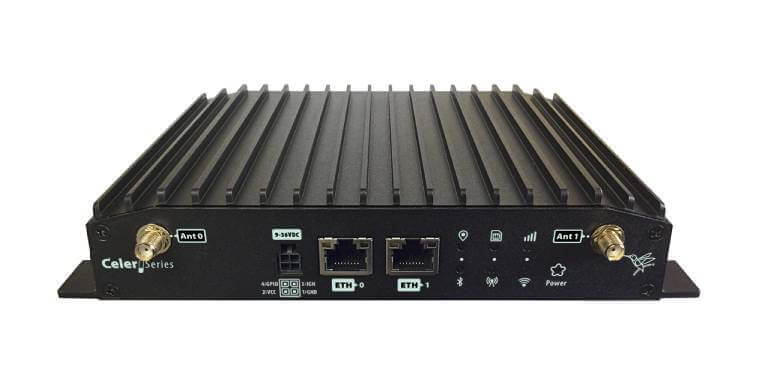
be.Manager manages the lifecycle of SD-WAN firewalls with native 4G/5G connectivity: inventory, ZTP, firmware and SIM management. It provides the controller with information on which SIM each firewall holds so that API reference calls are for the correct device.
Integration with security
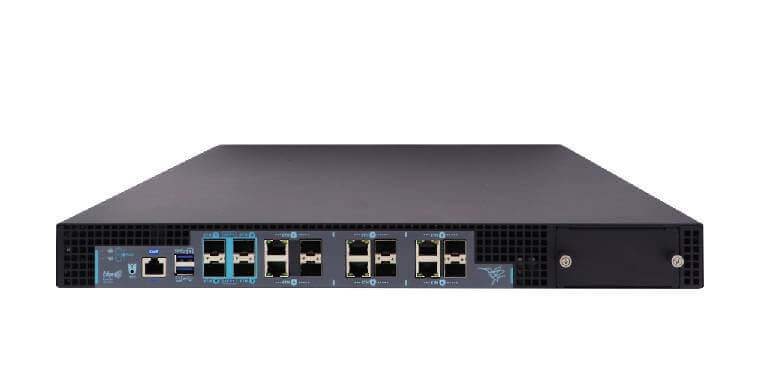
Open Gateway’s identity APIs (Number Verification, SIM Swap) complement be.Safe Pro and be.Safe XDR with operator signals. It detects suspicious SIM swaps in infrastructure firewalls or verifies the integrity of mobile connectivity. Key differentiators:
- Consumption from the controller: no SD-WAN vendor consumes CAMARA APIs from the controller with full topological visibility.
- Contextual activation: QoD is activated only where and when it is needed, optimizing cost.
- No CPE modification: the integration sits in the controller, the firewalls require no changes.
- Complete ecosystem: the same platform that manages SD-WAN, LAN, WLAN and security, orchestrates the Open Gateway APIs.
Open Gateway Solution – Use cases

Critical fleets with guaranteed quality
Security, cash-in-transit or roadside assistance vehicles with network quality activated automatically when the controller detects degradation.

Multi-WAN sites with quality on demand
Premium quality activated automatically when the SD-WAN policy routes a critical application over the 5G link, whether primary or backup.

Fleets and logistics with verification
Network location and driver identity verification orchestrated from the controller across the entire fleet.
Critical fleets with guaranteed quality
Security, cash-in-transit or roadside assistance vehicles with network quality activated automatically when the controller detects degradation.
Challenge
Critical vehicle fleets such as security, cash-in-transit, roadside assistance or emergency services, rely on mobile connectivity to transmit live video, telemetry and voice communications in real time. These transmissions are essential to operations. Losing the video feed from a security camera or dropping an emergency communication can have serious consequences.
However, standard mobile networks do not guarantee quality of service. In congested areas or those with limited coverage, the vehicle’s traffic competes with that of thousands of users, causing micro-outages, variable latency and packet loss. Managing premium quality activation, vehicle by vehicle manually is unfeasible in fleets with tens or hundreds of units.
Solution

The SD-WAN controller monitors the mobile link quality of each vehicle in the fleet. When it detects that latency or jitter exceed the configured thresholds on a firewall with active critical applications (video, voice, telemetry), it automatically requests a QoD profile for that device from the operator through the Quality on Demand API.
The policies define which applications justify activation and which thresholds trigger it. When link quality recovers, the controller deactivates QoD. Centralized monitoring records the metrics before and after to verify the impact.
Why Teldat?
be.SD-WAN Controller consumes Open Gateway’s QoD API with visibility across the entire fleet. It activates premium quality only on vehicles with real degradation and deactivates it on recovery. Teldat offer firewalls with native 5G, centralized management from CNM and automatic cost optimization.
Multi-WAN sites with quality on demand
Premium quality activated automatically when the SD-WAN policy routes a critical application over the 5G link, whether primary or backup.
Challenge
Organizations with distributed sites operate with multi-WAN architectures that combine fiber and 5G connectivity. At many sites the mobile link is the primary one because fiber does not reach them; at others it acts as a backup to ensure continuity. In both scenarios, critical applications such as video conferencing, ERP, POS or cloud access, need quality guarantees that standard mobile connectivity does not offer.
The problem arises when the SD-WAN policy decides to route one of these applications over the 5G link: due to a fiber outage, congestion or load balancing. At that moment, the critical traffic competes with the rest of the mobile network’s users without any prioritization. Managing premium quality activation site by site and application by application manually is unfeasible in networks with tens or hundreds of locations.
Solution

The SD-WAN controller knows at all times which applications run over each link at each site. When its routing policy directs a priority application toward the 5G link, whether because it is the primary link, because a failover has occurred or due to load balancing, it automatically requests a QoD profile for that device from the operator through the CAMARA API.
Activation is contextual. Premium quality is requested only when a critical application actually uses the mobile link. When the application returns to fiber or stops being active, the controller deactivates QoD, optimizing cost.
Why Teldat?
be.SD-WAN Controller activates QoD based on per-application routing decisions, not just link state. A single API integration manages hundreds of sites. be.Analyzer measures the real impact of QoD and justifies the investment with objective data.
Fleets and logistics with verification
Network location and driver identity verification orchestrated from the controller across the entire fleet.
Challenge
Transport and logistics companies manage fleets of vehicles equipped with mobile firewalls that provide connectivity and telemetry in transit. These operations face two challenges that traditional connectivity does not solve: reliable verification of driver identity and accurate location of the vehicles.
Identity verification via SMS is vulnerable to SIM fraud, and manual validation processes slow down driver onboarding. With location, relying exclusively on GPS creates problems in tunnels and dense urban areas where the signal is lost or can be spoofed. Managing these verifications manually, vehicle by vehicle, is unfeasible in fleets with hundreds of units.
Solution

The SD-WAN controller orchestrates Open Gateway’s APIs for the entire fleet from a single point. The KYC-Match API validates driver identity against operator data during registration. The Device Location Verification API confirms each vehicle’s position through antenna triangulation, complementing GPS.
The controller correlates network location with each firewalls’s GPS tracking, detecting discrepancies that could indicate tampering. The SIM Swap API raises an alert if the SIM of a fleet firewall has been changed, detecting possible tampering with the vehicle’s communications infrastructure.
Why Teldat?
be.SD-WAN Controller consumes Open Gateway’s location, identity and SIM Swap APIs for the entire fleet from a single point. Teldat CNM correlates network location with GPS tracking and raises alerts on suspicious SIM swaps in the vehicles’ firewalls.
Read our latest Blog Posts

Private 5G networks for companies, public sector and operators
The adoption of a private 5G network has become a strategic pillar for companies, public institutions, and operators seeking secure, high-performance communication infrastructures under their full control. Unlike public networks, a private 5G network combines the...

CE Marking – Certification and Marking
The certification of devices equipped with radio technology, together with their corresponding marking, has always been essential to ensure operational safety, electromagnetic compatibility, and the interoperability between systems. These processes were traditionally...

Constraint-Based Electronic Design
"The Constraints". While electronic schematics provide a practical way to represent the components and connections within a circuit, they are ultimately a simplification that overlooks important aspects of how the circuit actually behaves. Connection lines are assumed...