

Critical connectivity for emergency vehicles
Teldat’s in-vehicle connectivity solutions enable ambulances, police, and emergency services to maintain secure and continuous communications, ensuring real-time critical data in extreme situations.
Connectivity in critical environments
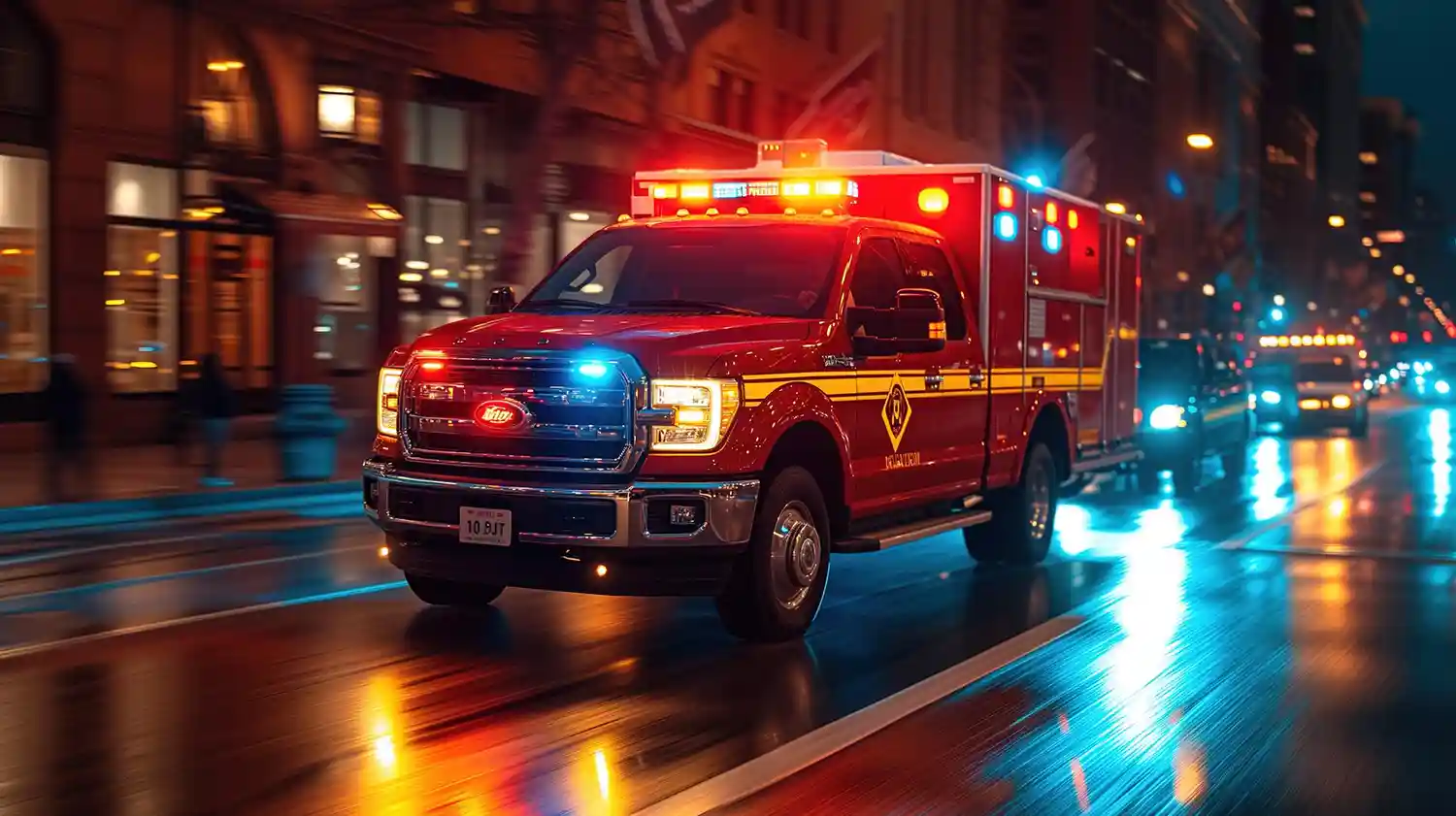
Teldat’s in-vehicle firewalls provide a secure and resilient communications platform, designed to deliver reliable, long-term connectivity solutions to our customers. Their capabilities include:
- Latest-generation Wi-Fi technology (Wi-Fi 6 / Wi-Fi 7).
- Integration with Teldat’s cybersecurity solutions (be.Safe Pro).
- 5G SA / NSA connectivity with high availability and eSIM support.
- Centralized device management, with support for SD-WAN architectures.
- Integration with SD-WAN technologies and satellite link management.





Evolution of in-vehicle connectivity

Emergency operations rely increasingly on the immediate availability of information and reliable communications. Ambulances, police vehicles, fire trucks, and civil protection units must maintain a continuous connection with control centers, hospitals, and emergency management systems to coordinate interventions effectively.
During an operation, emergency vehicles use multiple critical applications: real-time video transmission from in-vehicle cameras or bodycams, access to police or medical databases, advanced navigation systems, and more. All these applications require a network capable of guaranteeing high availability, security, and low latency, even with the vehicle in motion.
However, operating environments are highly variable. Vehicles may travel between dense urban areas, tunnels, rural regions, or zones with patchy coverage. In addition, emergency situations often coincide with peaks of network congestion, making resilient connectivity architectures essential.
To meet these challenges, modern vehicles incorporate in-vehicle communication nodes capable of integrating multiple access technologies, such as cellular networks, Wi‑Fi, and internal wired links. These nodes make it possible to centralize on-board systems, prioritize critical traffic, and maintain secure communications with operation centers. Centralized management of this infrastructure is equally key to ensuring visibility, remote control, and protection of sensitive information.
Key points for connectivity in emergency vehicles

Continuous mission-critical operation
Emergency units require continuous connectivity even while in motion. The network architecture must guarantee availability through multiple links and automatic recovery mechanisms in the event of failures or loss of coverage.

Secure transmission of sensitive data
Emergency vehicles handle critical and sensitive information, ranging from medical data to police databases. Connectivity must incorporate encryption, traffic segmentation, and advanced cybersecurity mechanisms.

Robust, certified hardware
Industrial-grade, robust hardware designed for demanding environments. It ensures service continuity and reduces failures, avoiding replacements that not only entail cost but also time during which the vehicle is left without connectivity.

Centralized fleet management
Emergency organizations operate large, distributed fleets. In-vehicle connectivity must enable centralized monitoring, remote configuration, and full network visibility across every unit.
Understanding emergency In-vehicle connectivity
Connectivity in emergency vehicles goes far beyond providing internet access inside the vehicle. It is about building a communications infrastructure capable of supporting critical operations where network availability can have a direct impact on people’s safety and on the effectiveness of the response.
Ambulances, police patrols, fire trucks, and other intervention units rely on a wide range of digital applications. These include access to medical records or police databases, real-time navigation and geolocation, video transmission from in-vehicle cameras, voice and data communications with command centers, as well as vehicle telemetry.
To support these services, vehicles must integrate multiple connectivity technologies. Cellular networks provide wide-area connectivity, while Wi-Fi or Ethernet interfaces allow internal vehicle devices such as cameras, mobile terminals, tablets, or sensors to be connected. All these technologies must work in a coordinated way to guarantee continuous connectivity during the operation.
A fundamental feature of these architectures is multi-WAN capability. Vehicles can simultaneously use different cellular links or dynamically switch between them based on availability, signal quality, or network congestion. This makes it possible to maintain connectivity even when a specific network experiences degradation or loss of coverage.
Intelligent traffic management is also essential. The applications used by emergency services have very different requirements in terms of latency, priority, and bandwidth. Live video transmission or access to critical databases must be prioritized over other less sensitive services.
Infrastructure resilience is equally key. Vehicles operate under demanding conditions, with vibrations, extreme temperatures, and complex electrical environments. Connectivity equipment must be specifically designed to operate reliably in this type of environment.
Finally, centralized management allows emergency organizations to maintain full control over their mobile network. From management platforms, it is possible to monitor the connectivity of each unit, deploy updates remotely, and apply consistent security policies across the entire fleet.

Teldat products & solutions for emergency vehicles
Teldat’s in-vehicle connectivity solutions are designed to provide reliable and secure communications in vehicles operating in critical environments. In the case of emergency services, these platforms make it possible to maintain continuous connectivity between units deployed in the field and control centers, even in highly demanding operational situations.
In-vehicle firewalls act as the central communications node within the vehicle. They integrate advanced cellular connectivity, Ethernet interfaces, and Wi-Fi capabilities to connect all on-board systems: cameras, mobile terminals, sensors, navigation systems, intervention tablets, or medical equipment in ambulances.
Multi-WAN architectures make it possible to use multiple cellular links and dynamically select the best available connection based on coverage or network quality. Automatic failover mechanisms ensure that communications continue even if one of the links is lost.


Advanced traffic segmentation makes it possible to separate different types of communications within the vehicle. In this way, critical services such as live video, database access, or operational communications can be prioritized over other less sensitive services.
Teldat’s in-vehicle firewalls are designed to operate in demanding environments, withstanding vibrations, wide temperature ranges, and the electrical conditions typical of emergency vehicles. Their robustness ensures continuous operation over long periods of service.
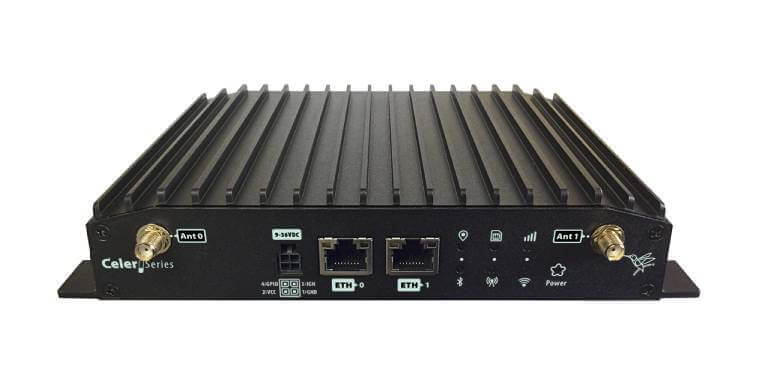
Teldat’s Celer 5G series provides high processing capacity and 5G/LTE connectivity to support data-intensive applications such as real-time video transmission, Edge analytics, or integration with advanced emergency management systems, based on a single-cellular-module architecture.
Teldat’s H5-Automotive+ series from Teldat offers a compact and efficient platform for large-scale deployments in emergency fleets, providing secure connectivity, centralized management, and integrated cybersecurity capabilities, using a dual cellular module to always ensure active connectivity.
Teldat complements its connectivity platform with cybersecurity, visibility, and network management tools, together with SD-WAN capabilities, to deliver a robust, secure, and scalable solution ready for the long term.

Connectivity for Buses – Use Cases
Emergency medical services
Secure connectivity for patient monitors, telemedicine systems, in-vehicle cameras, and real-time data transmission with hospitals.

Police force vehicles
Reliable connectivity for bodycams, in-vehicle cameras, automatic license plate recognition, and secure real-time access to police databases.
Fire and rescue operations
Resilient connectivity for intervention cameras, environmental sensors, and real-time coordination between field teams and command centers.
Emergency medical services
Secure connectivity for patient monitors, telemedicine systems, in-vehicle cameras, and real-time data transmission with hospitals.
Challenge
Modern ambulances integrate multiple digital systems: medical tablets, clinical data transmission, telemetry of healthcare equipment, in-vehicle cameras, and navigation systems. During patient transport, it is essential that medical staff can share information in real time with hospitals and coordination centers.
However, these units move quickly between areas with different coverage levels, which can cause communication interruptions. In addition, medical data requires high levels of security and confidentiality, demanding protected and segmented networks within the vehicle.
Solution

Teldat’s H5-Automotive+ in-vehicle firewall provides multi-WAN connectivity that makes it possible to maintain a continuous connection with hospitals and emergency centers through multiple cellular links.
Traffic segmentation and cybersecurity capabilities protect the transmission of medical data, while centralized management makes it possible to monitor the connectivity of all ambulances and apply consistent network policies across the entire fleet.
Why Teldat?
Teldat delivers secure, resilient connectivity ready for critical medical applications, enabling healthcare services to maintain continuous communication with hospitals and improve coordination during emergencies.
Police force vehicles
Reliable connectivity for bodycams, in-vehicle cameras, automatic license plate recognition, and secure real-time access to police databases.
Challenge
Police vehicles require immediate access to databases, recognition systems, in-vehicle cameras, and operational coordination tools. During field interventions, connectivity is essential to verify information, receive instructions, and transmit real-time video.
Constant mobility and variations in coverage can affect network availability, while the security of police information demands advanced data protection mechanisms.
Solution

With the H5-Automotive+, Teldat makes it possible to aggregate multiple cellular links and ensure communication continuity, even in demanding environments. It also enables the most critical operational applications to be prioritized, ensuring that essential services always have the necessary bandwidth. In addition, the H5-Automotive+ has the capabilities to act as an NGFW, protecting the vehicle from internal attacks.
The integrated security capabilities protect police communications and ensure secure access to central systems. When the network supports it, the device can also leverage network slicing functionalities, ensuring that the vehicle’s connectivity is not affected by congestion on the public network.
Why Teldat?
Teldat provides secure and resilient communications for police operations, guaranteeing continuous access to critical systems and improving coordination between units and control centers.
Fire and rescue operations
Resilient connectivity for intervention cameras, environmental sensors, and real-time coordination between field teams and command centers.
Challenge
Fire and rescue services operate in unpredictable environments where coordination between teams is essential. During an intervention, vehicles may need to transmit video, maps, sensor data, or operational information while moving between different coverage areas.
Operating conditions can also be extremely demanding, with high temperatures, vibrations, and complex electrical environments that require equipment specifically designed for these scenarios.
Solution

Teldat’s in-vehicle firewalls are designed to operate reliably in demanding environments such as emergency vehicles. Their industrial-grade, robust hardware withstands vibrations, temperature variations, and intensive operating conditions without compromising network performance. In addition, the equipment’s design complies with relevant industry certifications, such as ECE R118, ensuring compliance with the safety and durability requirements needed for installation in vehicles. These features ensure communication continuity and reduce the need for maintenance interventions in fleets deployed in the field.
Why Teldat?
Teldat’s solutions combine industrial-grade hardware, high MTBF levels, fanless design, and a proprietary operating system with continuous support, providing a reliable platform for emergency operations where network availability is critical.

IoT Cybersecurity for Smart Cities
We are currently living in a time where Spain’s municipalities are receiving lots of aid through European Next Generation funds including, among others, the water and agri-food PERTEs (Strategic Projects for Economic Recovery and Transformation). Projects relating to...

5G Challenges in Smart Grid Electrical Distribution Networks
The world and Europe are currently experiencing a context of climate emergency, energy scarcity and electrification of energy consumption. In this environment, electricity distribution networks face a challenge of continuous improvement with a focus on more efficient...

The role of communications in the automation and remote control of distribution networks
Electric distribution companies have tens of thousands of transformation centers that perform the function of distributing electric power, taking meter readings from supply points, and that are responsible for maintaining and ensuring all the elements involved operate...