

● Network Security
What is an NGFW?
NGFW: Next-Generation Firewall
An NGFW (Next-Generation Firewall) is a next-generation firewall that analyzes network traffic in depth, from layer 3 to layer 7 of the OSI model, to identify and block advanced threats that traditional firewalls cannot detect. It integrates deep packet inspection (DPI), an intrusion prevention system (IPS), application control, and antimalware protection into a single platform.
NGFW Definition
An NGFW (Next-Generation Firewall) is a network security device that combines traditional firewall functions stateful packet filtering, VPN support, and network address translation (NAT) with advanced capabilities such as deep packet inspection (DPI), an integrated intrusion prevention system (IPS), layer 7 application control, and antimalware protection. This combination enables security decisions based on the application, the user, and the traffic content, not just ports and IP addresses.
Traditional firewalls operate at layers 3 (network) and 4 (transport) of the OSI model. They make decisions based on source and destination IP addresses, ports, and protocols. This approach was effective when most traffic used clearly differentiated ports. However, modern applications from collaboration tools to SaaS platforms share common ports such as 443 (HTTPS), making them impossible to distinguish with traditional filtering.
NGFWs solve this fundamental limitation by inspecting traffic at the application layer (layer 7). This allows them to identify which application generates each data flow, which user is behind the connection, and what content is being transmitted. The result is much more precise decision-making adapted to current threats.
Key Fact: The global NGFW market was valued at $6.3 billion in 2024 and is expected to exceed $15.7 billion in 2033, according to Research and Markets. This growth reflects the massive adoption of next-generation firewalls as a central component of corporate security strategy.
How does an NGFW work?
A next-generation firewall inspects all incoming and outgoing network traffic across multiple layers simultaneously. Unlike traditional firewalls, which analyze only packet headers, an NGFW examines the complete packet (including its payload) to determine the application in use, the user involved, and whether the traffic contains any threat.
Inspection Process
The inspection flow of an NGFW follows several coordinated stages. First, stateful inspection verifies that each packet belongs to a legitimate network session. Next, deep packet inspection (DPI) analyzes traffic content up to layer 7, identifying the real application generating it regardless of the port used.
Simultaneously, the IPS engine compares traffic patterns against a continuously updated threat signature database. If it detects a match with an exploit, malware, or communication with a command-and-control (C2) server, it blocks the traffic in real time. Finally, the NGFW applies granular policies defined by the administrator, combining criteria such as user identity (Active Directory integration), detected application, destination web category, and device security posture.
TLS/SSL Traffic Decryption
With more than 90% of today’s web traffic encrypted, the ability to decrypt and inspect HTTPS connections is essential in a modern NGFW. The firewall acts as a TLS intermediary, decrypting traffic, inspecting its content for threats, and re-encrypting it before delivering it to its destination. Without this capability, attackers could use encryption as a shield to introduce malware or exfiltrate data without detection.
Main features of an NGFW
A modern NGFW integrates multiple security functions that in previous technology generations required separate devices. These are the essential capabilities that define a next-generation firewall:
NGFW vs Traditional Firewall
Although both firewall types share basic functions stateful packet filtering, VPN support, and NAT the differences are substantial.
| Capability | Traditional Firewall | NGFW |
|---|---|---|
| OSI Layers | Layers 3–4 | Layers 3–7 |
| Stateful Packet Filtering | ✓ | ✓ + DPI |
| Application Control | ✗ | ✓ Layer 7 |
| Integrated IPS/IDS | ✗ Separate device | ✓ Native |
| TLS/SSL Inspection | ✗ | ✓ |
| User-Based Policies | ✗ IP only | ✓ Active Directory |
| Virtual Patching | ✗ | ✓ |
| Antimalware Protection | ✗ External solution | ✓ Integrated (AI/ML) |
In summary: a traditional firewall checks where traffic goes; an NGFW also examines which application generates it, who sends it, what it contains, and whether it poses a risk. This comprehensive visibility is essential to protect corporate networks against current threats, where more than 80% of attacks occur at the upper layers of the OSI model.
NGFW vs UTM
UTM (Unified Threat Management) devices and NGFWs share a common principle: integrating multiple security functions into a single device. However, they are designed for different scenarios and present significant differences in performance, scalability, and customization.
A UTM provides an all-in-one ready-to-use solution: firewall, antivirus, web filtering, anti-spam, and VPN in one device. It is designed for small and medium-sized businesses that need complete protection without management complexity. The drawback is that functions cannot always be deeply customized, and performance may degrade when all modules are activated simultaneously in high-demand environments.
An NGFW, by contrast, is designed for environments requiring deeper inspection, higher performance under load, and granular control over which functions to activate and how to configure them. NGFWs are more suitable for distributed enterprise networks, datacenters, and environments where scalability and integration with orchestration platforms (APIs, SIEM) are key requirements. With an NGFW such as Teldat’s be.Safe Pro, the administrator can choose exactly which security functions to enable: SWG, IPS, NGFW, Virtual Patching, adapting protection to the profile of each branch or user.
NGFW in SD-WAN and SASE Architectures
The NGFW is a fundamental component in modern network and security architectures. Its integration with SD-WAN and SASE enables unified protection spanning remote branches to the public cloud.
Embedded NGFW in SD-WAN
SD-WAN networks offer clear advantages in management, speed, agility, and cost reduction. However, SD-WAN technology alone does not protect against attacks or threats. Complementing it with NGFW security is essential.
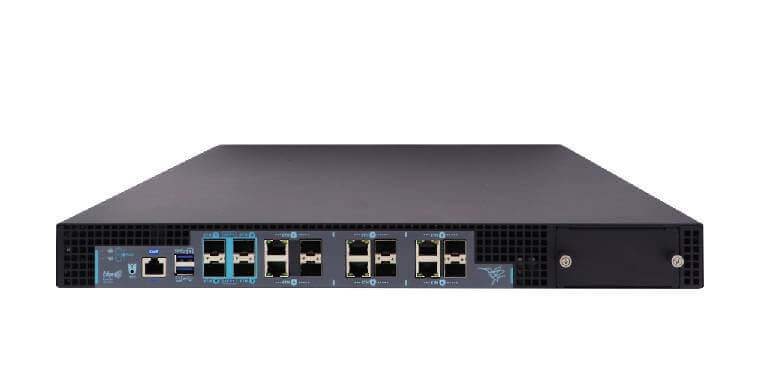
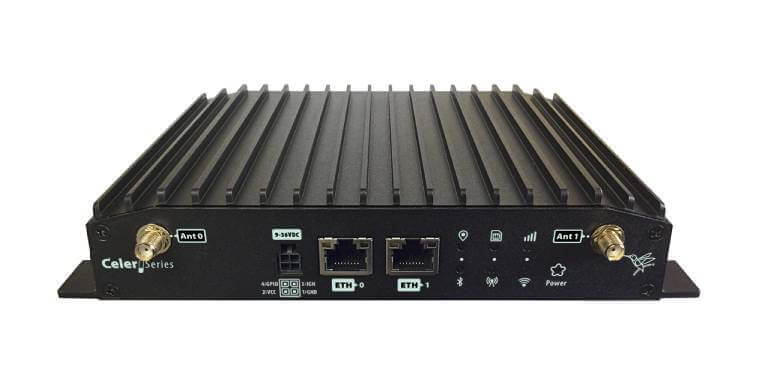
By embedding NGFW functions directly into network devices as Teldat does with its SD-WAN equipment range with integrated be.Safe Pro, organizations obtain a first line of defense at every branch without deploying independent security appliances. Traffic is inspected locally before exiting to the Internet or other branches, improving both performance and security posture. Teldat’s product range scales from small remote offices to large offices and datacenters with more than 10 Gbps of aggregated traffic.
NGFW as a Cloud Service (FWaaS) in SASE
In a SASE (Secure Access Service Edge) architecture, the next-generation firewall is deployed as a cloud service known as Firewall as a Service (FWaaS). This model provides the same inspection and protection capabilities as an on-premise NGFW but without relying on local hardware. It is especially useful for protecting remote workers and branches with direct Internet and cloud application access.
Teldat’s be.Safe Pro SSE solution provides FWaaS with full NGFW capabilities (SWG, IPS, Virtual Patching, application control) deployed as a cloud service with points of presence on five continents. A key difference in Teldat’s architecture is that each customer has a private cloud instance, without sharing IPs or resources, ensuring isolation and maximum availability.
Integration with ZTNA and Zero Trust
The NGFW also integrates with Zero Trust Network Access (ZTNA) solutions to implement microsegmentation and granular access control. In a Zero Trust model, the NGFW continuously verifies user identity and device posture before authorizing access to each resource. If a device becomes compromised, microsegmentation contains the threat within its segment, preventing lateral movement. Teldat offers this integration natively through its be.Safe and SD-WAN ecosystem.
Teldat NGFW: be.Safe Pro
Embedded NGFW security in network devices and as a cloud service (SSE/SASE). With 84 browsing categories, +4,000 application decoders, +15,000 IPS signatures, and centralized management from a single console.
Frequently Asked Questions about NGFW
❯ What is an NGFW?
An NGFW (Next-Generation Firewall) is a next-generation firewall that surpasses traditional packet filtering capabilities. It incorporates deep packet inspection (DPI), an integrated intrusion prevention system (IPS), layer 7 application visibility and control, and advanced protection against threats such as malware, phishing, and ransomware, all within a single security platform.
❯ What is the difference between a traditional firewall and an NGFW?
A traditional firewall operates at layers 3 and 4 of the OSI model, filtering traffic by ports, protocols, and IP addresses. An NGFW adds inspection up to layer 7 (application), enabling it to identify applications regardless of port, detect hidden threats in seemingly legitimate traffic using DPI, and apply granular policies based on user identity and application behavior.
❯ What is Deep Packet Inspection (DPI)?
Deep Packet Inspection (DPI) is a technique that analyzes the complete content of data packets (not just their headers) as they pass through the firewall. This allows detection of malware signatures, identification of the application generating traffic, and blocking of threats hidden within data flows that appear normal.
❯ What is the difference between an NGFW and a UTM?
Both integrate multiple security functions into a single device, but they target different scenarios. UTMs (Unified Threat Management) offer a complete ready-to-use solution ideal for small businesses. NGFWs are designed for environments requiring higher performance under load, deeper inspection, better scalability, and more granular control over the configuration of each security function.
❯ Is an NGFW necessary if I already have SD-WAN?
Yes. SD-WAN technology optimizes connectivity and network management but does not provide security protection by itself. An NGFW complements SD-WAN by adding deep traffic inspection, threat protection, web filtering, and application control. The combination of both technologies as offered by Teldat with its SD-WAN equipment with integrated be.Safe Pro provides a truly secure communications solution.
❯ What is Virtual Patching?
Virtual Patching is an NGFW capability that protects vulnerable systems before the vendor releases an official security patch. Through ad-hoc signatures generated when a new vulnerability (CVE) is detected, the NGFW blocks exploits targeting that flaw in real time, providing an immediate protection layer. This is especially valuable in environments where immediate software updates are not feasible, such as OT infrastructures or critical production servers.
❯ What is FWaaS (Firewall as a Service)?
FWaaS is a deployment model in which NGFW capabilities are delivered as a cloud service without requiring local hardware. Organizational traffic is redirected to the cloud platform, where it is inspected and protected before reaching its destination. FWaaS is a fundamental component of SASE architectures and is ideal for protecting remote workers, branches with direct Internet access, and distributed environments.