

For years, network and security teams were tasked with connecting and protecting a type of organization that no longer exists: one with a clearly defined perimeter, where employees worked from the office and applications resided in a single data center. That world no longer exists, and it’s time our architecture caught up.
Why unifying Networking and Security matters?
The way we work has changed dramatically. Organizations now operate with remote users, distributed branch offices, SaaS applications, and workloads spread across multiple cloud environments. In this context, networking and security can no longer be managed as separate disciplines. Secure SASE Convergence, the integration of networking (SD-WAN) and security (SSE) into a single cloud-delivered architecture, is a direct response to this new reality. It isn’t a passing trend. It’s the natural consequence of a perimeter that has dissolved, and traffic that no longer flows through a central hub. Understanding this shift is now essential for any organization.
The traditional approach and its limitations
Before Secure SASE Convergence, connectivity and security were typically built in layers, one product at a time. Branch office traffic was routed over costly MPLS links to the corporate data center, where security controls were applied using traditional hairpinning or backhauling techniques. Even when users simply wanted to access a SaaS application, their traffic had to detour through headquarters for inspection before being sent back out to the Internet. The result was predictable: increased latency, poor user experience, and higher costs.
On top of that, the security stack was highly fragmented. Organizations often relied on a firewall from one vendor, a secure web gateway (SWG) from another, a VPN for remote access, and a standalone CASB for SaaS applications. Each solution came with its own management console, policies, and logs. Security teams were left managing a patchwork of dashboards without a unified view of the environment. Policies were frequently duplicated or even contradictory and every new product increased the attack surface instead of reducing it. Scaling the environment meant purchasing, deploying, and maintaining additional hardware. Meanwhile, the traditional VPN model, which implicitly trusted anything “inside” the network perimeter, was fundamentally at odds with modern security principles.
Understanding how Secure SASE Convergence works
The term SASE (Secure Access Service Edge) was coined by Gartner in 2019, but the concept goes far beyond the acronym itself. It describes the real-world merging—into a single platform—of networking and security capabilities that once lived in separate silos. To understand how it works, it helps to break it into its two core components and see how they fit together.
First, there’s SD-WAN (Software-Defined WAN). Rather than relying on rigid MPLS connections, SD-WAN can use any available transport: fiber, broadband, or 5G and routes each traffic flow based on the application’s needs, selecting the optimal path in real time and enforcing QoS policies.
The second component is security, delivered through SSE (Security Service Edge). SSE brings together several security capabilities that were traditionally deployed as separate products. These consist of:
- SWG (Secure Web Gateway): inspects and filters web traffic.
- CASB (Cloud Access Security Broker): provides visibility and control over the use of SaaS applications.
- ZTNA (Zero Trust Network Access): provides identity- and context-based access to applications, serving as the natural successor to traditional VPNs.
- FWaaS (Firewall as a Service): cloud-delivered next-generation firewall protection.
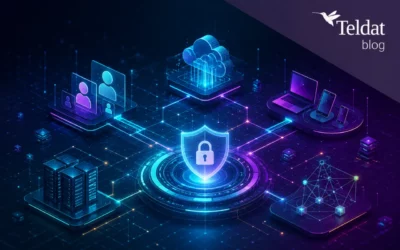
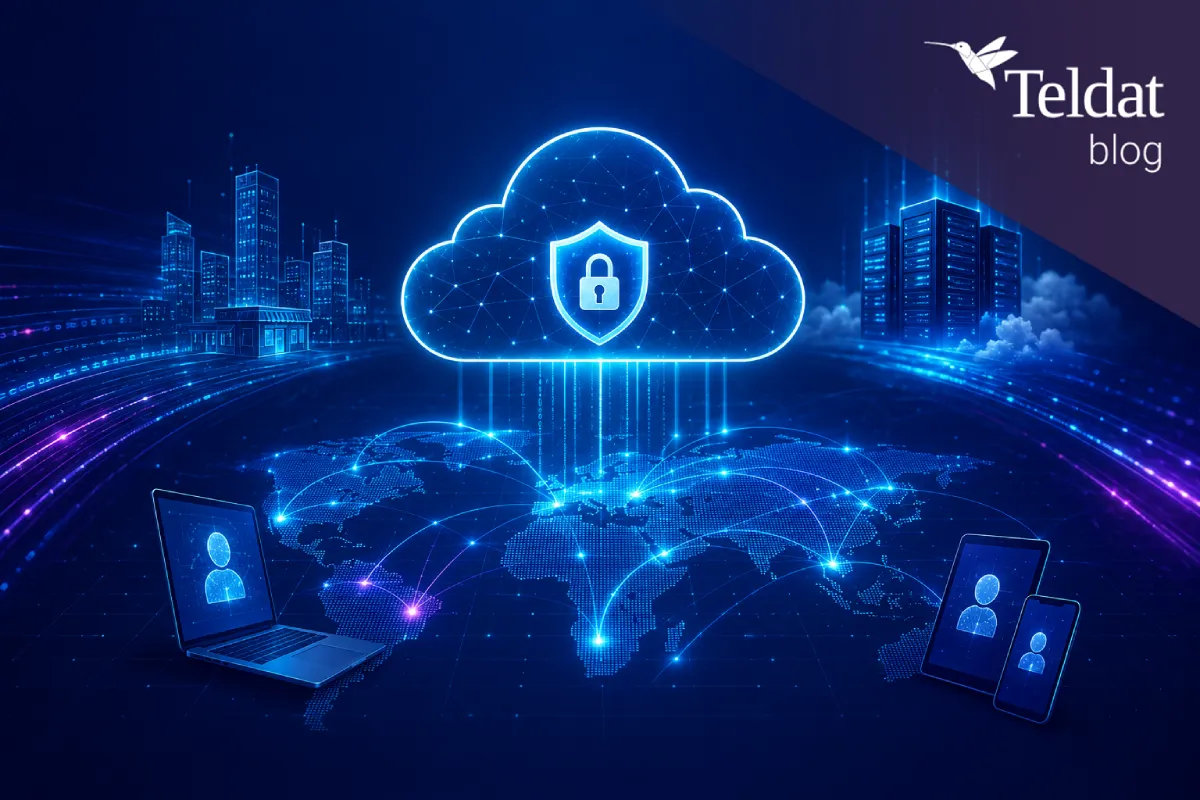
The essence of Secure SASE Convergence is that these components no longer operate as isolated products. Instead, they are integrated into a globally distributed network of points of presence (PoPs). Whether users are working from the office, from home, or from an airport, they connect to the nearest PoP. Their traffic is inspected once, security policies are applied consistently, and the connection is then routed directly to the destination application or cloud service. No more backhauling through a central data center.
Three principles underpin this model:
- Identity as the new perimeter. The decision to grant or deny access no longer depends on an IP address or whether a user is “inside” the network. Instead, it is based on who the user is, which device they are using, and the context of the request. This is the foundation of the Zero Trust approach: never trust, always verify.
- A single control plane. A single console, a single policy engine, and a single point of visibility. The policy is defined once and applied everywhere, eliminating the inconsistencies inherent in the fragmented model.
- Delivered from the cloud and close to the user. Traffic is inspected at the edge, as close as possible to where it originates, reducing latency and improving the user experience without sacrificing control.
In practice, Secure SASE Convergence brings together dozens of disconnected products into a single, cohesive, and scalable service. Connectivity and security are no longer separate initiatives but part of a single, unified strategy.
Key benefits of Secure SASE Convergence
With Secure SASE Convergence, organizations gain benefits that the fragmented model simply could not deliver:
- Simplicity and lower costs. Consolidating firewalls, SWGs, CASBs, ZTNAs, and SD-WAN into a single platform eliminates the need to purchase, integrate, and maintain multiple products from different vendors. The result is less hardware, fewer contracts, fewer management consoles.
- Better user experience. By inspecting traffic at the nearest PoP and routing it directly to the cloud, organizations eliminate backhauling and significantly reduce latency. SaaS applications, voice, and video services perform better no matter where they are.
- Consistent security and true Zero Trust. A single security policy follows users and devices wherever they are, rather than being tied to a location. Access is granted based on identity and context, reducing the attack surface and replacing broad VPN access with granular application-specific access.
- Unified visibility. A single dashboard provides visibility into and correlation across all traffic and security events. This accelerates threat detection and significantly simplifies compliance reporting and audit processes.
- Agility and scalability. Opening a new branch office or onboarding thousands of remote workers no longer requires a hardware deployment project—it can be delivered as a service. Organizations can scale at the speed of the business rather than at the pace of infrastructure procurement.
- Resilience. By leveraging multiple network transports and a globally distributed mesh of PoPs, connectivity and security are no longer dependent on a single link or a single point of failure.
Taken together, these benefits deliver tangible business outcomes: lower risk, reduced operational costs, and greater ability to adapt to change.
Conclusion: what this means for businesses
Secure SASE Convergence is more than a technological evolution. It represents a shift in mindset. It recognizes that in today’s hybrid, multi-cloud, and perimeterless world, networking and security are two sides of the same coin, and must be designed, managed, and delivered as a unified whole. For organizations, adopting this approach means stopping the cycle of fighting fires with isolated products and starting to operate from a coherent, scalable foundation. One that’s ready for whatever comes next.
For IT and security leaders, the question is no longer whether to converge networking and security, but which partner to do it with. This is where the experience of vendors like Teldat, with a portfolio that brings together SD-WAN connectivity and managed security, makes the difference: turning a concept into an architecture that organizations can deploy, operate, and trust.