

● Cybersecurity Glossary
What is IT/OT convergence?
IT/OT convergence is the integration of enterprise Information Technology systems (business applications, cloud services, corporate networks) with Operational Technology systems (SCADA, PLCs, DCS, industrial control systems). Convergence enables organizations to use operational data for business intelligence, predictive maintenance, and remote monitoring. But it also exposes previously air gapped industrial environments to the full IT threat landscape. Securing converged networks requires a fundamentally different approach: network segmentation following the Purdue model and IEC 62443, passive Network Traffic Analysis for OT visibility, and unified IT/OT security management that correlates threats across both domains.
IT/OT convergence definition and drivers
IT/OT convergence is the process of connecting Information Technology systems with Operational Technology systems so that data and services can flow between the corporate and industrial domains. In practical terms, this means that SCADA data reaches ERP systems, sensor readings feed machine learning models, engineers can monitor equipment remotely through cloud dashboards, and business logic influences production schedules in real time.
For decades, IT and OT operated as entirely separate worlds. OT networks used proprietary protocols, ran on dedicated hardware, and had no connection to the internet. This physical isolation (the air gap) was the primary security control. Convergence dissolved that air gap, driven by several forces:
The convergence paradox: Convergence creates operational efficiency and competitive advantage, but every connection between IT and OT is also a potential attack path. Organizations that converge without securing the boundary face the full IT threat landscape reaching their most critical industrial systems.
Flat networks vs segmented networks
The single most important architectural decision in IT/OT convergence is whether the network is flat or segmented. This distinction determines whether a security incident stays contained or spreads from office systems to the factory floor:
A flat network allows any device to communicate with any other device without restriction. There are no zones, no firewalls between IT and OT, and no access controls separating a business laptop from a PLC. In a flat converged network, an attacker who compromises an employee’s email account through phishing can move laterally until they reach SCADA servers, HMIs, or PLCs. The attack surface is the entire network.
A segmented network divides the environment into zones based on function and security requirements. The Purdue model defines the standard hierarchy: enterprise IT at Levels 4-5, an IT/OT DMZ as the boundary, site operations at Level 3, control systems at Levels 1-2, and physical processes at Level 0. Traffic between zones is controlled by firewalls with deny all, permit by exception rules. A compromise in the IT zone cannot reach OT without passing through the DMZ, where it is inspected and blocked.
| Dimension | Flat Network | Segmented Network |
|---|---|---|
| Communication | Any device talks to any device | Traffic only flows between authorized zones through firewalls |
| Attack surface | Entire network is reachable from any point | Each zone is isolated; compromise is contained |
| Lateral movement | Unrestricted; attacker moves freely from IT to OT | Blocked at zone boundaries by firewalls and access controls |
| Visibility | Difficult; traffic patterns are chaotic | Clear; each zone has defined traffic baselines |
| Compliance | Does not meet IEC 62443 or NIST SP 800-82 | Aligned with Purdue model, IEC 62443 zones and conduits |
| Recovery | A single breach can affect the entire operation | Breach is contained to one zone; other zones continue operating |
Manufacturing remains the most ransomware targeted sector for the fourth consecutive year, with attacks rising 61% in 2025. The majority of successful attacks exploit flat networks where there is no segmentation between IT and OT. Network segmentation is the single most effective defense against lateral movement from IT into production environments.
Convergence risks and attack paths
Understanding how attacks traverse converged networks is essential for designing effective defenses. The typical attack path in a converged IT/OT environment follows a predictable pattern:
The convergence risk in numbers: Over 70% of OT organizations experienced malware intrusions in the past year, with the majority entering through IT. Manufacturing is the most ransomware targeted sector for the fourth consecutive year. The average cost of downtime from an OT ransomware attack is $1.9 million per day. 45% of OT environments assessed by security firms had complete lack of network visibility.
How to secure converged IT/OT networks?
Securing a converged environment is not a single project but a phased program. The following practices, ordered by impact, form the foundation of a converged security architecture:
Visibility and monitoring in converged environments
Visibility is the foundation of security in converged networks. Without knowing what devices are connected, what traffic is flowing, and what constitutes normal behavior, security teams cannot detect threats or respond effectively.
The asset visibility challenge
Many organizations do not have a complete inventory of their OT assets. Devices installed over decades by different vendors create environments where no one knows exactly what is on the network. Traditional IT asset discovery tools use active scanning, which can crash OT equipment. OT asset discovery must use passive methods: observing network traffic to identify devices by their communication patterns without sending any probing packets.
Network Traffic Analysis with AI
Network Traffic Analysis (NTA) is the primary monitoring tool for converged environments. NTA passively observes all traffic on the OT network, building a behavioral baseline of normal operations. AI models learn which devices communicate with which other devices, using which protocols, at what intervals, and with what payload characteristics. When something deviates from this baseline, whether it is an unauthorized IT device communicating with a PLC, a Modbus command sent outside normal operating hours, or an unusual volume of data leaving the OT network, the NTA system generates an alert.
Correlated detection across IT and OT
The most advanced attacks traverse both IT and OT. A phishing email compromises an IT account, the attacker moves laterally through IT, crosses the DMZ, and reaches OT. If IT and OT security operate in silos with separate monitoring tools, each team sees only part of the attack. A unified Extended Detection and Response (XDR) platform correlates events across IT endpoints, network traffic, cloud services, and OT telemetry, presenting the full attack chain as a single incident.
Visibility gaps are the norm, not the exception: 45% of OT environments assessed by professional security teams in 2024 had a complete lack of network visibility. Without visibility, detection, triage, and response are impossible at scale. Passive NTA combined with unified XDR closes this gap without disrupting industrial operations.
Frameworks and governance for convergence
Securing IT/OT convergence is as much a governance challenge as a technical one. Clear ownership, shared policies, and alignment with recognized frameworks are essential:
IEC 62443 zones and conduits
IEC 62443 provides the definitive technical framework for securing converged industrial networks. Its zones and conduits model defines how to segment the network, what security controls to apply at each boundary, and how to assign Security Levels (SL-1 through SL-4) based on risk. The standard also addresses the roles of asset owners, system integrators, and product suppliers, ensuring accountability across the entire supply chain.
NIST CSF and SP 800-82
The NIST Cybersecurity Framework provides the overall governance structure (Identify, Protect, Detect, Respond, Recover), while NIST SP 800-82 maps those functions specifically to industrial control systems. Together they complement IEC 62443 and are widely referenced by organizations building converged security programs.
NIS2 and regulatory mandates
The NIS2 Directive in Europe mandates that operators of critical infrastructure implement risk management measures that cover their entire technology estate, including converged IT/OT networks. NIS2 requires incident reporting within 24 hours, supply chain security measures, and personal liability for management. Similar mandates exist in the US through CIRCIA and NERC CIP for specific sectors.
Organizational alignment
Convergence requires IT and OT teams to work together under shared governance. In 2025, 52% of organizations reported that the CISO is now responsible for OT cybersecurity (up from 18% in 2022), and 80% planned to move OT security under the CISO within 12 months. A cross functional security committee that includes IT, OT, operations leadership, and executive management creates shared accountability. Unified security policies that acknowledge OT specific constraints, rather than applying IT policies wholesale, build buy in from both sides.
Teldat solutions for IT/OT convergence
Teldat addresses the security challenges of IT/OT convergence through two integrated solutions: be.OT for industrial OT security and be.Safe XDR for unified threat detection and response across both domains.
be.OT: securing the OT side of convergence
be.OT provides the four pillars of OT security in converged environments. Visibility through automated asset discovery identifies every device on the industrial network using passive methods. Control through NGFW with over 1,000 ICS specific application controls and IPS signatures for industrial protocols (Modbus, DNP3, BACnet, OPC UA). Detection through Network Traffic Analysis with AI that learns normal OT behavior and detects anomalies including lateral movement from IT, unauthorized protocol commands, and zero day attacks. Protection through virtual patching that blocks exploit traffic targeting legacy devices without requiring production downtime.
be.Safe XDR: unified IT/OT threat detection
be.Safe XDR correlates security events from IT endpoints, network traffic, cloud services, and OT telemetry from be.OT into a single platform. An attack that begins with a phishing email in IT and progresses toward OT appears as one correlated incident chain, not as disconnected alerts in separate consoles. AI powered detection identifies complex attack patterns that span both domains, and automated response workflows contain threats before they reach critical OT assets.
Embedded security at every boundary
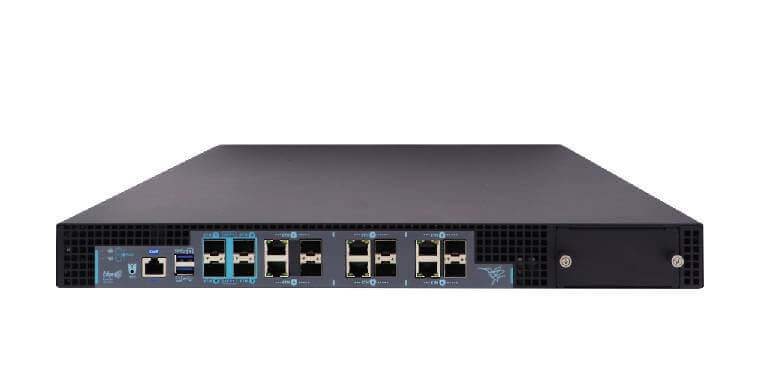
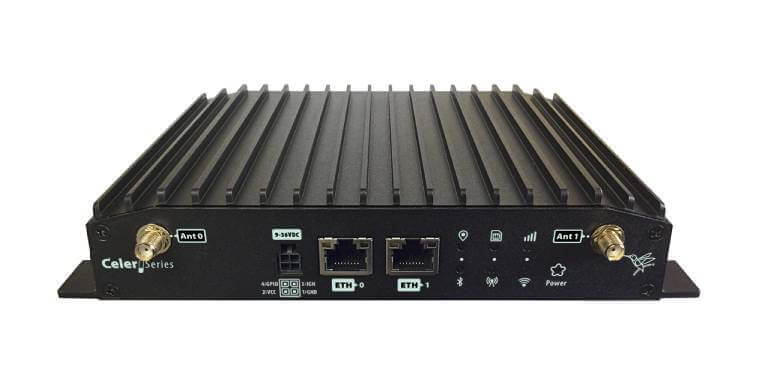
Teldat embeds NGFW and IDS/IPS capabilities directly into its networking hardware, turning each router and switch into a security enforcement point. In converged architectures, this means security is applied at the IT/OT DMZ, at every zone boundary within OT, and at every branch or remote site, without requiring separate security appliances. Dedicated CPUs handle inspection without impacting network throughput.
Teldat’s convergence advantage: As both a network hardware manufacturer and cybersecurity provider, Teldat delivers security at the intersection of IT and OT. be.OT secures the industrial network with asset discovery, ICS specific NGFW, NTA with AI, and virtual patching. be.Safe XDR unifies IT and OT security monitoring with correlated detection and automated response. Together, they provide organizations with a single ecosystem that secures the entire converged architecture, from the enterprise edge to the factory floor.
Frequently asked questions about IT/OT convergence (FAQ’s)
❯ What is IT/OT convergence?
IT/OT convergence is the integration of enterprise IT systems (business applications, cloud, corporate networks) with Operational Technology systems (SCADA, PLCs, industrial control systems). It enables operational data to be used for business intelligence and predictive maintenance, but it also exposes previously isolated OT environments to cyber threats from the IT network.
❯ Why is IT/OT convergence risky?
Convergence connects industrial systems designed for reliability (not security) to corporate networks facing constant cyber threats. Over 70% of OT organizations experienced malware intrusions in the past year, with the majority originating from IT. A flat converged network without segmentation allows an attacker who compromises a business system to reach SCADA and PLC equipment directly.
❯ What is the difference between flat and segmented networks?
A flat network allows any device to communicate with any other device. A segmented network divides the environment into zones (following the Purdue model and IEC 62443) with firewalls between them. Segmentation is the single most effective defense against lateral movement from IT into production environments.
❯ How do you secure a converged IT/OT network?
Secure converged networks by: (1) Establishing the IT/OT DMZ. (2) Segmenting OT into zones and conduits per IEC 62443. (3) Deploying passive NTA for OT visibility. (4) Implementing virtual patching for legacy devices. (5) Enforcing identity based access with MFA. (6) Unifying IT/OT security monitoring with XDR.
❯ What is the IT/OT DMZ?
The IT/OT DMZ is a network buffer zone between enterprise IT and operational OT. All traffic between IT and OT must pass through the DMZ, where firewalls and inspection systems enforce access control. No direct communication is allowed between IT systems and OT controllers. It is the most critical security control in any converged architecture.
❯ What role does Network Traffic Analysis play?
NTA provides passive visibility into converged IT/OT networks without disrupting operations. AI models learn normal OT behavior and detect anomalies such as unauthorized commands, lateral movement from IT, or exploitation of industrial protocols. NTA combined with XDR closes the visibility gap that 45% of OT environments still face.
Secure your converged IT/OT Network with Teldat
be.OT and be.Safe XDR deliver asset discovery, ICS specific NGFW, NTA with AI, virtual patching, and unified IT/OT security monitoring for converged industrial environments.