

On-board connectivity for bus fleets
Teldat’s onboard connectivity solutions for bus fleets help operators and integrators improve operational efficiency as well as the passenger experience, with secure and continuous communications.
Driving connectivity in vehicles

- Multi-operator 5G/LTE with automatic switching for always-on links.
- Wi-Fi 6 & multi-gigabit Ethernet to connect onboard systems and passengers.
- Edge processing to support real-time applications (video, ticketing, etc.).
- Integrated cybersecurity: firewall & encrypted VPN as a mobile perimeter.
- Centralized fleet management with remote monitoring and firmware updates.




Modern connectivity in a mobile environment

Buses operate in highly dynamic environments, crossing areas with varying coverage quality, dense urban zones or long interurban routes. This calls for connectivity architectures capable of integrating multiple access technologies such as cellular networks, Wi-Fi and wired interfaces, ensuring stable communications throughout the entire journey.
Beyond connectivity, operators need tools to manage large, geographically distributed fleets. Centralized network visibility, remote monitoring and the enforcement of consistent policies are essential to simplify operations and reduce maintenance costs.
In this context, onboard routers become the core of the bus digital infrastructure. These devices aggregate the different vehicle systems, ensure resilient connectivity to control centers and cloud platforms, and enable advanced capabilities such as SD-WAN, cybersecurity and centralized management to safeguard performance and service continuity.
Key points for Bus Connectivity

Reliable hardware for vehicles

Multi-link connectivity
Buses pass through areas with varying coverage and network quality. Multi-WAN architecture allows several cellular links to be combined and automatically select the best available connection at any given moment.

Traffic segmentation
Bus systems generate different types of traffic. Segmentation using VLANs and QoS policies isolates operational services, vehicle systems and passenger Wi-Fi to ensure security and performance.

Centralized fleet management
Centralized management enables supervision and control connectivity across the entire fleet, apply consistent network policies and perform remote configuration or diagnostics, reducing operating costs and intervention times.
Understanding Onboard Connectivity
Onboard connectivity in buses means providing reliable, secure and continuous communication to all the vehicle’s digital systems while it is in motion. Beyond simply connecting the bus to the Internet, the goal is to ensure that every operational application and passenger service runs reliably throughout the journey.
Modern buses integrate multiple digital systems that constantly generate and consume data. These include electronic ticketing, payment validators, video surveillance, passenger counting, passenger information systems, passenger Wi-Fi, vehicle telemetry and remote diagnostics. All these systems require permanent connectivity with central platforms or cloud services.
As the vehicle is in motion, the network must continuously adapt to changes in signal quality, coverage and network congestion. To handle this, multi-WAN architectures are used that combine several cellular links along with automatic failover mechanisms to maintain connectivity even when one of the links degrades.
Traffic management is another key aspect. Not all applications have the same latency or priority requirements. For example, vehicle operational systems or video surveillance must take priority over passenger Wi-Fi. The network architecture must make it possible to segment and prioritize traffic to ensure that all services run correctly.
Finally, centralized management allows operator control and supervised connectivity across the whole fleet from a single platform. This makes it easier to enforce network policies, monitor performance and resolve incidents remotely. Hence reducing operating costs and simplifying the operation of networks distributed across hundreds or thousands of vehicles.

Teldat solutions and products for vehicles
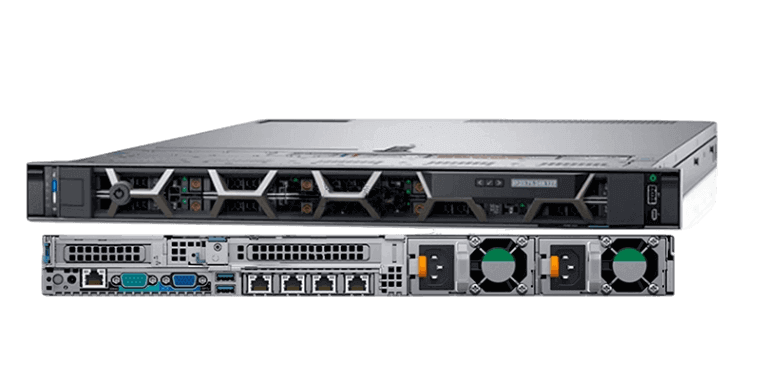
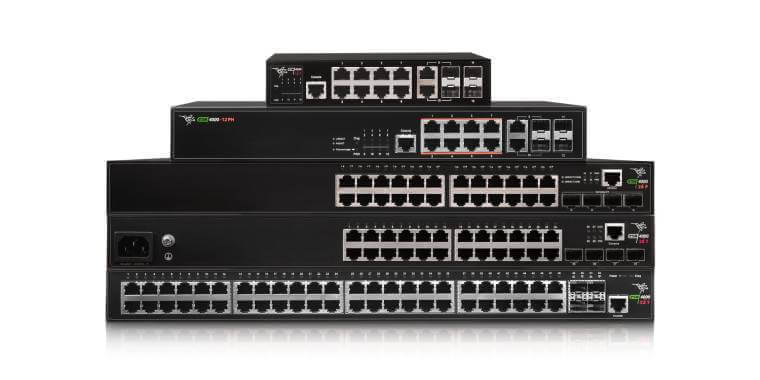
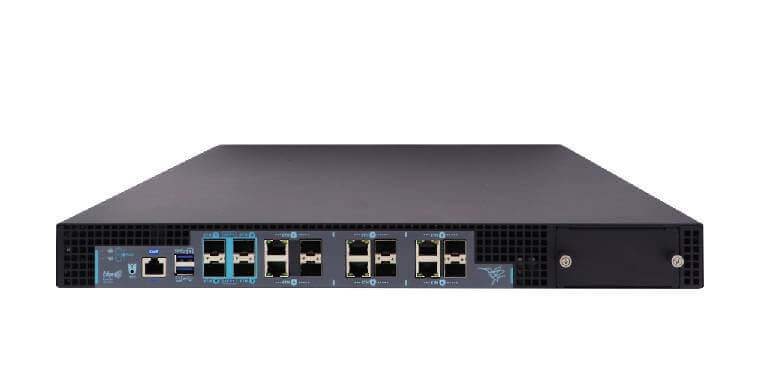
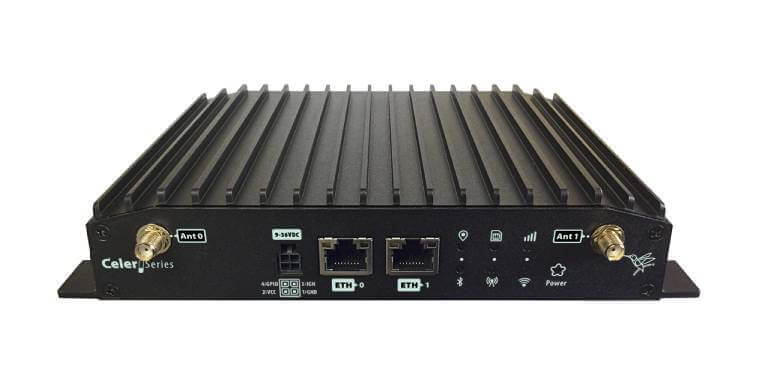
The onboard routers integrate 4G/5G, Wi-Fi and Ethernet connectivity, making it possible to connect ticketing systems, video surveillance cameras, vehicle telemetry, passenger information systems and public Wi-Fi networks for users. Aggregating multiple cellular links together with automatic failover mechanisms ensures continuous communications even under adverse network conditions.


The rugged hardware of the onboard devices is designed to withstand vibration, temperature variations and the demanding electrical conditions typical of vehicle environments. This ensures stable operation across long lifecycles and reduces the number of maintenance interventions.
The Teldat’s Celer 5G for vehicles targets advanced, high-capacity connectivity scenarios, integrating 5G/LTE communications, multiple network interfaces and Edge processing capacity to support data-intensive applications.
These platforms can be complemented with Teldat’s management and security solutions, including be.Safe Pro for cybersecurity and be.Safe XDR for network visibility, making it possible to manage the entire fleet from a single centralized platform and ensure secure communications across every vehicle.

Connectivity for Buses – Use Cases
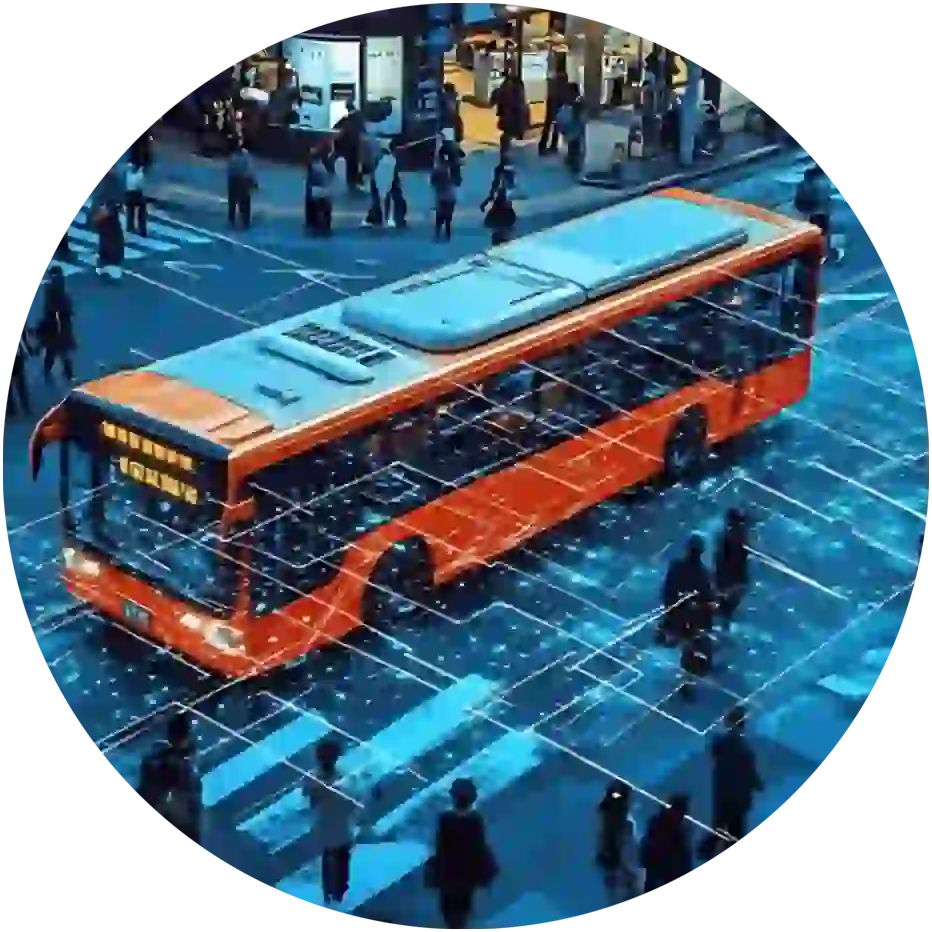
Urban & interurban public transport
Onboard connectivity for ticketing, video surveillance, telemetry and passenger services on public transport fleets.

Long-distance buses
Stable connectivity for passenger Wi-Fi, remote monitoring and operational management on long interurban journeys.
Tourist and premium buses
Advanced connectivity for digital passenger services and centralized fleet management for tourist operators.
Urban & interurban public transport
Onboard connectivity for ticketing, video surveillance, telemetry and passenger services on public transport fleets.
Challenge
These vehicles operate in urban environments where cellular coverage can vary and the network may become congested in certain areas or at certain times of the day. In addition, buses are exposed to vibration, temperature variations and demanding electrical conditions. Many fleets still rely on fragmented connectivity solutions that hinder centralized management, network visibility and the continuity of digital services.
Solution

Teldat’s onboard routers act as the central communications node inside the bus, integrating 4G/5G, Wi-Fi and Ethernet connectivity to aggregate all of the vehicle’s digital systems.
Multi-WAN architecture enable to combine several cellular links and guarantee continuous connectivity even when coverage varies. Automatic failover mechanisms and intelligent traffic management ensure the availability of critical services. In addition, segmentation using VLANs and advanced QoS policies isolates the bus operational systems from passenger Wi-Fi, while centralized management makes it easier to control and monitor the entire fleet.
Why Teldat?
Long-distance buses
Stable connectivity for passenger Wi-Fi, remote monitoring and operational management on long interurban journeys.
Challenge
Signal variability, switching between operators and the efficient management of data consumption all add complexity to the communications infrastructure. On top of that, passenger traffic must be separated from operational traffic to avoid interference and ensure the security of the vehicle systems.
Solution

Teldat’s onboard solution makes it possible to aggregate multiple cellular links and dynamically select the best available connection based on coverage, performance or cost. This ensures stable connectivity over long journeys and across different regions.
Vehicle traffic is segmented through advanced network policies, isolating operational services from passenger Wi-Fi. SD-WAN capabilities make it possible to optimize the use of the available links and prioritize critical applications. These kinds of solutions are fully compatible with satellite links, so the system can detect a satellite link as an additional WAN exit and apply SD-WAN policies to it when needed.
Why Teldat?
Tourist and premium buses
Advanced connectivity for digital passenger services and centralized fleet management for tourist operators.
Challenge
These operators manage fleets that may run in different cities or countries, with roaming, centralized management and data consumption control requirements. They also need to ensure that passenger traffic is separated from the vehicle operational systems in order to protect information and ensure consistent performance, even in areas with high tourist concentration or a heavy density of connected users.
Solution

Teldat’s onboard solution makes it possible to aggregate multiple cellular links and dynamically optimize connectivity based on available coverage and data cost. This ensures stable connectivity both for the vehicle’s digital services and for passengers.
Advanced network segmentation isolates passenger traffic from corporate and operational traffic, improving security and performance. The flexibility of deploying profiles through eSIM gives our customers the freedom to avoid physically installing profiles and to host up to 8 different profiles on each eSIM.
Why Teldat?

IoT Cybersecurity for Smart Cities
We are currently living in a time where Spain’s municipalities are receiving lots of aid through European Next Generation funds including, among others, the water and agri-food PERTEs (Strategic Projects for Economic Recovery and Transformation). Projects relating to...

5G Challenges in Smart Grid Electrical Distribution Networks
The world and Europe are currently experiencing a context of climate emergency, energy scarcity and electrification of energy consumption. In this environment, electricity distribution networks face a challenge of continuous improvement with a focus on more efficient...

The role of communications in the automation and remote control of distribution networks
Electric distribution companies have tens of thousands of transformation centers that perform the function of distributing electric power, taking meter readings from supply points, and that are responsible for maintaining and ensuring all the elements involved operate...