

Teldat´s solutions for the Railway Sector
Resilient, secure connectivity for the railway sector: onboard and trackside communications that keep trains connected, passengers online, and critical systems protected, from remote tracks to central control.
Smart, secure, resilient rail networks

Teldat’s railway solutions deliver secure, industrial-grade onboard and trackside communications, connecting rolling stock, signaling, and passengers. Ensuring continuous connectivity and stronger operational resilience:
-
- Rugged onboard routers engineered for trains, trams, and metro rolling stock.
- LTE/5G, Wi-Fi 6, Wi-Fi 7, and LEO satellite connectivity for uninterrupted onboard coverage.
- Built-in cybersecurity (NGFW, OT, ZTNA) protecting onboard and trackside assets.
- Onboard Edge computing for real-time video analytics, telemetry, and diagnostics.
- Centralized fleet management to streamline deployments and boost efficiency.




Railway connectivity market

The rise of connected rolling stock and smart signaling is increasing the need for communications infrastructure that is secure, scalable, and simple to manage across large, distributed fleets. LTE/5G, Wi-Fi 6 Wi-Fi 7, and LEO satellite connectivity, backed by advanced OT cybersecurity and onboard edge computing, are now essential to guarantee uninterrupted operations, richer passenger services, and faster incident response.
Together, these trends make resilient, secure connectivity a cornerstone of the shift toward safer, smarter, and more efficient railway operations worldwide.
Key Points related to Railway Sector

Always-on onboard connectivity
LTE/5G, Wi-Fi 6 Wi-Fi 7, and LEO satellite links keep trains, trams, and metros connected end to end. Passengers get richer onboard services while operators gain continuous telemetry, even across tunnels and remote lines.

Continuous and predictive monitoring
Onboard sensors and telemetry track train status, diagnostics, and passenger systems around the clock. Advanced analytics catch anomalies early, cutting maintenance costs and reducing unplanned downtime across the fleet.

OT cybersecurity across the rail network
Onboard and trackside OT protection now extends to maintenance depots, stations, and control centers, keeping signaling, operations, and passenger systems secure across the entire railway ecosystem, from the train to headquarters.

Edge computing for smarter operations
Local processing onboard analyzes video, sensor, and telemetry data in real time, reducing bandwidth needs and speeding up response. Fleets run leaner, safer, and more predictably, wherever they operate.
Understanding railway connectivity and security
Modern railways are the natural evolution of rail transport: more digital, more automated, and designed around the passenger experience. Onboard Wi-Fi, real-time passenger information, video surveillance, ticketing, and predictive diagnostics are transforming how rolling stock, signaling, and stations are managed. Turning communications infrastructure into a critical network for coordinating distributed fleets, catching issues early, and keeping services running reliably across every line and shift.
To meet these demands, a new generation of onboard and trackside communication platforms is emerging, purpose-built for the railway environment. They combine rugged, EN 50155-grade hardware designed to withstand vibration, shock, humidity, and extreme temperatures, with flexible connectivity across LTE/5G, Wi-Fi 6 Wi-Fi 7, and LEO satellite links. The result is an architecture that adapts to any scenario, from high-speed lines and urban metros to remote branch lines and rolling stock crossing extended dead zones.
The rapid growth of onboard applications is driving demand for communications that can handle dense passenger Wi-Fi traffic, high-definition CCTV, and continuous telemetry, all at once. LEO satellite IoT connectivity fills the gaps where terrestrial networks fall short, extending coverage to tunnels, rural corridors, and cross-border routes, while LTE/5G Wi-Fi 6 and Wi-Fi 7 provide the capacity and low latency required for real-time passenger services and operational data. Together, they form a hybrid network that stays reliable regardless of terrain or distance from the nearest base station.
Integrating data from onboard sensors, CCTV, passenger information systems, and signaling equipment unlocks a new level of automation. Onboard Edge computing processes video analytics, diagnostics, and telemetry directly at the source. Eeasing bandwidth pressure and enabling operators to move from reactive fixes to predictive maintenance and faster incident response.
However, greater connectivity also increases exposure to risk. Railway operations are critical to public safety, making OT cybersecurity non-negotiable at every level of the network, from onboard equipment to maintenance facilities, stations, and the operator’s Command and Control and Monitoring Center. Modern platforms must include advanced segmentation, industrial protocol inspection, strong authentication, and continuous monitoring. Building a defense-in-depth approach that keeps rolling stock, signaling, and station systems secure from the inside out, while supporting compliance with emerging railway cybersecurity regulation.
Taken together, railway networks are evolving into highly connected ecosystems where communications act as the engine of safety, efficiency, and passenger experience. These platforms do far more than move data. They modernize operations, strengthen security, and prepare the railway sector to meet the operational and regulatory demands of today and tomorrow.

Teldat Railway Solutions & Products
Teldat offers a comprehensive portfolio of onboard connectivity and cybersecurity solutions designed to drive the digital transformation of the railway sector. As operators modernize rolling stock and signaling, from high-speed trains to trams and metros, they need platforms that deliver industrial-grade reliability, flexible connectivity, and seamless integration with onboard systems. Teldat’s ecosystem provides exactly that. Secure, efficient, and scalable communications that keep trains, trams, and metros running without interruption.
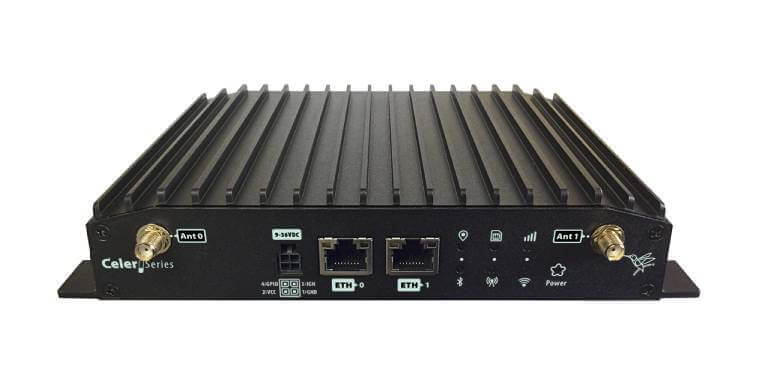
At the core of Teldat’s onboard range are the H5-Rail and H2-Rail platforms, purpose-built for installations exposed to vibration, shock, humidity, and extreme temperatures. These modular routers integrate dual-SIM LTE/5G, Wi-Fi 6/7, and Ethernet, and can extend coverage with LEO satellite IoT links, delivering reliable backhaul for passenger Wi-Fi, CCTV, ticketing, and telemetry across the full length of every line. Their rugged, EN 50155-oriented design ensures stable, predictable performance even in tunnels, mountain passes, and remote corridors where terrestrial coverage is limited.
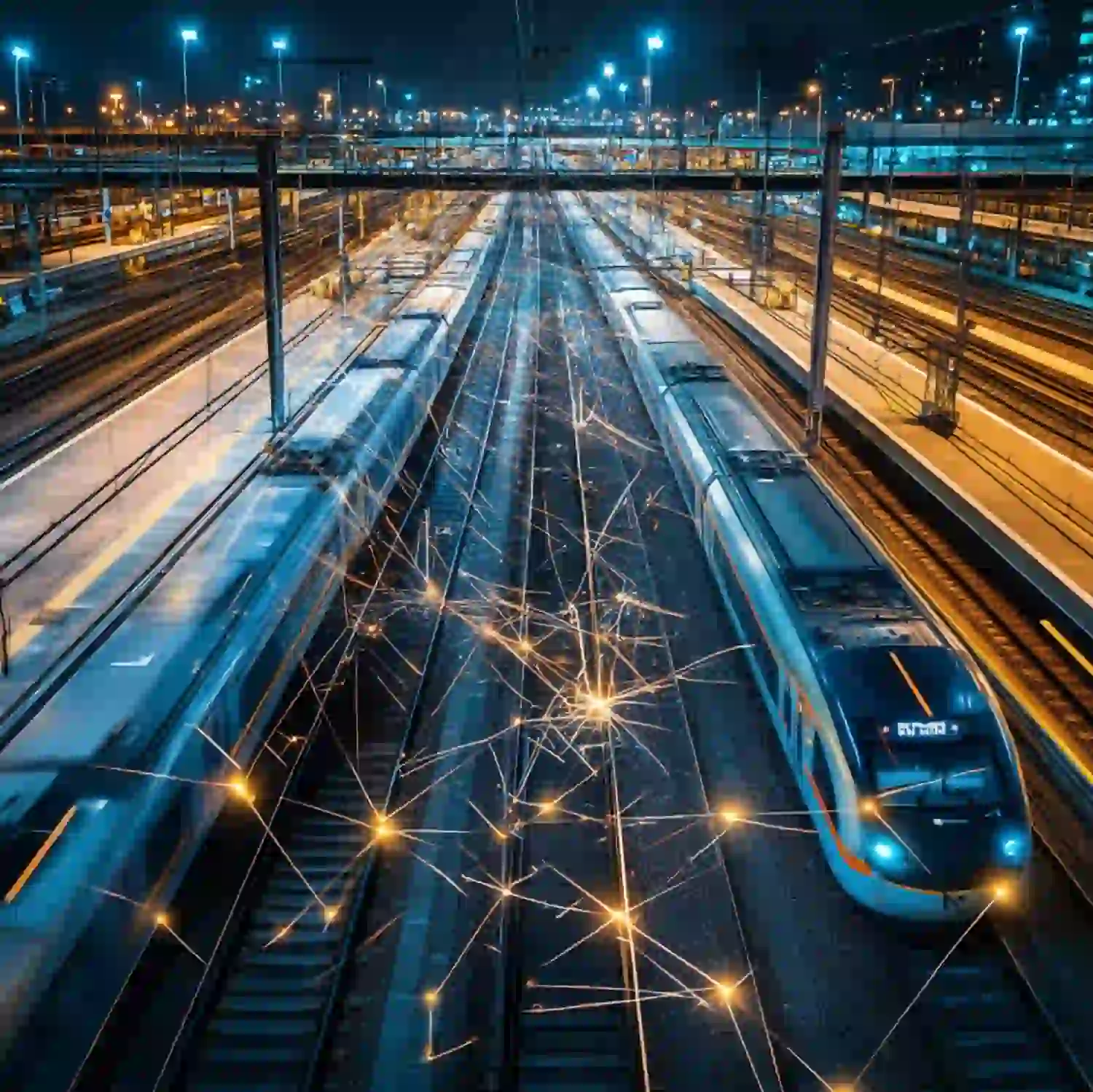

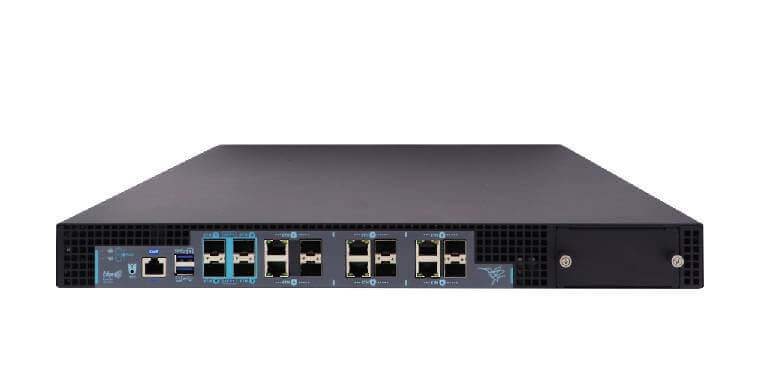
For onboard processing, the H5-Rail UTM brings Edge computing directly onto the train. Running video analytics, diagnostics, and telemetry locally and easing the load on backhaul links. Paired with the APR2044-ax access point for high-density Wi-Fi, operators can deliver richer passenger services, from streaming and real-time journey information to onboard entertainment, while gaining sharper, real-time visibility into rolling stock condition and performance.
Teldat’s solutions also incorporate industrial SD-WAN, intelligently prioritizing traffic based on criticality, favoring alarms and telemetry. Also automatically switching between LTE/5G, Wi-Fi, and satellite links the moment connection quality drops. This built-in network intelligence keeps fleets stable and makes centralized management of distributed rolling stock, across regions and operators, truly practical.
Security is built into every layer, and it is a key development vector for Teldat in railways: reaching beyond the train itself into maintenance facilities, stations, and the operator’s Command and Control and Monitoring Center. Teldat’s railway solutions incorporate SASE, NGFW, Zero Trust OT, and DPI for industrial protocols, protecting signaling and control systems against unauthorized access, process manipulation, and cyberattacks across this wider operational ecosystem. Deep traffic inspection identifies anomalies in real time, while advanced segmentation keeps passenger networks isolated from control systems, containing threats before they can spread from a single train, facility, or site to the rest of the network.
Every Teldat solution for the railway sector is built on a unified architecture that prioritizes security, resilience, and ease of management. Centralized monitoring, remote provisioning, and built-in redundancy keep services running while reducing the burden on operations teams. Because all product families work seamlessly together. Operators can build coherent, future-ready communication infrastructures, from rolling stock to headquarters, ready for wherever the transition toward smarter, more connected railways takes them.

Railway connectivity and security – Use Cases

Onboard & Trackside connectivity
Uninterrupted LTE/5G, Wi-Fi, and LEO satellite connectivity for passengers and operations, even in tunnels and remote lines.

OT Cybersecurity across the ecosystem
Extending OT protection beyond the train to maintenance facilities, stations, control centers, and operator headquarters.

Edge Computing & Fleet Management
Onboard Edge processing and centralized management for predictive maintenance and operational efficiency across the fleet.
Onboard & Trackside connectivity
Uninterrupted LTE/5G, Wi-Fi, and LEO satellite connectivity for passengers and operations, even in tunnels and remote lines.
Challenge
Operators must keep trains, trams, and metros connected across highly variable terrain: dense urban corridors, long tunnels, mountain passes, and remote branch lines where terrestrial coverage is weak or absent. Passenger expectations for onboard Wi-Fi, streaming, and real-time journey information keep rising, while operations teams depend on the same links for CCTV backhaul, ticketing, and telemetry.
Relying on a single cellular provider leaves fleets exposed to coverage gaps and dead zones, degrading both the passenger experience and the flow of operational data. As rolling stock crosses regions, borders, and remote lines, operators need connectivity that adapts automatically, without manual intervention or costly, fragmented infrastructure.
Solution

Teldat’s H5-Rail and H2-Rail onboard routers combine dual-SIM LTE/5G as well as Wi-Fi 6 and Wi-Fi 7 with support for LEO satellite IoT links, extending coverage into tunnels, rural corridors, and cross-border routes where terrestrial networks fall short. Built-in SD-WAN continuously monitors link quality and automatically switches between cellular, Wi-Fi, and satellite paths, prioritizing alarms and telemetry over best-effort traffic.
Centralized management lets operators configure, monitor, and update the entire fleet from a single console, keeping passengers online and operational data flowing, regardless of where the train is running.
Why Teldat?
Decades of experience in demanding, mobile environments let Teldat deliver rugged, EN 50155-oriented hardware built for constant vibration and temperature extremes. Multi-technology connectivity, including LEO satellite, and centralized management make Teldat the platform for always-on railway connectivity.
OT Cybersecurity across the ecosystem
Extending OT protection beyond the train to maintenance facilities, stations, control centers, and operator headquarters.
Challenge
Rail cybersecurity risk no longer stops at the train. Passenger Wi-Fi, ticketing, CCTV, and legacy signaling share onboard infrastructure, while maintenance depots, stations, and trackside cabinets run their own OT equipment, often with weaker perimeter controls. All of it ultimately feeds into the operator’s Command and Control and Monitoring Center, and from there into headquarters IT networks.
This growing convergence of IT and OT, across the train and the wider operational ecosystem, widens the attack surface at every link. A single compromised device, onboard or at a facility, can expose passenger data or reach safety-critical control systems, so operators need consistent authentication, segmentation, and inspection end to end, not just on rolling stock.
Solution

Teldat’s OT cybersecurity extends beyond the train: embedded NGFW, Zero Trust Network Access, and protocol-specific deep packet inspection protect onboard networks, maintenance depots, stations, and trackside cabinets alike, under one consistent security model.
Centralized policy management links these sites to the operator’s Command and Control and Monitoring Center, isolating passenger traffic from signaling and control systems and containing compromised devices before they can spread. Real-time logs and alerts flow through to headquarters, giving operations teams one coherent view of security across the entire railway ecosystem.
Why Teldat?
OT cybersecurity is a strategic development vector for Teldat in railways, reaching from the train itself to maintenance facilities, stations, control centers, and headquarters. One consistent, embedded security model across the whole operational ecosystem, not just rolling stock.
Edge Computing & Fleet Management
Onboard Edge processing and centralized management for predictive maintenance and operational efficiency across the fleet.
Challenge
Fleet operators manage rolling stock spread across depots, regions, and sometimes multiple operators, each generating growing volumes of video, sensor, and telemetry data. Streaming all of it back to a central system strains onboard links, drives up connectivity costs, and delays the diagnostics teams need to plan maintenance.
Without local processing, anomalies in traction, doors, or braking systems can go undetected until a failure occurs, driving up unplanned downtime and costs. At the same time, operators need a single, coherent view of the whole fleet to plan maintenance windows, allocate resources, and respond quickly when something goes wrong, without juggling siloed tools and disconnected platforms across depots.
Solution

The H5-Rail UTM brings Edge computing directly onto rolling stock, running video analytics, diagnostics, and telemetry processing locally, so only relevant, actionable data is sent upstream. This eases pressure on onboard links, cuts connectivity costs, and speeds up detection of anomalies in real time, before they become costly failures.
Centralized management through Teldat’s SD-WAN platform gives operators a single view of the entire fleet, simplifying configuration, monitoring, and software updates while enabling predictive maintenance based on real onboard conditions rather than fixed schedules.
Why Teldat?
Teldat combines connectivity, security, and Edge computing in a single onboard platform, avoiding fragmented, multi-vendor deployments. Centralized management through Teldat’s CNM console makes large, distributed fleets simple to monitor, maintain, and scale.
Read our latest Blog Posts

The vehicle of the future
One day, Henry Ford said: "If I had asked people what they wanted, they would have said faster horses". Twenty years later, horses had disappeared from the roads. Today, vehicles come with advanced safety, alternative fuels, and intelligent driving assistance...

Advances in eSIM technology in the transport sector
In our increasingly connected world, communications play a pivotal role in our everyday lives. Whether it’s staying in touch with friends and family, working remotely, or simply browsing the internet, having reliable connectivity is crucial. Within this context, eSIM...

ITxPT – IT for public transport
When we hear about automotive electronics as a specific field of electronic engineering, one often wonders what makes it so special. As regular consumers, we are familiar with consumer electronics and tend to believe that everything (design, manufacturing, and...