

Teldat’s Switching Technology Solution FAQ’s
1. What is the fundamental difference between a Level 2 (L2) Switch and a Level 3 (L3) Switch?
2. What are Level 2+ (L2+) Switches, and what advantage do they offer?
3. What are the three main types of enterprise switches categorized by network function?
4. What is the role of an Access Switch in a network environment?
5. How do Distribution Switches fit into the network architecture?
6. What is the primary function of a Core Switch, and why is high performance necessary?
7. Why is Power over Ethernet (PoE/PoE+) considered an important feature for switches?
8. How do enterprise switches address the need for network security?
9. What is Quality of Service (QoS) and why is it essential for enterprise applications?
10. What are VXLAN and VSU, and why are they important in core switches like the Windbit ESW4L3?
11. Which Teldat switch is designed for critical scenarios requiring non-stop operation?
12. Which Teldat switch is recommended for large campus networks and datacenters?
13. Which Teldat switch series is best suited for small to mid-sized businesses (SMEs) or branch offices?
14. What role do switches play in the modern SD-Branch solution?
15. How are enterprise-level switch demands being shaped by technological market trends?
1. What is the fundamental difference between a Level 2 (L2) Switch and a Level 3 (L3) Switch?
Level 2 (L2) Switches operate at the data link layer of the OSI model and handle the switching of data frames based on MAC addresses. Level 3 (L3) Switches function at the network layer and are capable of routing packets based on IP addresses.
2. What are Level 2+ (L2+) Switches, and what advantage do they offer?
Level 2+ (L2+) Switches can be considered a streamlined version of Level 3 Switches, as they possess the ability to carry out limited Level 3 switching functionalities. They allow for faster hardware processing for high-speed data flows and advanced features. L2+ switches also permit a high cost performance when required.
3. What are the three main types of enterprise switches categorized by network function?
4. What is the role of an Access Switch in a network environment?
5. How do Distribution Switches fit into the network architecture?
6. What is the primary function of a Core Switch, and why is high performance necessary?
7. Why is Power over Ethernet (PoE/PoE+) considered an important feature for switches?
8. How do enterprise switches address the need for network security?
Security is a vital concern in contemporary enterprise networks. Enterprise switches offer essential security features, including MAC address bypass (MAB) authentication and Access Control Lists (ACLs), which manage which devices are allowed or denied network access. Switches also utilize VLAN support, enabling network segmentation to enhance security and efficiency.
9. What is Quality of Service (QoS) and why is it essential for enterprise applications?
Quality of Service (QoS) is a critical feature allowing the prioritization of specific types of traffic. This ensures that critical applications receive the necessary bandwidth and resources, guaranteeing a high operation experience.
10. What are VXLAN and VSU, and why are they important in core switches like the Windbit ESW4L3?
Virtual Extensible LAN (VXLAN) is used to provide scalability, ensuring performance in large environments. Virtual Switch Unit (VSU) ensures redundancy with high availability and failover capabilities, as well as synchronization to maintain consistent configurations for seamless operation of large switch scenarios. The Teldat Windbit ESW4L3 core switch works on both VXLAN and VSU.
11. Which Teldat switch is designed for critical scenarios requiring non-stop operation?
Teldat’s Windbit ESW2L3 is a Layer 3 managed access switch designed for critical scenarios. It is distinguished by the inclusion of two power modules (redundant power module), assuring 24x7x365 service by eliminating the risk of outages. This switch is often used in industries such as healthcare or security.
12. Which Teldat switch is recommended for large campus networks and datacenters?
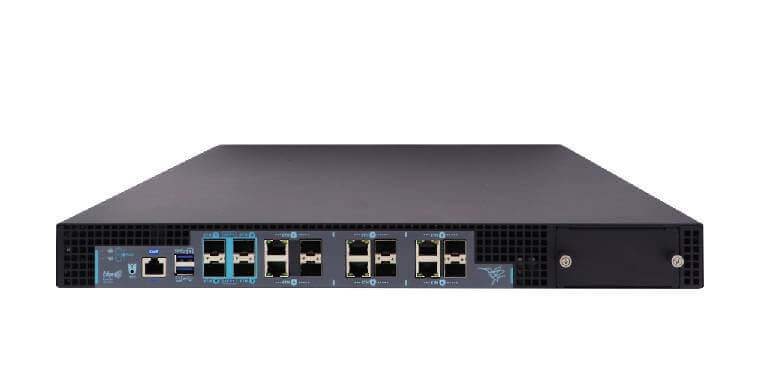
The Teldat’s Windbit ESW4L3 switch is a high-performance Layer 3 core switch designed for diverse campus and datacenter scenarios. It features an advanced hardware architecture for elevated processing and offers high-speed interfaces, including 10G and 25G access ports, and a 100Gbps interface for uplink, avoiding bottlenecks.
13. Which Teldat switch series is best suited for small to mid-sized businesses (SMEs) or branch offices?
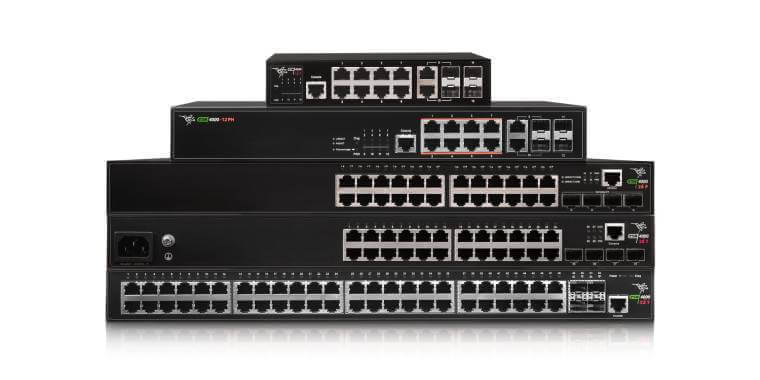
Companies with moderate network demands, such as small to mid-sized businesses or branch offices, would benefit from the Windbit ESW0L3 series. It provides essential Layer 3 functionalities without additional licensing requirements, along with PoE/PoE+ capabilities, making it suitable for less complex infrastructures and organizations with budget constraints.
14. What role do switches play in the modern SD-Branch solution?
In an SD-Branch scenario, switches enhance network performance, reliability, and resilience. They offer a centralized management and orchestration point for the branch network, and also enable advanced cybersecurity features and segmentation for protection.