
Logo Teldat

• Cybersecurity Glossary

What is a Private 5G Network?

A private 5G network is a dedicated cellular mobile network deployed for the exclusive use of a single organization, with full control over coverage, capacity, security policies, and the data that traverses it. Unlike public mobile operator networks shared by all subscribers, a private 5G network uses dedicated radio infrastructure, a dedicated core network (often deployed at the edge), and licensed, shared, or unlicensed spectrum reserved for the operating organization. The result is a network purpose-built for industrial environments, critical infrastructure, and enterprise campuses where deterministic performance, data sovereignty, and operational autonomy matter more than coverage outside the perimeter. With 3GPP Release 16 and 17 introducing the standardized frameworks for Non-Public Networks (NPN), private 5G is the connectivity foundation of Industry 4.0 and increasingly, of the operational technology layer of utilities, transport, healthcare, and defense.

Private 5G network definition

A private 5G network is a 5G mobile network built and operated for the exclusive use of a defined organization, covering a specific geographic area such as a factory, port, mine, hospital, airport, or enterprise campus. The 3GPP standardization body refers to these as Non-Public Networks (NPN), a category formally introduced in Release 16 and refined in Release 17. The defining characteristic is that the network’s radio access, transport, and core elements serve a single tenant, with policies, identities, and traffic kept within the organization’s control.

There are two principal deployment models recognized by 3GPP. A Stand-alone Non-Public Network (SNPN) is fully independent: its own spectrum, its own core, its own subscriber identities, with no requirement for a public mobile network operator. A Public Network Integrated NPN (PNI-NPN) shares some elements with a public operator typically the radio access or part of the core while keeping the data plane and security policies under the organization’s control through mechanisms such as network slicing.

The distinction matters operationally. SNPN is the choice when data sovereignty, isolation, and full autonomy are non-negotiable typical in defense, critical manufacturing, or environments where public spectrum is unavailable. PNI-NPN suits scenarios where seamless handover to public coverage and a lighter operational footprint outweigh full isolation. Both models can coexist with private LTE deployments, and both rely on dedicated edge computing infrastructure to deliver the low latency that defines the 5G value proposition for industry.

Architecture and network components

A private 5G network is built from the same architectural blocks as a public mobile network, but each block is sized, located, and managed for a single organization. The six components below cover what every private 5G deployment includes, and where Teldat infrastructure fits into the picture.

1
The radio layer consists of small cell base stations (gNodeBs) deployed across the coverage area indoor radio heads for factory floors, ruggedized outdoor units for ports and yards, distributed antenna systems for hospitals. The RAN connects user equipment (industrial routers, IoT sensors, AGVs, handheld devices) to the core network. Private 5G typically uses a Centralized Unit / Distributed Unit (CU/DU) split, allowing baseband processing to be consolidated at the edge while radio units remain close to the antennas.
2
The 5G Core handles authentication, session management, policy enforcement, and the user plane that carries data traffic. In a private deployment, the 5GC is usually deployed locally on-premises or in a regional edge data center rather than in a hyperscaler cloud region. Local deployment is what delivers the low latency that distinguishes private 5G from operator-routed connectivity. It is also what keeps subscriber and traffic data physically within the organization’s perimeter.
3
User Plane Function (UPF) at the edge
The UPF is the data plane element of the 5G Core. In private 5G, the UPF is colocated with the user equipment to minimize round-trip time a critical requirement for the Ultra-Reliable Low-Latency Communications (URLLC) class of service that supports robotic control, mobile-machine coordination, and real-time vision. Teldat edge routers integrate with the UPF for traffic offload, application steering, and SD-WAN policy enforcement on the data plane.
4
Subscriber identity and SIM management
Devices on a private 5G network authenticate using SIMs, eSIMs, or iSIMs provisioned with credentials issued by the organization’s private identity store. The Authentication Server Function (AUSF) and the Unified Data Management (UDM) functions handle this entirely within the private domain no dependency on a public operator’s subscriber database. This is what gives private 5G its identity sovereignty: only devices the organization has explicitly enrolled can connect.
5
Edge computing and integration layer
Most private 5G deployments include an edge computing layer that hosts the applications consuming the connectivity: machine vision, predictive maintenance analytics, AGV coordination, real-time control loops. The edge layer reduces the latency budget further by keeping data and processing on the same physical site. Teldat industrial gateways and SD-WAN edge devices provide the integration layer between the 5G network and the OT systems, IT data centers, and cloud services that consume the data.
6
Network management and orchestration
Private 5G operations cover spectrum monitoring, RAN configuration, slice instantiation, and policy enforcement across user groups. The management plane connects to the enterprise’s IT operations through standardized northbound interfaces. Teldat Cloud Net Manager (CNM) provides centralized orchestration of the SD-WAN and security layers that sit alongside the private 5G core, giving a unified operational view across the entire connectivity stack from the radio edge to the cloud.

The edge is the defining architectural principle. Public 5G centralizes the core in the operator’s regional data centers and accepts the resulting latency and data movement. Private 5G inverts this: the core, the user plane, and the application logic all sit on the same physical site as the radios. This is why private 5G can deliver sub-10-millisecond round-trip times for industrial control, while public 5G cannot.

Spectrum and deployment models

Spectrum is the single most decisive factor in a private 5G project. The radio frequencies the network can use determine cost, coverage characteristics, regulatory obligations, and which deployment model is feasible. The five paths below cover the main spectrum options available to enterprise operators worldwide.

1
Licensed spectrum direct allocation
Some regulators (Germany’s BNetzA in band n78 at 3.7–3.8 GHz, Japan’s local 5G in n79 at 4.6–4.9 GHz, the UK’s Ofcom shared access licenses) grant enterprises direct rights to spectrum for private deployments. This is the cleanest model: the organization owns the right to transmit and faces no contention from other users. Initial cost is higher, but operational predictability is unmatched.
2
CBRS in the United States shared access
The Citizens Broadband Radio Service in band 48 (3.55–3.7 GHz) uses a three-tier Spectrum Access System (SAS) that dynamically coordinates incumbent users, Priority Access License (PAL) holders, and General Authorized Access (GAA) users. CBRS has made private 5G economically accessible to manufacturers, ports, and campuses in the US GAA access requires no spectrum purchase, only SAS coordination.
3
Leased spectrum from public operators
Public mobile operators in many countries lease portions of their licensed spectrum to enterprises for private deployments. This typically takes the form of a network slice or a dedicated frequency block within bands n78, n77, or n28. The operator retains overall spectrum management; the enterprise gets exclusive use within its perimeter.
4
Unlicensed and lightly licensed bands
5G NR-U (New Radio in Unlicensed) operates in the 5 GHz and 6 GHz unlicensed bands. This eliminates spectrum cost entirely but introduces coexistence with Wi-Fi and other unlicensed users. Suitable for indoor industrial environments where coverage area is bounded and Wi-Fi traffic can be controlled.
5
Hybrid public + private PNI-NPN
In the Public Network Integrated NPN model, the enterprise uses an operator’s licensed spectrum and RAN under a private slice or virtual private network architecture. Data traffic for the private network is logically segregated, often with a dedicated UPF deployed at the enterprise edge. This model trades full isolation for operational simplicity and seamless handover to public coverage.
6
Spectrum-aware deployment design
Spectrum choice cascades into every other architectural decision: band n78 (3.5 GHz) for outdoor industrial coverage, band n258 (mmWave) for ultra-high-bandwidth fixed wireless within a single building, band n28 (700 MHz) for wide-area coverage with deep penetration. Teldat works with system integrators and spectrum holders to align radio planning with the enterprise’s operational requirements, from initial site survey through long-term capacity planning.

Private 5G vs public 5G, Wi-Fi 6 and Wi-Fi 7

Private 5G is not a replacement for public 5G or Wi-Fi it is a complement positioned at a specific point on the price, performance, and control axis. The comparison below isolates the differences that matter for industrial and critical infrastructure decisions, where the choice typically comes down to private 5G vs Wi-Fi 6 and Wi-FI 7 for indoor industrial coverage.

Dimension Public 5G Private 5G Wi-Fi 6 and Wi-Fi 7
Spectrum Operator-licensed spectrum, shared with all subscribers Dedicated licensed, CBRS, or unlicensed band reserved for one organization Unlicensed 2.4 / 5 / 6 GHz shared with all nearby Wi-Fi networks
Latency 20–50 ms round-trip typical (depends on operator core location) Sub-10 ms achievable with edge UPF supports URLLC 10–30 ms typical, variable under contention
Reliability Best-effort for most subscribers; SLA tiers available Carrier-grade with deterministic delivery; engineered for 99.999% Statistical multiplexing; variable under load
Coverage Wide-area outdoor coverage operated by mobile operator Engineered for site-specific coverage: factory, port, campus, hospital Limited to building / room with rapid signal fall-off through walls
Mobility Seamless handover across operator macro cells Seamless handover within private cells; optional handover to public Roaming requires controller-mediated handoff; less seamless
Device density Operator-managed quality at high density Engineered density: thousands of devices per cell with QoS Saturates above a few hundred active devices per AP
Data sovereignty Traffic traverses operator infrastructure All traffic and identities stay within the organization’s perimeter Traffic stays local; identities typically in enterprise directory
Cost model Per-subscriber operator subscription CAPEX-heavy initial build, predictable operational cost Lowest CAPEX; OPEX rises with controller, spectrum coexistence work

The decision rule: private 5G is the right choice when deterministic latency, mobility, device density, and data sovereignty all matter simultaneously. Wi-Fi 6 and Wi-Fi 7 remains the better fit for cost-sensitive indoor coverage with no critical mobility requirements. Most real industrial deployments use both Wi-Fi for office and warehouse coverage, private 5G for the production floor, mobile assets, and outdoor yards.

Industry Use cases

Private 5G adoption is moving from pilot deployments to production rollouts across sectors where the connectivity characteristics of public mobile networks or Wi-Fi cannot meet operational requirements. The use cases below cover the verticals where private 5G is delivering measurable operational impact today.

1
Automotive plants, electronics manufacturing, and process industries deploy private 5G to connect Automated Guided Vehicles (AGVs), Autonomous Mobile Robots (AMRs), connected workers with AR headsets, and high-resolution machine vision systems. The combination of mobility, deterministic latency, and traffic isolation enables flexible production lines that fixed Ethernet cannot match and that Wi-Fi cannot deliver with the required reliability.
2
Ports, mines, and logistics yards
Container ports and mining operations cover several square kilometers with metallic structures and heavy machinery that block Wi-Fi signals and degrade public 5G. Private 5G with outdoor radio units, sometimes augmented with mmWave for high-bandwidth backhaul, provides the reliable wide-area coverage required for autonomous cranes, remote-operated trucks, and real-time logistics tracking.
3
Electric utilities deploy private LTE and private 5G for substation automation, distribution automation, and the secondary control plane of smart grid operations. The combination of wide-area coverage, deterministic delivery, and full data sovereignty meets NERC CIP, NIS2, and ENS requirements that public operator networks cannot easily satisfy. Teldat industrial gateways with embedded NGFW support utility-grade private 5G integration.
4
Hospitals and healthcare campuses
Hospitals deploy private 5G for connected medical equipment, asset tracking of high-value mobile assets, real-time patient monitoring beyond the wired bedside, and high-definition video for telesurgery and consultation. Patient data sovereignty and reliability requirements are the primary drivers both fundamentally incompatible with shared public operator networks.
5
Defense and critical national infrastructure
Military bases, naval ports, energy installations, and government campuses adopt private 5G under stand-alone NPN configurations to ensure that no traffic and no identities leave the organizational perimeter. The combination of full spectrum control, encrypted radio, edge core, and sovereign identity management gives security postures that public operator slicing alone cannot deliver.
6
Transport airports, railways, and motorways
Airports use private 5G for ground operations: baggage tracking, ground vehicle coordination, and apron CCTV. Rail operators deploy it along corridors for in-train passenger services and CBTC (Communications-Based Train Control). Highway operators use it for ITS (Intelligent Transport System) deployments and connected roadside infrastructure. Each of these requires linear coverage, mobility handover, and operational independence from public consumer networks.

The common pattern: private 5G is chosen where one or more of four factors apply operational mobility over a wide site, deterministic latency for control systems, data sovereignty driven by regulation or security, or device density well beyond Wi-Fi limits. When at least two of these factors apply, private 5G typically becomes the most cost-effective choice over the full operational lifetime of the system.

Benefits and security advantages

The business case for private 5G usually rests on a combination of operational and security advantages that no public network or Wi-Fi deployment can deliver simultaneously. The six advantages below cover the value drivers that justify the higher initial capital expenditure.

1
Deterministic performance for industrial control
URLLC capabilities in 5G can deliver sub-1-millisecond air-interface latency with 99.9999% reliability the threshold required for real-time motion control, mobile robot coordination, and process control loops that previously required wired connections. No public mobile network and no Wi-Fi deployment can guarantee these numbers for the device population a typical factory needs.
2
Data sovereignty and regulatory alignment
All subscriber identities, session data, and traffic remain physically within the organization’s perimeter. This aligns directly with NIS2 (EU), the CER Directive, Spain’s ENS Categoría Alta, the US NIST SP 800-82 industrial control system framework, and sector-specific regulations in defense, healthcare, and critical infrastructure. Private 5G is often the only technically and legally compatible option for regulated operational environments.

3
Engineered security from the radio edge
3GPP security mechanisms SUCI for subscriber identity protection, network domain security, secure roaming protocols combine with private identity management and edge encryption to deliver a security posture that surpasses both public mobile networks and Wi-Fi. Teldat edge routers add SD-WAN segmentation, embedded NGFW, and integration with the be.Safe XDR platform to extend the security boundary from the radio into the OT and IT layers.
4
Scalable device density
5G supports up to one million connected devices per square kilometer in massive Machine-Type Communications (mMTC) configurations. Industrial sites with thousands of sensors, tools, mobile assets, and wearables can be served by a single private 5G network with deterministic QoS a scale that aggregated Wi-Fi cannot reach without prohibitive infrastructure overhead.
5
Network slicing for differentiated services
A single private 5G network can be partitioned into multiple logical slices one for URLLC robotic control, one for mMTC sensor telemetry, one for enhanced Mobile Broadband (eMBB) video, one for connected worker handhelds each with its own QoS profile and security policy. This allows a single radio infrastructure to support the full diversity of industrial connectivity requirements without operational compromise.
6
Integration with SD-WAN and SSE
Private 5G is rarely deployed in isolation. It connects to the enterprise WAN, to cloud SaaS, and to remote sites. Teldat SD-WAN integrates the private 5G connectivity into the broader network fabric with application-aware routing, while be.Safe Pro SSE extends Secure Web Gateway, CASB, and ZTNA protections to traffic leaving the private 5G perimeter closing the security gap between the radio edge and cloud destinations.

Teldat private 5G solutions

As a European network hardware manufacturer and cybersecurity software provider, Teldat positions private 5G within an integrated connectivity and security platform. The components below cover where Teldat technology fits into a private 5G deployment, and why integration with SD-WAN, NGFW, and centralized orchestration matters for the operational lifetime of the network.

1
Industrial 5G edge routers and gateways
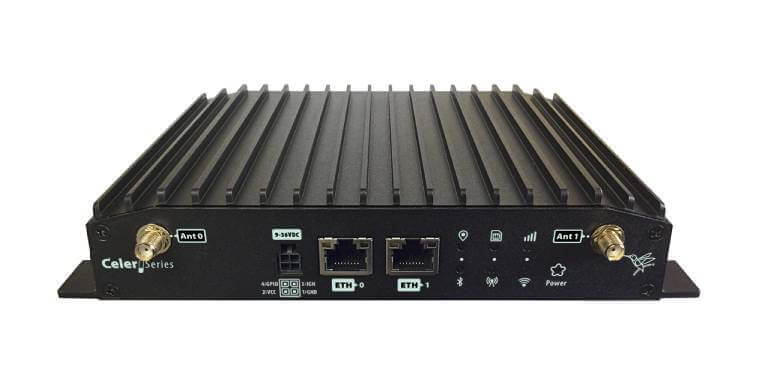
Teldat manufactures industrial-grade routers and gateways with integrated 5G connectivity, suitable for deployment as customer-premises equipment (CPE) in private 5G environments, as backup connectivity in mission-critical sites, and as integration points between the 5G network and OT/IT systems. Ruggedized form factors support deployment in industrial cabinets, vehicles, and outdoor enclosures.
2
SD-WAN integration with private 5G
Teldat SD-WAN integrates private 5G connectivity as a transport overlay alongside MPLS, fiber, and Internet links. Application-aware routing, QoS, and failover policies treat the private 5G interface as a first-class WAN link, allowing private 5G to be deployed for mission-critical traffic and backup transport in a single unified fabric. Configuration and monitoring are managed centrally through Teldat CNM.
3
Embedded NGFW at every edge point
Every Teldat edge router includes an embedded Next Generation Firewall providing intrusion prevention, application control, and threat intelligence at the boundary between the private 5G network and the rest of the enterprise infrastructure. This eliminates the need for a separate firewall appliance in many deployments and ensures consistent security policy enforcement across the WAN fabric, including the private 5G interface.

4
be.Safe Pro SSE cloud security beyond the 5G perimeter
Traffic leaving the private 5G network for SaaS applications, cloud workloads, or external partners is protected by Teldat be.Safe Pro SSE. The platform combines Secure Web Gateway, Cloud Access Security Broker (CASB), and Zero Trust Network Access (ZTNA), ensuring that the security boundary established at the radio edge extends through to cloud destinations closing the gap that pure radio security cannot address.
5
be.Safe XDR for industrial threat detection
be.Safe XDR provides extended detection and response across the network, endpoint, and OT layers. Network Traffic Analysis (NTA) capabilities feed traffic telemetry from the private 5G edge into the XDR platform, enabling detection of anomalies in industrial communication patterns that signature-based tools cannot identify. Particularly relevant for utilities, manufacturing, and critical infrastructure where the OT layer requires specialized visibility.
6
CNM unified orchestration across the connectivity stack
Teldat Cloud Net Manager (CNM) provides centralized configuration, monitoring, and policy management across SD-WAN, security, and edge connectivity including private 5G interfaces. A single operational view spans factory floors, branch offices, data centers, and cloud destinations, eliminating the operational silos that result from managing the radio network, the WAN, and the security layer as independent stacks.

The Teldat private 5G value proposition: private 5G connectivity is only as useful as its integration with the rest of the enterprise stack. Teldat delivers industrial 5G edge hardware, SD-WAN overlay, embedded NGFW, cloud-delivered SSE, and centralized orchestration as a unified platform. Organizations deploying private 5G particularly for utilities, manufacturing, and critical infrastructure get a connectivity and security stack designed to work as a single system, not a multi-vendor integration project.

Frequently asked questions (FAQ’s) about private 5G networks

❯ What is a private 5G network?

A private 5G network is a dedicated cellular mobile network deployed and operated for the exclusive use of a single organization, covering a defined area such as a factory, port, mine, hospital, airport, or enterprise campus. The 3GPP standardization body classifies these as Non-Public Networks (NPN), introduced in Release 16 and extended in Release 17. Unlike public mobile networks that serve all subscribers, every element of a private 5G network radio, core, identities, traffic serves one organization, under that organization’s policies.

❯ How is private 5G different from public 5G?

Public 5G is operated by a mobile operator and serves all subscribers across a wide coverage area, with the core network in regional operator data centers. Private 5G is operated for a single organization, with the core network typically deployed locally (often at the edge of the site) to deliver sub-10-millisecond latency. All subscriber identities, traffic, and policies stay within the organization’s perimeter, providing data sovereignty that public networks cannot match. Private 5G also engineers reliability and device density to industrial requirements that public networks meet only for premium SLA tiers.

❯ What spectrum can a private 5G network use?

Multiple options exist depending on the country. In Germany, BNetzA grants direct local licenses in band n78 (3.7–3.8 GHz). In the US, the Citizens Broadband Radio Service (CBRS) in band 48 provides shared access through the Spectrum Access System (SAS). In Japan, local 5G is allocated in band n79. The UK uses shared access licenses managed by Ofcom. Other paths include leased spectrum from public operators (under PNI-NPN slicing arrangements) and unlicensed bands via 5G NR-U. The optimal choice depends on coverage requirements, regulatory environment, and integration with public network roaming.

❯ Does private 5G replace Wi-Fi?

No private 5G complements Wi-Fi rather than replacing it. Wi-Fi 6 and Wi-Fi 7 remain the more cost-effective choice for indoor coverage in office buildings, warehouses, and other environments where critical mobility and deterministic latency are not required. Private 5G is the right choice for outdoor industrial yards, mobile assets, production floors with safety-critical machine control, and environments where data sovereignty makes shared infrastructure unacceptable. Most real deployments use both technologies in parallel.

❯ How does Teldat support private 5G deployments?

Teldat manufactures industrial-grade 5G edge routers and gateways, integrates private 5G as a transport overlay in its SD-WAN platform, embeds Next Generation Firewall capabilities at every edge point, and extends security policy to cloud destinations through be.Safe Pro SSE. be.Safe XDR provides extended detection and response across the network, endpoint, and OT layers including traffic telemetry from the private 5G edge. All components are orchestrated centrally through Teldat Cloud Net Manager (CNM), providing unified operational visibility across the entire connectivity and security stack.

❯ Is private 5G secure enough for critical infrastructure?

Private 5G can meet the security requirements of critical infrastructure when deployed correctly. The 3GPP security architecture, combined with local subscriber identity management, local core deployment, and integration with enterprise security platforms, provides a posture that meets NIS2 (EU), the CER Directive, Spain’s ENS Categoría Alta, US NIST SP 800-82 (industrial control systems), and sector-specific regulations in defense, healthcare, and utilities. The Teldat integration of private 5G with SD-WAN, embedded NGFW, be.Safe Pro SSE, and be.Safe XDR is engineered to meet these requirements as a single system rather than a multi-vendor assembly.

Build your private 5G network with Teldat

From industrial-grade 5G edge hardware to integrated SD-WAN, embedded NGFW, cloud-delivered SSE, and unified orchestration through CNM Teldat delivers private 5G as a complete connectivity and security platform engineered for industry, utilities, and critical infrastructure.