

• Cybersecurity Glossary
What is a Private 5G Network?
A private 5G network is a dedicated cellular mobile network deployed for the exclusive use of a single organization, with full control over coverage, capacity, security policies, and the data that traverses it. Unlike public mobile operator networks shared by all subscribers, a private 5G network uses dedicated radio infrastructure, a dedicated core network (often deployed at the edge), and licensed, shared, or unlicensed spectrum reserved for the operating organization. The result is a network purpose-built for industrial environments, critical infrastructure, and enterprise campuses where deterministic performance, data sovereignty, and operational autonomy matter more than coverage outside the perimeter. With 3GPP Release 16 and 17 introducing the standardized frameworks for Non-Public Networks (NPN), private 5G is the connectivity foundation of Industry 4.0 and increasingly, of the operational technology layer of utilities, transport, healthcare, and defense.
Private 5G network definition
A private 5G network is a 5G mobile network built and operated for the exclusive use of a defined organization, covering a specific geographic area such as a factory, port, mine, hospital, airport, or enterprise campus. The 3GPP standardization body refers to these as Non-Public Networks (NPN), a category formally introduced in Release 16 and refined in Release 17. The defining characteristic is that the network’s radio access, transport, and core elements serve a single tenant, with policies, identities, and traffic kept within the organization’s control.
There are two principal deployment models recognized by 3GPP. A Stand-alone Non-Public Network (SNPN) is fully independent: its own spectrum, its own core, its own subscriber identities, with no requirement for a public mobile network operator. A Public Network Integrated NPN (PNI-NPN) shares some elements with a public operator typically the radio access or part of the core while keeping the data plane and security policies under the organization’s control through mechanisms such as network slicing.
The distinction matters operationally. SNPN is the choice when data sovereignty, isolation, and full autonomy are non-negotiable typical in defense, critical manufacturing, or environments where public spectrum is unavailable. PNI-NPN suits scenarios where seamless handover to public coverage and a lighter operational footprint outweigh full isolation. Both models can coexist with private LTE deployments, and both rely on dedicated edge computing infrastructure to deliver the low latency that defines the 5G value proposition for industry.
Architecture and network components
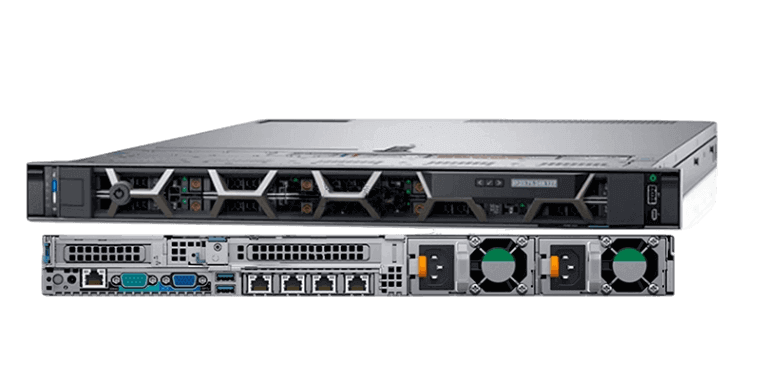
A private 5G network is built from the same architectural blocks as a public mobile network, but each block is sized, located, and managed for a single organization. The six components below cover what every private 5G deployment includes, and where Teldat infrastructure fits into the picture.
The edge is the defining architectural principle. Public 5G centralizes the core in the operator’s regional data centers and accepts the resulting latency and data movement. Private 5G inverts this: the core, the user plane, and the application logic all sit on the same physical site as the radios. This is why private 5G can deliver sub-10-millisecond round-trip times for industrial control, while public 5G cannot.
Spectrum and deployment models
Spectrum is the single most decisive factor in a private 5G project. The radio frequencies the network can use determine cost, coverage characteristics, regulatory obligations, and which deployment model is feasible. The five paths below cover the main spectrum options available to enterprise operators worldwide.
Private 5G vs public 5G, Wi-Fi 6 and Wi-Fi 7
Private 5G is not a replacement for public 5G or Wi-Fi it is a complement positioned at a specific point on the price, performance, and control axis. The comparison below isolates the differences that matter for industrial and critical infrastructure decisions, where the choice typically comes down to private 5G vs Wi-Fi 6 and Wi-FI 7 for indoor industrial coverage.
| Dimension | Public 5G | Private 5G | Wi-Fi 6 and Wi-Fi 7 |
|---|---|---|---|
| Spectrum | Operator-licensed spectrum, shared with all subscribers | Dedicated licensed, CBRS, or unlicensed band reserved for one organization | Unlicensed 2.4 / 5 / 6 GHz shared with all nearby Wi-Fi networks |
| Latency | 20–50 ms round-trip typical (depends on operator core location) | Sub-10 ms achievable with edge UPF supports URLLC | 10–30 ms typical, variable under contention |
| Reliability | Best-effort for most subscribers; SLA tiers available | Carrier-grade with deterministic delivery; engineered for 99.999% | Statistical multiplexing; variable under load |
| Coverage | Wide-area outdoor coverage operated by mobile operator | Engineered for site-specific coverage: factory, port, campus, hospital | Limited to building / room with rapid signal fall-off through walls |
| Mobility | Seamless handover across operator macro cells | Seamless handover within private cells; optional handover to public | Roaming requires controller-mediated handoff; less seamless |
| Device density | Operator-managed quality at high density | Engineered density: thousands of devices per cell with QoS | Saturates above a few hundred active devices per AP |
| Data sovereignty | Traffic traverses operator infrastructure | All traffic and identities stay within the organization’s perimeter | Traffic stays local; identities typically in enterprise directory |
| Cost model | Per-subscriber operator subscription | CAPEX-heavy initial build, predictable operational cost | Lowest CAPEX; OPEX rises with controller, spectrum coexistence work |
The decision rule: private 5G is the right choice when deterministic latency, mobility, device density, and data sovereignty all matter simultaneously. Wi-Fi 6 and Wi-Fi 7 remains the better fit for cost-sensitive indoor coverage with no critical mobility requirements. Most real industrial deployments use both Wi-Fi for office and warehouse coverage, private 5G for the production floor, mobile assets, and outdoor yards.
Industry Use cases
Private 5G adoption is moving from pilot deployments to production rollouts across sectors where the connectivity characteristics of public mobile networks or Wi-Fi cannot meet operational requirements. The use cases below cover the verticals where private 5G is delivering measurable operational impact today.
The common pattern: private 5G is chosen where one or more of four factors apply operational mobility over a wide site, deterministic latency for control systems, data sovereignty driven by regulation or security, or device density well beyond Wi-Fi limits. When at least two of these factors apply, private 5G typically becomes the most cost-effective choice over the full operational lifetime of the system.
Benefits and security advantages
The business case for private 5G usually rests on a combination of operational and security advantages that no public network or Wi-Fi deployment can deliver simultaneously. The six advantages below cover the value drivers that justify the higher initial capital expenditure.
Teldat private 5G solutions
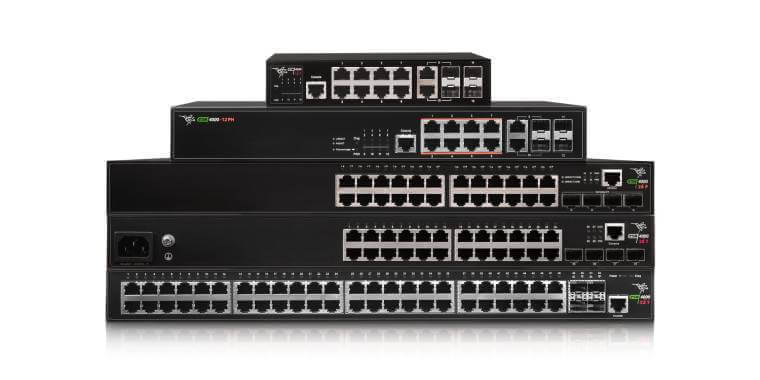
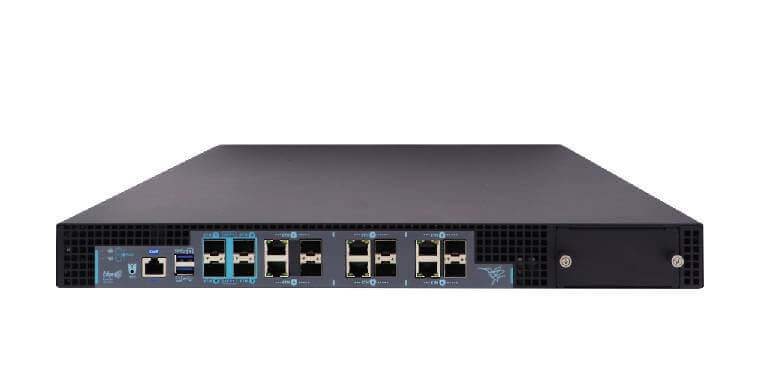
As a European network hardware manufacturer and cybersecurity software provider, Teldat positions private 5G within an integrated connectivity and security platform. The components below cover where Teldat technology fits into a private 5G deployment, and why integration with SD-WAN, NGFW, and centralized orchestration matters for the operational lifetime of the network.
The Teldat private 5G value proposition: private 5G connectivity is only as useful as its integration with the rest of the enterprise stack. Teldat delivers industrial 5G edge hardware, SD-WAN overlay, embedded NGFW, cloud-delivered SSE, and centralized orchestration as a unified platform. Organizations deploying private 5G particularly for utilities, manufacturing, and critical infrastructure get a connectivity and security stack designed to work as a single system, not a multi-vendor integration project.
Frequently asked questions (FAQ’s) about private 5G networks
❯ What is a private 5G network?
A private 5G network is a dedicated cellular mobile network deployed and operated for the exclusive use of a single organization, covering a defined area such as a factory, port, mine, hospital, airport, or enterprise campus. The 3GPP standardization body classifies these as Non-Public Networks (NPN), introduced in Release 16 and extended in Release 17. Unlike public mobile networks that serve all subscribers, every element of a private 5G network radio, core, identities, traffic serves one organization, under that organization’s policies.
❯ How is private 5G different from public 5G?
Public 5G is operated by a mobile operator and serves all subscribers across a wide coverage area, with the core network in regional operator data centers. Private 5G is operated for a single organization, with the core network typically deployed locally (often at the edge of the site) to deliver sub-10-millisecond latency. All subscriber identities, traffic, and policies stay within the organization’s perimeter, providing data sovereignty that public networks cannot match. Private 5G also engineers reliability and device density to industrial requirements that public networks meet only for premium SLA tiers.
❯ What spectrum can a private 5G network use?
Multiple options exist depending on the country. In Germany, BNetzA grants direct local licenses in band n78 (3.7–3.8 GHz). In the US, the Citizens Broadband Radio Service (CBRS) in band 48 provides shared access through the Spectrum Access System (SAS). In Japan, local 5G is allocated in band n79. The UK uses shared access licenses managed by Ofcom. Other paths include leased spectrum from public operators (under PNI-NPN slicing arrangements) and unlicensed bands via 5G NR-U. The optimal choice depends on coverage requirements, regulatory environment, and integration with public network roaming.
❯ Does private 5G replace Wi-Fi?
No private 5G complements Wi-Fi rather than replacing it. Wi-Fi 6 and Wi-Fi 7 remain the more cost-effective choice for indoor coverage in office buildings, warehouses, and other environments where critical mobility and deterministic latency are not required. Private 5G is the right choice for outdoor industrial yards, mobile assets, production floors with safety-critical machine control, and environments where data sovereignty makes shared infrastructure unacceptable. Most real deployments use both technologies in parallel.
❯ How does Teldat support private 5G deployments?
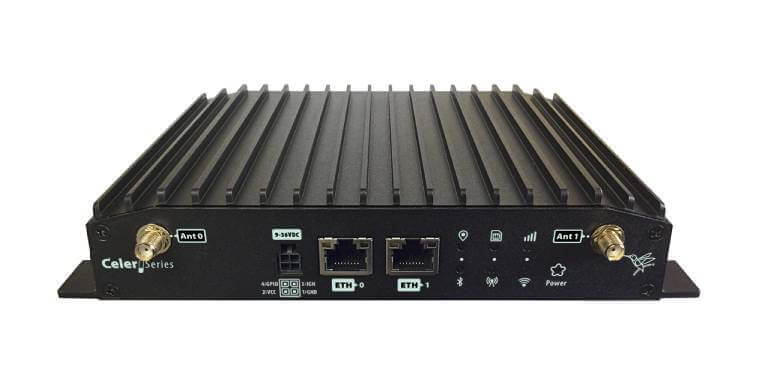
Teldat manufactures industrial-grade 5G edge routers and gateways, integrates private 5G as a transport overlay in its SD-WAN platform, embeds Next Generation Firewall capabilities at every edge point, and extends security policy to cloud destinations through be.Safe Pro SSE. be.Safe XDR provides extended detection and response across the network, endpoint, and OT layers including traffic telemetry from the private 5G edge. All components are orchestrated centrally through Teldat Cloud Net Manager (CNM), providing unified operational visibility across the entire connectivity and security stack.
❯ Is private 5G secure enough for critical infrastructure?
Private 5G can meet the security requirements of critical infrastructure when deployed correctly. The 3GPP security architecture, combined with local subscriber identity management, local core deployment, and integration with enterprise security platforms, provides a posture that meets NIS2 (EU), the CER Directive, Spain’s ENS Categoría Alta, US NIST SP 800-82 (industrial control systems), and sector-specific regulations in defense, healthcare, and utilities. The Teldat integration of private 5G with SD-WAN, embedded NGFW, be.Safe Pro SSE, and be.Safe XDR is engineered to meet these requirements as a single system rather than a multi-vendor assembly.
Build your private 5G network with Teldat
From industrial-grade 5G edge hardware to integrated SD-WAN, embedded NGFW, cloud-delivered SSE, and unified orchestration through CNM Teldat delivers private 5G as a complete connectivity and security platform engineered for industry, utilities, and critical infrastructure.