

BLOG
Generative AI as an attack vector: a new frontier in Cybersecurity
Generative Artificial Intelligence (Generative AI) is redefining the cybersecurity landscape in ways that go far beyond the purely technical. Its impact extends to the strategic level, affecting the digital and geopolitical sovereignty of companies and governments worldwide. What until recently seemed like science fiction machines capable of creating, adapting, and...
Kategorien

Segmentation in SD-WAN
The SD-WAN market is gaining more and more strength; software-defined and managed connectivity solutions provide ever more possibilities and functionalities to adapt to the reality of business networks. One of the key aspects that all companies value is security. In...
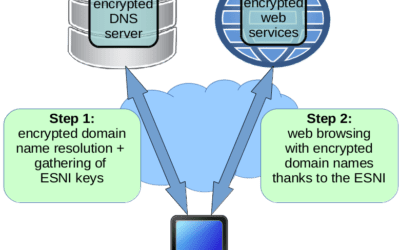
Moving towards a fully encrypted Internet: DNS encryption and ESNI in TLS
Web browsing first began as a system lacking in privacy that allowed users to view simple content in text mode. Since then, the service has evolved in both functionality–allowing you to view complex designs–and in its access methods–said web content can be downloaded...

High-speed Internet from space: The Starlink network
Accessing the Internet from space is not new, with many companies (OneWeb, Space Norway, Telesat, etc.) now offering it. More recently, however, a new participant has emerged on the scene promising something different – Starlink. SpaceX’s plan is to create a network...

DTLS security over UDP
DTLS (Datagram transport Layer Security) is a protocol that provides privacy for UDP communications. To understand DTLS, you first need to understand UDP. UDP (User Datagram Protocol) is a transport layer protocol based on the exchange of datagrams (encapsulated in...

Web components – understanding the technology
Web Components is a standard introduced by the W3C for creating new elements for the web. It also allows developers to easily reuse and extend both the developed components and native elements. As they are part of the browser, no external library like jQuery is...
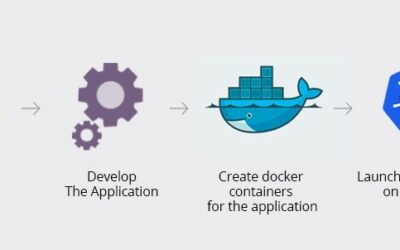
Microservices, Dockers and Kubernetes
Many companies today are opting for microservices-based architecture. And this most certainly has to do with the fact that microservices are a perfect complement to SDN/SD-WAN technology, allowing the modules that make up the applications to be implanted in numerous...

Fixed Wireless Access – Why 5G-FWA can succeed
In my previous blog post last week on 5G, we saw how Fixed Wireless Access (FWA) is considered a cornerstone use case for 5G and a new source of revenue stream for both MNOs and CPEs manufacturers. But if LTE is already capable of reaching extremely high Broadband...

Fixed Wireless Access – primary use case for 5G
Fixed Wireless Access has huge opportunities and challenges for the Telecom Industry with the deployment of the 5G system, but why is so important? Up to now, LTE is still considered the fastest developing mobile technology ever. Since its launch in early 2010, it has...

The importance of SD-WAN for SMEs
Small and medium enterprises (SME’s) make up an increasing percentage of existing companies. As a result, they account for almost all of the business fabric worldwide. However, given their limited size, their budget for human resources, technology, safety, and...
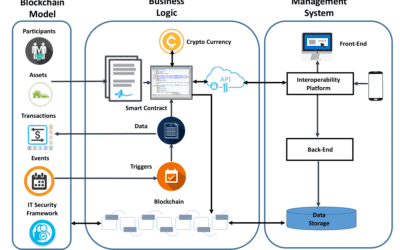
How did Blockchain commence?
As we previously mentioned in an article published in June 2019, the Bitcoin did not create a new computer technology but integrated a series of pre-existing techniques in a revolutionary manner. The possibilities this protocol could bring were soon condensed in a new...

React, a new technology
Launched in 2010 by Facebook, React is an open source technology that became popular when Facebook bought Instagram in 2014 and launched this new language. Facebook, together with a free software community made up of more than 1,000 developers, is in charge of its...

SD-WAN in Latin America
It’s no secret to anyone that the concept of SDN/ SD-WAN has been gaining ground over the past four years. This is in direct response to a clear need to erase geographical boundaries and improve visibility, control, availability, performance, scalability and security...

