

• Cybersecurity Glossary
What is Edge Computing?
Edge Computing is a distributed IT architecture that processes data at or near its source of origin, rather than relying entirely on a centralized data center or cloud environment. By placing compute, storage, and networking resources close to the endpoints that generate data, Edge Computing enables real time decisions, lower bandwidth costs, and operational resilience in locations with limited or intermittent connectivity. With the rapid expansion of IoT devices, 5G networks, and AI inference workloads, Gartner projects that 75% of enterprise data will be created and processed outside of traditional data centers. Edge Computing is now a core component of modern network architecture for industries ranging from manufacturing and healthcare to retail and transportation.
Edge Computing definition
Edge Computing refers to a distributed information technology architecture where data is processed at or near its source of origin, instead of relying entirely on a centralized data center or cloud environment. The “edge” refers to the outer boundary of a network, where local devices and infrastructure interact with the broader internet.
In traditional cloud models, all data travels from devices to remote servers for processing. Edge Computing reverses that pattern by placing compute, storage, and networking resources close to the endpoints that generate the data. This allows organizations to analyze information faster, act on it in real time, and reduce the amount of raw data that needs to travel across the network.
The shift toward edge processing is driven by three forces: the explosion of IoT devices generating massive data volumes, the availability of 5G and Wi Fi 6 connectivity that supports demanding edge workloads, and the growing need for real time AI inference that cannot tolerate the latency of a cloud round trip. Industries from manufacturing to healthcare now treat Edge Computing as a core part of their network architecture rather than a niche optimization.
| Dimension | Traditional cloud model | Edge Computing model |
|---|---|---|
| Processing location | Remote data center or cloud | At or near the data source |
| Latency | Higher (variable, network dependent) | Very low (single digit milliseconds) |
| Bandwidth usage | High, all raw data travels to cloud | Low, only filtered data is transmitted |
| Offline resilience | No, requires constant connectivity | Yes, autonomous local operation |
| Best suited for | Large scale analytics, long term storage | Real time decisions, IoT, local AI inference |
| Security perimeter | Centralized, well defined | Distributed, per node enforcement |
Key components of an Edge Computing architecture
A professional Edge Computing deployment is built on four functional layers. Each layer must work together to deliver the low latency, high reliability, and centralized manageability that enterprise edge environments require:
The four layer model in practice: A temperature sensor in a factory (Layer 1) sends readings to an edge gateway router (Layer 2) that detects an anomaly locally and triggers an immediate equipment alert. The gateway transmits filtered data over 5G (Layer 3) to a cloud analytics platform (Layer 4) that compares the anomaly against historical patterns and predicts that a motor bearing will fail within 72 hours. The maintenance team receives a work order before the failure occurs. This is how Edge Computing turns raw sensor data into actionable intelligence.
Edge vs Cloud vs Fog Computing
Edge, cloud, and fog computing are distinct yet complementary approaches to managing data and workloads. Each processes data at a different point in the network, and most enterprise architectures use a combination of all three:
| Dimension | Edge Computing | Cloud Computing | Fog Computing |
|---|---|---|---|
| Data processing location | At or near the data source | Remote data center | Intermediate network nodes |
| Latency | Very low (milliseconds) | Higher (variable) | Low to moderate |
| Bandwidth usage | Low, local processing | High, all data travels to cloud | Moderate, pre filtered data |
| Best use case | Real time decisions, IoT | Large scale analytics, storage | Distributed IoT gateways |
| Security model | Distributed, per node | Centralized | Distributed with fog layer |
| Offline capability | Yes, autonomous operation | No, requires connectivity | Partial |
| Scalability | Scales per location | Elastic, on demand | Moderate, network dependent |
When to use each approach: Edge Computing handles time critical decisions that cannot tolerate a cloud round trip: safety shutdowns, real time video analytics, and local AI inference. Cloud computing handles large scale analytics, long term data storage, and global coordination across facilities. Fog computing bridges the two, using intermediate nodes like routers and gateways to pre process and aggregate data before it reaches the cloud. Most modern architectures combine all three.
How Edge Computing architecture works?
In an edge architecture, data flows through a layered hierarchy designed to balance speed, efficiency, and centralized oversight. The process typically follows four stages:
Data generation
IoT sensors, cameras, machines, or other connected devices collect data at the edge of the network. This data could be anything from temperature readings in a factory to video feeds in a retail store or telemetry from a fleet of vehicles. The volume of data generated at the edge is growing exponentially as more devices become connected.
Local processing
An edge node, often a router, gateway, or micro server located on premises, receives the raw data and performs initial filtering, aggregation, or analytics. Time sensitive decisions are made here, with latency measured in single digit milliseconds. For example, a safety shutdown on a production line cannot wait for a cloud round trip. The edge gateway executes control logic locally, processing high frequency sensor data and triggering actions without a network dependency.
Selective transmission
Only relevant or summarized data is forwarded to a central cloud or data center for deeper analytics, long term storage, or global coordination. This reduces bandwidth consumption and network congestion. Businesses typically see an 80% reduction in data backhaul costs when edge processing is properly implemented, because steady state readings that add no analytical value are filtered at the source.
Centralized management
An orchestration platform manages the fleet of distributed edge nodes, pushing configuration updates, security patches, and application workloads from a single control plane. Teldat CNM SD WAN Suite is one example of a platform that provides this capability for edge router networks, supporting zero touch provisioning to deploy new devices without sending IT personnel to remote sites.
Edge Computing and 5G: The rise of 5G and Wi-Fi 6 connectivity has accelerated edge adoption by providing the high bandwidth, low latency links needed to support demanding edge workloads like real time video analytics and autonomous systems. 5G enables new edge use cases that were previously impractical over LTE, including remote surgery assistance, real time DER management in energy grids, and high density factory automation.
Security challenges in Edge Computing
Distributing processing across many locations increases the attack surface compared to a single, well defended data center. Each edge node becomes a potential entry point for threats, which means organizations must adopt a comprehensive, layered security strategy:
The edge security imperative: As Edge Computing pushes processing outside the traditional data center perimeter, security must follow. The most effective approach embeds security capabilities directly into the edge infrastructure. Teldat edge routers include NGFW, VPN, and access control capabilities as part of the base platform, with be.Safe Pro SSE extending cloud delivered protection for users and data beyond the edge. This eliminates the need for separate security appliances at each site and ensures consistent policy enforcement across the entire distributed network.
Edge Computing deployment framework
Deploying edge infrastructure follows a structured approach to match business requirements with the right mix of hardware, connectivity, and management tools:
Assess workload requirements
Identify which applications need low latency local processing versus those that can run in the cloud. Common candidates for edge processing include real time monitoring, local AI inference, safety critical control systems, and applications that must continue operating during connectivity outages.
Select edge hardware
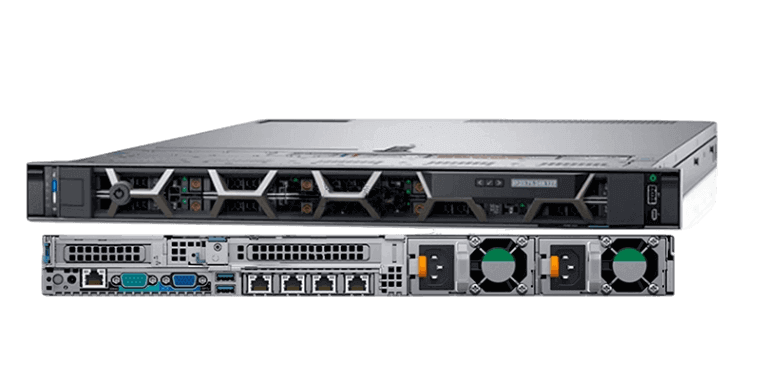
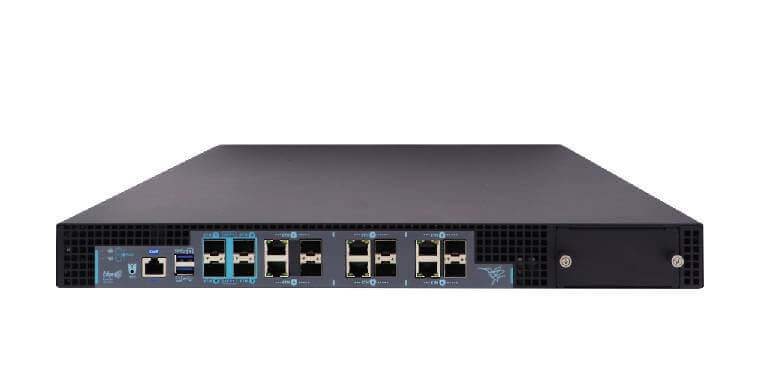
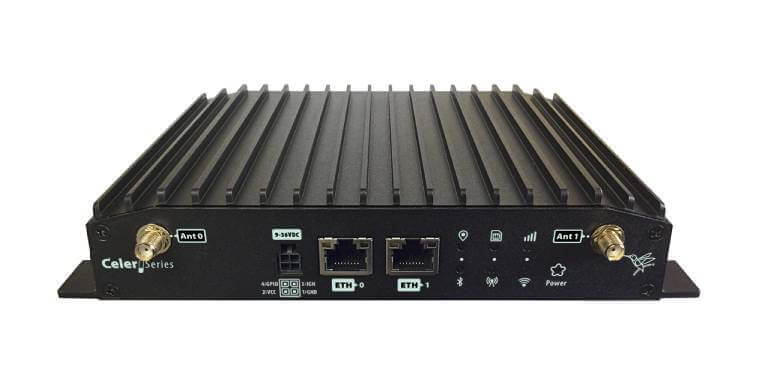
Choose devices based on the processing power, connectivity options, and environmental conditions of each site. Small branch offices may need compact routers like the Teldat-M10 Smart,, while headquarters or data centers may require high performance platforms like the Atlas 840 with 10 Gbps interfaces. Remote sites benefit from cellular gateways like the Teldat 5Ge for 5G WAN backup.
Plan connectivity
Design the network topology, including primary and backup WAN links. SD WAN technology enables intelligent traffic routing across multiple links (MPLS, broadband, cellular) based on application requirements. Cellular 5G backup ensures resilience even when fixed line connections fail.
Implement security from the start
Embedded NGFW, VPN, and access control policies into the edge infrastructure during the design phase, not as an afterthought. Teldat edge routers include be.Safe Pro SSE and embedded NGFW security as part of the base platform.
Centralize management
Deploy an orchestration platform such as Teldat CNM to configure, monitor, and update all edge nodes from a single interface. Zero Touch Provisioning simplifies rollout across hundreds or thousands of sites.
Monitor and optimize
Use network traffic analysis, performance monitoring, and security event correlation to continuously improve edge operations and detect anomalies early. be.Safe XDR correlates security events from IT endpoints, network traffic, cloud services, and edge telemetry, providing unified threat detection across the entire infrastructure.
Teldat Edge Computing solutions
Teldat provides a comprehensive portfolio of edge network computing devices designed for enterprises that need to process data locally while maintaining centralized visibility and control. Every Teldat edge device runs the same operating system and integrates with Teldat CNM for unified management across distributed networks:
The Teldat edge advantage: As a network hardware manufacturer and cybersecurity provider, Teldat delivers edge connectivity and security from the same ecosystem. Edge routers, cellular gateways, embedded NGFW security, cloud delivered SSE, SD WAN orchestration, and XDR threat detection are integrated rather than bolted together from different vendors. This reduces complexity, eliminates gaps between tools, and adapts to the specific requirements of each deployment, from small branch offices and retail stores to large headquarters and industrial sites.
Frequently asked questions about Edge Computing – (FAQ’s)
❯ What is Edge Computing in simple terms?
Edge Computing is a distributed IT architecture that processes data near the source where it is generated, rather than sending everything to a remote data center or cloud. This reduces latency, saves bandwidth, and allows faster decision making at the network border.
❯ How does Edge Computing differ from cloud computing?
Cloud computing centralizes processing in remote data centers, while Edge Computing distributes processing to locations close to data sources. Edge Computing complements the cloud by handling time sensitive workloads locally and sending only relevant data to central systems for long term storage and deeper analytics.
❯ What are the main benefits of Edge Computing?
The main benefits include lower latency for real time applications, reduced bandwidth consumption, stronger data privacy through local processing, improved reliability in locations with limited connectivity, and the ability to run AI and analytics workloads closer to where decisions need to be made.
❯ What industries use Edge Computing?
Edge Computing is widely used in manufacturing (predictive maintenance, robotics), healthcare (patient monitoring devices), retail (inventory tracking, point of sale analytics), transportation (autonomous vehicles, fleet management), energy (smart grids, remote asset monitoring), and smart cities (traffic management, environmental sensors).
❯ Is Edge Computing secure?
Edge Computing introduces new security considerations because data is processed across distributed locations rather than a single data center. Proper edge security requires encrypted communications, network segmentation, zero trust access controls, and integrated threat detection at each edge node. Teldat edge routers include embedded NGFW security to protect edge deployments.
❯ How does Teldat support Edge Computing deployments?
Teldat offers a portfolio of edge routers and network computing devices such as the Atlas 840, M10 Smart, Teldat 5Ge, and Ares C640 that combine SD WAN, embedded NGFW security, and 5G connectivity in a single platform. These devices enable enterprises to process data at the edge with low latency while maintaining centralized management through Teldat CNM.
Secure your Edge Network with Teldat
From Atlas 840 for high performance edge routing to be.Safe Pro SSE for cloud delivered security and CNM for centralized management, Teldat delivers edge connectivity and cybersecurity from a single integrated ecosystem.