

• Cybersecurity Glossary
What is SD-WAN?
SD-WAN (Software Defined Wide Area Network) is a networking technology that applies software defined networking principles to manage wide area networks. It separates the control plane from the data plane, enabling centralized management, dynamic traffic steering across multiple transport links and application aware routing. SD-WAN replaces rigid, MPLS centric WAN architectures with a flexible virtual overlay that uses any combination of broadband, LTE/5G and MPLS connections to optimize performance, reduce cost and integrate security. It is the foundational networking layer of SASE (Secure Access Service Edge) and a core enabler of enterprise digital transformation.
SD-WAN definition
SD-WAN (Software Defined Wide Area Network) is a virtual WAN architecture that uses software to manage and optimize network connections across geographically distributed locations. It applies the principles of Software Defined Networking (SDN) to wide area networks by separating the control plane (where routing decisions are made) from the data plane (where traffic is forwarded). This separation allows network behavior to be defined centrally through software policies rather than configured manually on each individual device.
Traditional WANs relied on dedicated MPLS circuits to connect branch offices to a central data center. This worked when applications were hosted on premises, but the shift to cloud computing, SaaS applications and remote work has made the data center centric model inefficient. Backhauling all traffic through a central site adds latency, wastes bandwidth and degrades the performance of cloud applications that users access directly from the internet.
SD-WAN solves this by creating an intelligent overlay network across any available transport: broadband internet, MPLS, LTE, 5G or any combination. The overlay monitors real time network conditions (latency, jitter, packet loss) and dynamically steers application traffic across the best available path. This approach delivers better performance at lower cost while enabling direct cloud access from every branch location.
SD-WAN architecture and components
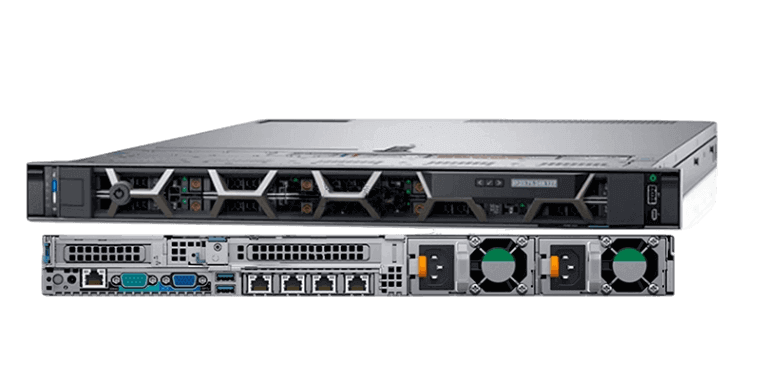
SD-WAN architecture is built around the separation of control and data planes. The control plane defines network behavior through centralized policies; the data plane forwards traffic at each edge device according to those policies. This architecture enables centralized management of distributed networks at any scale.
SD-WAN vs Traditional WAN and MPLS
SD-WAN and MPLS are not competing technologies in the same category. MPLS is a transport service; SD-WAN is a software architecture that can use MPLS as one of several underlay links. However, the practical effect of SD-WAN adoption is a reduction in MPLS dependency and cost, with equal or better application performance.
| Dimension | Traditional WAN / MPLS | SD-WAN |
|---|---|---|
| Architecture | Hub and spoke; all traffic backhauled to central data center | Any topology: star, mesh or hybrid; direct cloud access from branches |
| Transport | Single dedicated MPLS circuit per site; expensive, long lead times | Any combination of broadband, MPLS, LTE/5G; transport agnostic |
| Cost | High: MPLS circuits carry significant per site monthly cost | Lower: broadband substitution reduces circuit costs by 50 to 90 percent |
| Deployment speed | Weeks to months for MPLS circuit provisioning | Minutes to hours with Zero Touch Provisioning |
| Cloud access | Traffic must traverse central data center before reaching cloud (trombone effect) | Direct internet breakout at each branch; optimized SaaS performance |
| Traffic steering | Static routing; manual failover to backup link | Dynamic path selection based on real time application SLA requirements |
| Scalability | Limited by MPLS circuit availability and cost | Horizontal scaling; add sites with broadband and ZTP |
| Visibility | Per device monitoring; limited application awareness | Centralized, application level analytics across entire WAN |
| Security | Relies on centralized security stack at data center | Integrated security at each edge; SASE integration for cloud delivered protection |
| Management | Device by device CLI configuration | Centralized controller with policy based management and REST APIs |
The migration reality: most enterprises do not eliminate MPLS overnight. Instead, they use SD-WAN to create a hybrid architecture where MPLS carries the most sensitive traffic while broadband and LTE handle the rest. Over time, as confidence in the SD-WAN overlay grows, organizations progressively reduce MPLS circuits and shift to internet based transport. Teldat CNM SD-WAN Suite supports this hybrid migration path with active active link utilization and automatic failover.
Key benefits of SD-WAN
SD-WAN delivers measurable improvements across cost, performance, management complexity and security. These benefits compound as the network grows, making SD-WAN increasingly valuable for organizations with distributed branch architectures.
SD-WAN and security
Security is not an optional add on to SD-WAN; it is an integral part of the architecture. As SD-WAN moves traffic from private MPLS circuits to public internet, the overlay must provide equivalent or better security. Modern SD-WAN platforms integrate security at multiple layers.
Deployment models and Use Cases
SD-WAN can be deployed on premises, as a cloud enabled service or as a managed offering from a service provider. The technology adapts to organizations of any size, from a handful of branch offices to thousands of distributed locations.
Teldat CNM SD-WAN Suite
Teldat provides a complete, European sovereign SD-WAN solution through its CNM SD-WAN Suite. Designed for organizations of any size, from mid market enterprises to large public sector deployments, the platform combines networking, security and management in a single integrated offering.
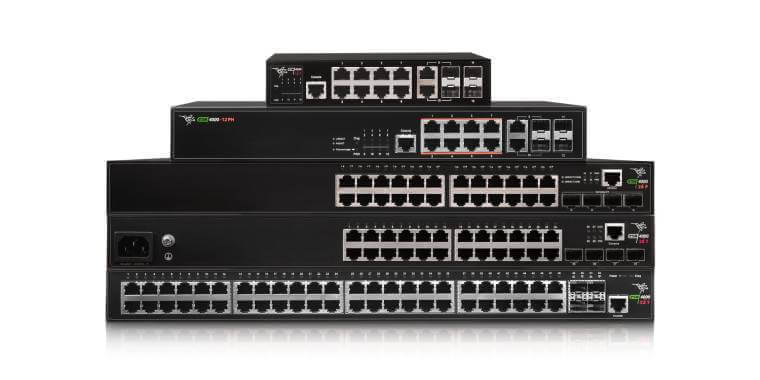
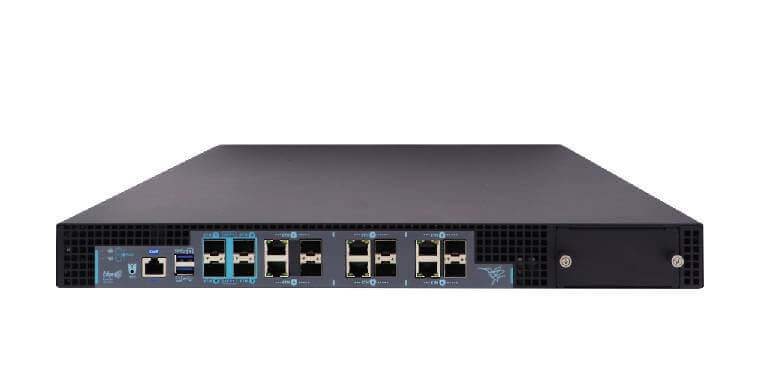
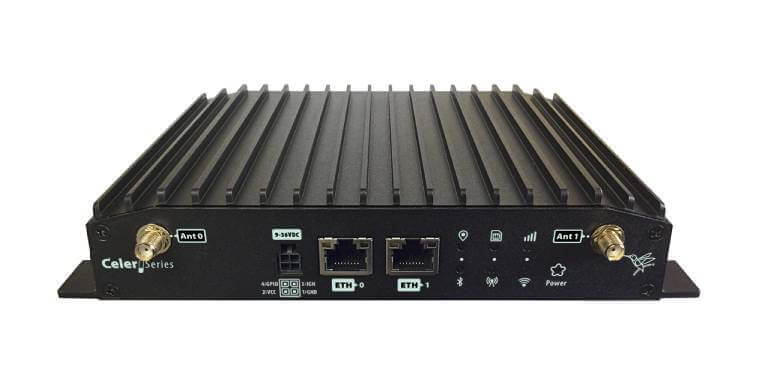
The Teldat SD-WAN advantage: Teldat is one of the few vendors that manufactures both the SD-WAN hardware and the software platform. Edge routers, data center concentrators and the CNM management suite are all designed and built by Teldat under European jurisdiction. This vertical integration means faster innovation, tighter security integration and a single point of responsibility for the entire SD-WAN lifecycle, from hardware design through deployment to ongoing operation.
Frequently asked questions about SD-WAN – (FAQ’s)
❯ What is SD-WAN in simple terms?
SD-WAN (Software Defined Wide Area Network) is a technology that uses software to manage and optimize network connections between branch offices, data centers and cloud applications. Instead of relying on a single expensive MPLS circuit, SD-WAN creates an intelligent overlay across multiple transport links (broadband, LTE/5G, MPLS) and automatically routes traffic based on application requirements and real time network conditions. It is managed from a centralized controller, making it faster to deploy, easier to change and less expensive than traditional WAN architectures.
❯ What is the difference between SD-WAN and MPLS?
MPLS is a dedicated, carrier managed circuit that provides reliable but expensive connectivity with fixed bandwidth. SD-WAN is a software overlay that can use any combination of transport links, including MPLS, broadband and cellular. SD-WAN offers dynamic path selection based on application requirements, centralized management, lower cost through broadband substitution, direct cloud access without backhauling, and integrated security. Many organizations use SD-WAN to reduce MPLS dependency while maintaining or improving application performance.
❯ What are the main components of SD-WAN architecture?
SD-WAN architecture has four main components. The edge devices (physical or virtual appliances at branch offices and data centers) forward traffic and enforce policies. The controller provides centralized visibility and policy definition. The orchestrator manages lifecycle operations including zero touch provisioning and configuration distribution. The transport layer consists of the underlay connections (broadband, MPLS, LTE/5G) over which the SD-WAN overlay builds encrypted tunnels. Some architectures also include cloud gateways or points of presence for optimized cloud connectivity.
❯ How does SD-WAN improve security?
SD-WAN improves security through encrypted overlay tunnels (typically IPsec) across all transport links, network segmentation that isolates traffic by application or user role, centralized policy enforcement, and integration with security services including next generation firewall, intrusion prevention, secure web gateway and ZTNA. When combined with SASE (Secure Access Service Edge), SD-WAN extends security to cloud delivered services. Teldat SD-WAN integrates with be.Safe Pro SSE for SASE and be.Safe XDR for AI powered threat detection.
❯ What is Zero Touch Provisioning in SD-WAN?
Zero Touch Provisioning (ZTP) is the ability to ship an SD-WAN device to a remote location, power it on and have it automatically configure itself without manual intervention. The device contacts the centralized controller, downloads its configuration template, establishes overlay tunnels and joins the SD-WAN fabric. ZTP eliminates the need for skilled technicians at remote sites and enables large scale network deployments in days rather than months. Teldat CNM SD-WAN Suite provides advanced ZTP with template based deployment that has been proven at scale across 2,700 branches.
❯ Why choose Teldat for SD-WAN?
Teldat is a European network hardware manufacturer that provides a complete SD-WAN solution through its CNM SD-WAN Suite. Key differentiators include European sovereignty (designed and operated under EU jurisdiction), proven scale (2,700 branch deployment at the Junta de Andalucia, the largest SD-WAN and XDR implementation in Europe), integrated security (be.Safe Pro SSE for SASE and be.Safe XDR for threat detection), CPSTIC certification at ENS Alta level, support for any topology (star, mesh, hybrid), active active high availability, and application aware routing with SLA management through a single management console.
Transform your WAN with Teldat SD-WAN
From Zero Touch Provisioning to integrated SASE and XDR, Teldat CNM SD-WAN Suite delivers enterprise networking and security from a single European platform. Proven at scale across 2,700 branches.