

BLOG

All 5G’s Are Born Equal, But Some Are More Equal Than Others
When 5G entered the public conversation, it did so with grand ambitions. Ultra-fast speeds. Near-zero latency. A technology poised to reshape everything from factory automation to healthcare delivery. For most users, however, the experience boiled down to something far more modest: a slightly faster mobile connection and a new icon on their phone. That gap between...
Kategorien

Cloud as the answer to the challenges of WAN
It is no secret today that the world is changing, and this is also true for the world of WAN - Wide Area Network. The digital transformation is currently experiencing with the popularization of technology in all aspects of our daily lives is also generating new...
User experience: same goal, different applications
Today, almost everyone knows what User Experience (UX) is. A concept that has become fashionable in recent years and that major digital multinationals like Amazon, Facebook, etc., not only know of, but have entire teams dedicated to studying and looking for ways to...

The expansive reach of artificial intelligence
Now that we are close to celebrating its 70th anniversary, the growing scope of Artificial Intelligence and the direct and indirect role it plays in our daily lives and in future developments cannot be contested. A quick review of the most relevant breakthroughs in...

Digital transformation involves turning the business around
The single most important message we’ve been trying to get across in all of our previous blog posts is that Digital Transformation processes are not linked to technology itself, but to the manner in which we use this technology to boost business (cost saving...

What does 2019 hold for us?
2018 has shown us (Teldat) that many of the predictions made at the beginning of last year by relevant consultants and market analysts related to Cloud technology, SD-WAN, Artificial Intelligence (AI) and more, can be acknowledged today as correct predictions…....
The cloud gaming era is upon us – Is your router ready?
The explosion of cloud services brings the bulk of computational load to the servers located on the Internet, freeing up the end devices from having to do this. This new paradigm gives rise to more demanding network requirements, both on the Internet and in the...
Application-Aware Routing related to SD-WAN
Application-Aware Routing is a change to the way we think about how data packets should be routed through an IP network and is closely related to SD-WAN, Policy-based routing and the use of SLA’s – Service Level Agreements. Ever since the beginning of the Internet,...

How to face the challenge of integrating telecommunication technologies and vendors
One of the biggest challenges that customers have always faced is that of integrating different telecommunication technologies or vendors in the same customer environment, with a view to getting the best characteristics from each technology. Nowadays, there are...

European Utility Week 2018: Smart Grids and more
On November 6th, the European Utility Week 2018 (EUW18) was held in Vienna (Austria). The event is attended by numerous companies and industry experts and provides an opportunity for them to showcase their developments and solutions. One of the main objectives of this...
3D printing is also being used for communications devices
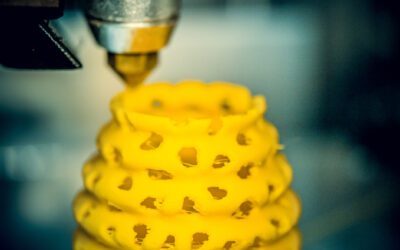
3D printing, also known as direct digital manufacturing or additive manufacturing, has come to revolutionize every sector of industry; at the design level, building prototypes and even serial production, producing fully functional parts for the most demanding of...

SD-WAN joins the interoperability challenge
Some days ago, I had the chance to go to the annual SD-WAN Summit, an event that has been held in Paris for the last 3 years. It is a great opportunity to learn about state-of-the-art solutions and share trends on wide-area network connectivity, since key industry...

ZigBee Smart Energy
ZigBee Smart Energy (SE) is a standard for interconnecting and interoperating devices, via radio frequency, directed towards monitoring, managing and automating energy, gas and water usage. It seeks to be a useful tool for creating “Green Homes”, and is aimed at...

