

Teldat’s 5G Network Slicing FAQ’s
1. What exactly is 5G Network Slicing?
2. What are the key foundational technologies that make 5G Network Slicing possible?
3. What critical roles does 5G Network Slicing play in digital transformation?
4. How does network slicing accommodate diverse application requirements?
5. How is security and isolation achieved in a network slice?
6. What are the three end-to-end components that make up a single network slice?
7. How does the network dynamically manage and adjust slices in real-time?
8. What is the Orchestration Layer, and what are its main functions?
9. What is the commercial opportunity presented by network slicing for service providers?
10. Which sectors are driving the market growth for 5G network slicing?
11. Who are the key groups promoting and requiring 5G network slicing?
12. How does slicing help Public Safety and Mission Critical Services?
13. What advantages does 5G slicing offer for Smart Manufacturing and Industry 4.0?
14. How does network slicing enhance Media and Entertainment applications?
15. Where does a company like Teldat fit into the 5G network slicing architecture?
1. What exactly is 5G Network Slicing?
5G network slicing is a virtualization technology that allows a single physical 5G network to be partitioned into multiple independent, logical “slices”. It permits multiple virtual networks to run on a single, shared physical 5G infrastructure. Each slice functions as an end-to-end virtual network with dedicated resources and tailored performance characteristics to serve a specific purpose, application, or customer.
2. What are the key foundational technologies that make 5G Network Slicing possible?
Network slicing relies on the convergence of several key technologies. The foundation is built upon Network Functions Virtualization (NFV), which replaces physical network appliances with software versions called Virtualized Network Functions (VNFs) that can be instantiated on-demand for each slice. It also depends on Software-Defined Networking (SDN), which separates the network’s control plane from the data plane, enabling centralized, programmable control necessary to manage slice paths.
3. What critical roles does 5G Network Slicing play in digital transformation?
5G network slicing is critical key feature to enable digital transformation. It allows personalized connectivity, security, and service guarantees, transforming the way industries operate and innovate. It is key to unlocking the full economic potential of 5G by transforming mobile network operators from utility providers into digital innovation enablers across all sectors.
4. How does network slicing accommodate diverse application requirements?
A major benefit of network slicing is its ability to support diverse requirements efficiently. The same physical network can simultaneously run High-Speed, Low-Latency applications (like those needed for critical operations), support Massive Connectivity for thousands of simple IoT sensors, and provide High Bandwidth networks. Without slicing, building separate physical networks for these different needs would be prohibitively expensive and inefficient.
5. How is security and isolation achieved in a network slice?
The architecture of network slicing offers inherent security through logical isolation. Each slice is logically separated, meaning a problem or issue in one slice (or domain) cannot affect the others. Enterprise customers trusting their critical operations to a public network slice must have absolute confidence in this security and isolation, making it non-negotiable.
6. What are the three end-to-end components that make up a single network slice?
A single network slice spans the entire network:
7. How does the network dynamically manage and adjust slices in real-time?
Network slicing infrastructure is dynamic and scalable, based on SDN and NFV. Slices can be created, adjusted, or removed in real time as demand shifts. This dynamic management is enabled by the orchestration layer.
8. What is the Orchestration Layer, and what are its main functions?
The Orchestration Layer is the intelligence of the solution—a software platform that automates the entire slice management process. It consists of three basic areas:
9. What is the commercial opportunity presented by network slicing for service providers?
Network slicing gives service providers an excellent opportunity to monetize the 5G network by offering Network as a Service (NaaS) to vertical sectors. For Network Operators, this transforms their business model from selling basic connectivity to selling customized network solutions.
10. Which sectors are driving the market growth for 5G network slicing?
Industry analysts project strong double-digit growth for this market, and this is driven by the high demand for personalized connectivity. Key sectors include IoT, critical services, autonomous vehicles, and industrial automation. Digital transformation projects across manufacturing (Industry 4.0), healthcare, automotive, media, and logistics are seeking the advanced connectivity solutions that slicing offers.
11. Who are the key groups promoting and requiring 5G network slicing?
There are three key groups involved:
12. How does slicing help Public Safety and Mission Critical Services?
Traditional cellular networks are “best-effort” and can become catastrophically congested during major emergencies, risking communication failures for first responders. The solution is a dedicated Mission-Critical Services Slice that has the highest network priority. This slice ensures first responders have immediate and uninterrupted access, with high bandwidth and low latency, even if the public network is overwhelmed.
13. What advantages does 5G slicing offer for Smart Manufacturing and Industry 4.0?
In Industry 4.0, slicing addresses the rigidity of wired networks and the unreliability of Wi-Fi. By using an URLLC (Ultra-Reliable Low-Latency Communication) slice, manufacturers gain wireless flexibility with guaranteed performance, deterministic latency, and reliability that Wi-Fi cannot offer. This provides traffic isolation between critical control systems and other factory data.
14. How does network slicing enhance Media and Entertainment applications?
The Media and Entertainment industry benefits massively from eMBB (enhanced Mobile Broadband) slicing for live event broadcasting. This solution allows broadcasters to create a dedicated, high-performance network overlay on the public infrastructure, ensuring Guaranteed High Bandwidth and consistent low latency, regardless of network congestion caused by spectators. This minimizes delays critical for live broadcasting and coordination.
15. Where does a company like Teldat fit into the 5G network slicing architecture?
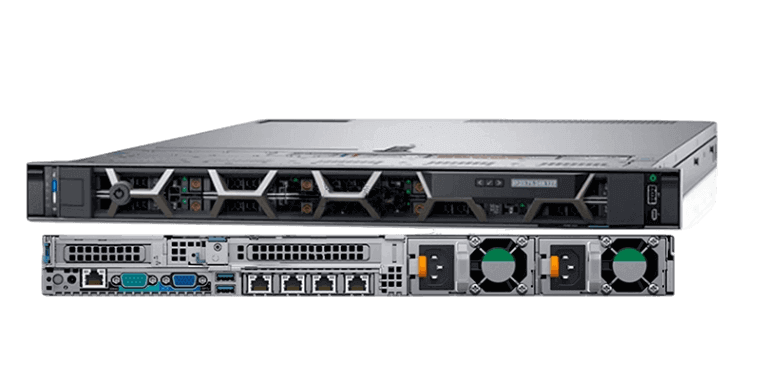
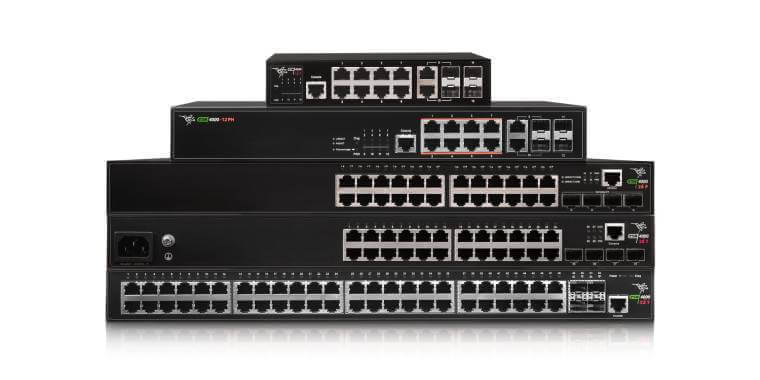
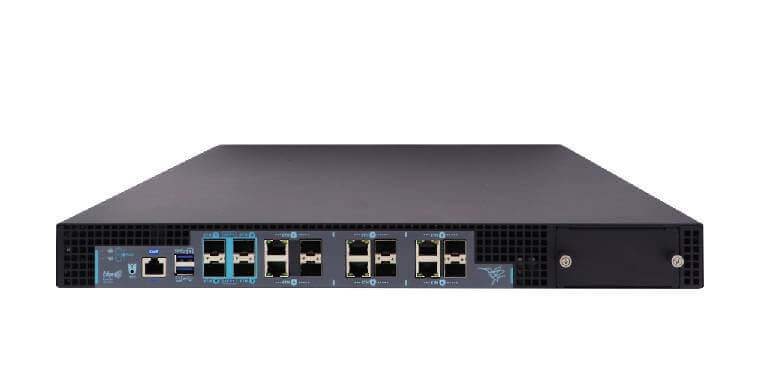
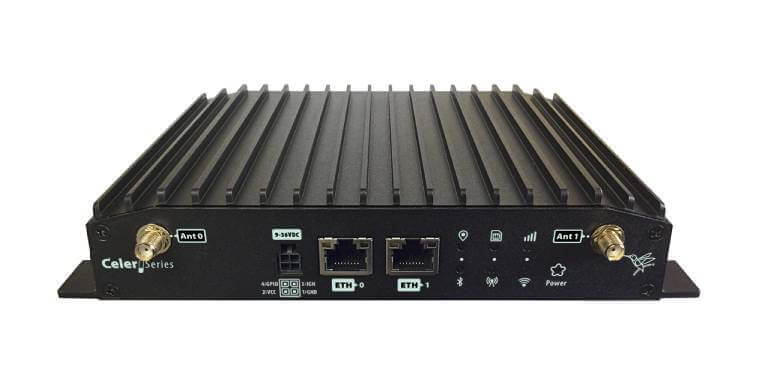
Teldat is a leading cybersecurity and telecommunications manufacturer. While Teldat does not build the entire 5G slice, its strength lies in leveraging and integrating with slices at the customer premises and within the transport network. Teldat provides intelligent Customer-Premises Equipment (CPE) and software-defined networking solutions that allow businesses to reliably and securely connect to multiple 5G network slices, intelligently route application traffic into the correct slice, secure the connection, and manage performance from the user’s perspective.